

Wie du die Produktivität deiner Mitarbeitenden in 11 Schritten steigern kannst
2019 hat Microsoft Japan beschlossen, seinen Mitarbeitenden eine 4-Tage-Woche zu geben, ohne ihr Gehalt zu kürzen. Was dabei rauskam, spricht für sich: Die Mitarbeitenden wurden um 40 % produktiver als vorher. Was können wir daraus lernen? Es zeigt, dass längere Arbeitszeiten nicht unbedingt bedeuten, dass man mehr schafft. Aber Zeit ist nicht das Einzige, was zählt, wenn man die Leistung der Mitarbeitenden verbessern will. Man muss alle Faktoren checken, die die Produktivität der Mitarbeitenden beeinflussen können. Zum Beispiel haben Arbeitsumgebung, die organisatorischen Abläufe und die Qualität der Interaktionen zwischen Mitarbeitenden einen echten Einfluss auf die Effizienz. Was kannst du also tun, um die Produktivität zu steigern? Bei deskbird ist es unser Ziel, nicht nur die beste Hybrid-Work-Software zu entwickeln, sondern dich auch beim Aufbau eines erfolgreichen, mitarbeiterorientierten Unternehmens zu unterstützen.
Hier sind 11 konkrete Maßnahmen, mit denen du die Produktivität deiner Teams steigern kannst.
Was ist Mitarbeiterproduktivität?
Einfach ausgedrückt misst die Mitarbeiterproduktivität, wie viel Arbeit in einer bestimmten Zeit erledigt werden kann. Es ist aber auch wichtig, sich ein bisschen genauer mit dem Konzept zu beschäftigen, weil es sowohl um den Input als auch um den Output der Mitarbeitenden geht. Also nicht nur um die Zeit, die für eine Aufgabe aufgewendet wird, sondern auch um die Energie und das Engagement, das Mitarbeitende dafür aufbringen. Das Ziel ist, ein gutes Produkt oder eine gute Dienstleistung zu liefern und vor allem einen Mehrwert zu schaffen.
Vor Jahrzehnten basierte die Produktivität am Arbeitsplatz noch auf der irreführenden Vorstellung, dass mehr Produktivität vor allem durch längere Arbeitstage erreicht wird. Heute ist das anders. Wie die Initiative von Microsoft Japan bestätigt, geht es bei der Produktivität nicht nur um Zeit. Viele andere Faktoren spielen eine große Rolle bei der Steigerung der Effizienz, z. B. die Bereitstellung der richtigen Arbeitsplatztechnologie, die Förderung des Wohlbefindens der Arbeitnehmenden, die Möglichkeit der Hybridarbeit und vieles mehr. Wir haben die 11 wichtigsten Punkte zusammengestellt, die dazu beitragen können, die Produktivität deiner Mitarbeitenden zu verbessern.

Wie du die Leistung deiner Mitarbeitenden verbessern kannst: 11 Tipps
1. Stelle die Mitarbeitenden ins Zentrum
Es ist keine Überraschung, dass große Unternehmen wie Google oder HubSpot immer mehr Initiativen für eine stärkere Mitarbeiterorientierung ergreifen. Eine der wichtigsten Veränderungen, die wir in der Arbeitswelt beobachten, ist die Einführung eines stärker mitarbeiterzentrierten Ansatzes. Denn die Belegschaft entscheidet letztendlich über Erfolg oder Misserfolg eines Unternehmens – das haben diese großen Organisationen eindeutig verstanden. Die Konzentration auf die Bedürfnisse der Mitarbeitenden ist der erste Schritt zur Steigerung der Produktivität. Wenn die Menschen das Gefühl haben, dass man sich um sie kümmert, ihnen zuhört und ihre Leistung wertschätzt, sind sie engagierter, motivierter und damit produktiver.
2. Schaffe eine positive Arbeitsplatzkultur
Wo wir gerade darüber reden, wie sich die Leute bei der Arbeit fühlen: Auch die Kultur am Arbeitsplatz hat einen großen Einfluss auf die tägliche Leistung deiner Mitarbeitenden. Wie sieht die Unternehmenskultur in deiner Firma aus? Lässt du sie einfach von selbst wachsen oder arbeitest du ständig daran, sie zu verbessern? Dieser kulturelle Aspekt beeinflusst nicht nur dein Image, sondern auch Zufriedenheit und Wohlbefinden deiner Mitarbeitenden.
Unternehmen mit einer problematischen Arbeitskultur haben oft eine höhere Fluktuation und wenig Engagement unter den Leuten, die bleiben. Eine positive Arbeitskultur aufzubauen, ist wirklich wichtig, wenn du die richtigen Bewerber:innen anziehen und deine Belegschaft motiviert halten willst.
3. Mach flexibles Arbeiten zur Priorität
Jede:r Einzelne von uns hat eine andere Persönlichkeit und Arbeitsweise. Manche Menschen brauchen zum Beispiel unbedingt das Umfeld ihrer Kolleg:innen, um motiviert zu sein, während andere ihre Arbeit lieber allein an einem ruhigen Ort erledigen. Manche Menschen können ihre Aufgaben sofort nach dem Aufstehen in Angriff nehmen, aber andere starten erst mal langsam mit einem Kaffee in den Tag und meistern später ihre Aufgaben. Deshalb ist Flexibilität heute ein Muss, wenn du eine produktive Belegschaft aufbauen willst. Das lässt sich ganz leicht durch ein hybrides Arbeitsmodell und Gleitzeit erreichen. Niemand weiß besser, was deine Mitarbeitenden brauchen, als sie selbst. Also lass sie ihren eigenen Wochenplan aufstellen und das Leistungsniveau wird wie von selbst steigen.

4. Setze deine Prioritäten smart
Für Mitarbeitende ist es nicht immer einfach zu wissen, welche Aufgabe am wichtigsten ist und welche zuerst erledigt werden muss. Wenn es deinen Teammitgliedern schwerfällt, richtig zu priorisieren, solltest du sie dabei unterstützen. Du kannst dafür zum Beispiel die Pareto-Regel einführen (auch „80-20-Regel“ genannt). Das Konzept ist einfach: Mit 20 % der eigenen Handlungen werden 80 % der Ergebnisse erreicht. Damit diese Gleichung aufgeht, müssen deine Mitarbeitenden jedoch wissen, wie sie klug priorisieren. Vielleicht interessiert euch dafür die Eisenhower-Matrix, eine sehr effektive Arbeitsmethode.
5. Vermeide Multitasking und Ablenkungen
Wir tun es alle und merken es oft noch nicht mal: Multitasking. Leider ist Multitasking völlig kontraproduktiv, auch wenn es uns das Gefühl von Effizienz vermittelt. Unser Gehirn ist dafür gemacht, sich auf eine Aufgabe gleichzeitig zu konzentrieren, nicht auf zwei, drei oder mehr. Das Gleiche gilt für Ablenkungen. Vermeide so viele Ablenkungen wie möglich, um zu verhindern, dass deine Teammitglieder mitten in der Arbeit aufhören. Eine Studie der University of California Irvine zeigt, dass man genau 23 Minuten und 15 Sekunden braucht, um sich wieder zu konzentrieren. Mit anderen Worten: Wenn dein Team gerade einen wichtigen Bericht schreibt und du spontan ins Büro kommst und etwas besprechen willst, brauchen sie so lange, um sich wieder auf ihre eigentliche Aufgabe zu konzentrieren.
6. Achte auf Wertschätzung im Team
Als Teil einer mitarbeiterzentrierten Kultur ist Wertschätzung von entscheidender Bedeutung für den Unternehmenserfolg. Jede:r sollte das Gefühl haben, dass die eigene Arbeit wahrgenommen und wertgeschätzt wird. Einerseits steigen Engagement und Motivation, wenn Arbeitgebende und Führungskräfte ihren Mitarbeitenden Wertschätzung entgegenbringen und sie belohnen. Andererseits ist mangelnde Anerkennung einer der Gründe für große Kündigungswellen. Diejenigen, die ihre Arbeitsplatz nicht kündigen können, werden möglicherweise völlig desinteressiert und erleben sogar ein Burnout. Und an diesen Punkt sollten deine Mitarbeitenden natürlich nicht kommen.

7. Minimiere Mikromanagement
Vertrauen ist ein zentraler Faktor, um die Effizienz der Mitarbeitenden zu steigern. Wenn du deinen Leuten ständig im Nacken sitzt, wird das eher das Gegenteil bewirken. Als Führungskraft kannst du das Engagement deines Teams super steigern, indem du ihnen zeigst, dass du voll auf ihre Fähigkeiten und ihre Arbeit vertraust. Mitarbeitende mit mehr beruflicher Freiheit und Flexibilität sind oft kreativer und zeigen mehr Eigeninitiative.
Wenn du ein hybrides Team leitest, kann das am Anfang echt schwierig sein. Trotzdem solltest du Mikromanagement als Managementmethode vermeiden, um die Leistungsfähigkeit deines Teams zu fördern. Wer sich ernstgenommen fühlt, ist auch weniger gestresst und kann konzentrierter und effizienter arbeiten.
8. Optimiere deine Bürogestaltung
Die Arbeitsumgebung deiner Mitarbeitenden hat definitiv einen großen Einfluss auf die Produktivität. Die Bürogestaltung und die Effizienz deines Teams sind eng verknüpft. Wie das sein kann? Weil unser Verhalten auch dadurch beeinflusst wird, wie wohl wir uns an einem Ort fühlen. Es gibt dabei viele Aspekte zu beachten, wie die Größe der Büroräume, die Beleuchtung, die Pflanzen, die verwendeten Farben und Materialien usw.
Versuch mal, die Produktivität deiner Mitarbeitenden mithilfe des Feng-Shui-Konzepts fürs Büro zu steigern. Super sind auch verschiedene Arbeitsbereiche (Einzelschreibtische, Meetingräume, Gemeinschaftsarbeitsbereiche usw.), um den Bedürfnissen aller gerecht zu werden.
9. Mach dir Arbeitsplatztechnologie zunutze
Die Technologie am Arbeitsplatz hat die Art und Weise, wie wir arbeiten, wirklich verändert. Heutzutage kann fast alles automatisiert werden, was den Beschäftigten die Möglichkeit gibt, ihre Zeit zu optimieren und sich auf wichtigere Aufgaben zu konzentrieren. Kommunikationstools wie Slack oder Zoom machen Remote Work viel einfacher. Flexibles Arbeiten war noch nie so einfach wie heute, da die Personalabteilung den hybriden Büroraum mit einer Schreibtischbuchungssoftware verwalten kann. Was die Arbeitnehmenden betrifft, so können sie jetzt ihren Wochenkalender selbst mit der Wochenplanungsfunktion gestalten. Wenn sie richtig und intelligent eingesetzt werden, sind all diese technischen Hilfsmittel eine großartige Unterstützung, um die Effizienz eurer Belegschaft zu steigern.
10. Schaffe eine optimale Kommunikationsstrategie
Remote- und Hybridarbeit zwingt Unternehmen, noch mehr auf effiziente Kommunikationsmittel zu achten. Sie müssen schnell, einfach und vor allem mitarbeiterorientiert sein. Fehlende oder schlechte Kommunikation kann die Produktivität am Arbeitsplatz ernsthaft beeinträchtigen. So können Fehler passieren oder Besprechungen verpasst werden, sowie Konflikte und Stress entstehen. Wenn du dein Team bei der Steigerung seiner Produktivität unterstützen willst, solltest du das Thema Kommunikation nicht unterschätzen.
11. Lege den Fokus auf das Wohlbefinden der Mitarbeitenden
Produktivität hat nicht nur mit der Gestaltung des Arbeitsplatzes, Wertschätzung, Unternehmenskultur usw. zu tun. Auch Gesundheit und Wohlbefinden spielen eine große Rolle für die Leistungsfähigkeit deiner Belegschaft. So wirkt sich beispielsweise körperliche Aktivität nachweislich auf unsere Konzentrationsfähigkeit aus. Warum also solltest du deine Mitarbeitenden nicht ermutigen, mehr Sport zu treiben? Wie kannst du von einem Teammitglied volle Konzentration und ordentliche Arbeitsergebnisse erwarten, wenn die Person sich mental nicht wohlfühlt? Körperliches und geistiges Wohlbefinden sind Schlüsselkomponenten zur Steigerung der Effizienz deiner Arbeitskräfte.

Mehr Mitarbeiterproduktivität mit deskbird
Mit deskbird können deine Teams produktiver und leistungsfähiger werden – indem es für reibungslose Abläufe in hybriden Büros sorgt. So können deine Mitarbeitenden schnell den richtigen Schreibtisch finden oder Meetingraum buchen und bleiben mit der Konzentration bei ihrer Arbeit.
Für Workplace- und Operations-Teams zentralisiert deskbird die Ressourcenbuchung in einem Tool, sorgt für weniger Verwaltungsaufwand und flüssige Arbeitsabläufe im Büroalltag. Außerdem verwandelt deskbird die täglichen Buchungen in aussagekräftige Infos zu Analytics und Nutzungsdaten. So können Führungskräfte Räume, hybride Richtlinien und Zusammenarbeit besser organisieren – und zwar anhand von Daten statt reinem Bauchgefühl.
Produktivität fängt bei der Zufriedenheit im Job an
Kurz gesagt: Wenn du als Manager nach Möglichkeiten suchst, die Leistung deiner Mitarbeitenden zu steigern, solltest du dich auf ihr Wohlbefinden und ihre Zufriedenheit konzentrieren. Wenn du die Menschen selbst in den Fokus rückst, werden sie ihre Ziele motivierter verfolgen und vielleicht sogar übertreffen. Zu solchen Maßnahmen zählen zum Beispiel Work-Life-Balance, Anerkennung, Zugang zu hybrider Technologie und ein mitarbeiterorientiertes Arbeitsumfelds. Bei der Produktivität von Mitarbeitenden geht es nicht darum, mehr oder länger zu arbeiten – sondern besser zu arbeiten.

Häufig gestellte Fragen
Was sind die größten Produktivitätskiller in modernen Büros?
Multitasking und ständige Unterbrechungen schlagen sich negativ auf die Produktivität nieder, weil es nach einer Ablenkung jedes Mal Zeit braucht, sich wieder zu konzentrieren. Unklare Prioritäten und chaotische Kommunikation machen die Sache noch schwieriger, vor allem in hybriden Teams, wo der Kontext schnell verloren geht.
Wie verbessern optimierte Büroflächen die Produktivität der Mitarbeitenden?
Optimierte Büros reduzieren Ablenkungen, fördern die Gesundheit und schaffen Bedingungen für Höchstleistungen. Ergonomische Arbeitsplätze beugen Belastungen vor, Erholungsbereiche wirken Stress entgegen und kollaborative Zonen verbessern die Teamarbeit. Durch natürliches Licht, Pflanzen und digitale Tools steigen außerdem Konzentration und Kreativität. Tatsächlich zeigen Umfragen, dass Mitarbeitende besser organisierte und optimierte Räume für eine Produktivitätssteigerung von bis zu 38 % verantwortlich machen.
Wie kann hybrides Arbeiten die Produktivität steigern, ohne die Burnouts zu riskieren?
Hybrides Arbeiten klappt, wenn Mitarbeitende echte Flexibilität und die richtige Unterstützung bekommen, um ihren Arbeitsstil im Laufe der Woche an ihr Energieniveau und ihre Konzentrationsbedürfnisse anzupassen.
Es braucht auch klare Kommunikationsregeln und einen mitarbeiterzentrierten Ansatz, weil schlechte Koordination schnell zu Ablenkungen, Stress und Zeitverlust führt.
Wie kann die Bürogestaltung für mehr Produktivität bei verschiedenen Arbeitsweisen sorgen?
Ein produktives Büro bietet Mitarbeitenden Auswahlmöglichkeiten wie ruhige Bereiche für konzentriertes Arbeiten und Gemeinschaftsbereiche für Teamarbeit. So kann jede Person die richtige Umgebung für ihre Aufgabe wählen. Designentscheidungen treffen eher ins Schwarze, wenn sie auf Nutzungsdaten statt Annahmen basieren, damit entsprechende Änderungen auch die tatsächliche Arbeitsweise der Teams widerspiegeln.
Wie wirken sich gut verwaltete Büros auf die Mitarbeiterproduktivität und -zufriedenheit aus?
Gut verwaltete Einrichtungen reduzieren Störungen und schaffen eine positive Mitarbeitererfahrung. Wenn Mitarbeitende einfachen Zugang zu sauberen, zuverlässigen und funktionalen Räumlichkeiten haben, verschwenden sie weniger Zeit und fühlen sich besser unterstützt. Das Hinzufügen von komfortorientierten Funktionen wie z. B. ergonomischen Einrichtungen oder Ruhebereichen fördert das Wohlbefinden zusätzlich und hilft Teams, engagiert, produktiv und motiviert zu bleiben.
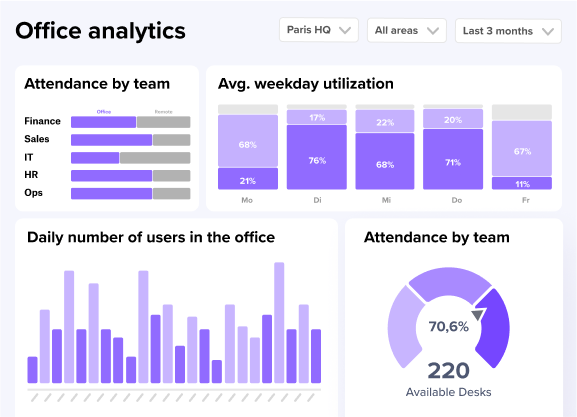
Für mehr Produktivität in deinem hybriden Büro
Vereinfache die Schreibtisch- und Raumbuchung mit nur einem Tool, spare dir Verwaltungsaufwand und gib deinen Teams den nötigen Überblick, um konzentriert und reibungslos zusammenzuarbeiten.