Alla scoperta del lavoro ibrido: vantaggi, sfide e qualche consiglio
Cos'è il lavoro ibrido, quali sono i pro e i contro e come impostare il lavoro flessibile per aumentare la produttività.

Con "lavoro flessibile" si definisce il modo con cui le aziende moderne attraggono i migliori professionisti, aumentano la produttività e mantengono alto il coinvolgimento delle persone. Il lavoro ibrido unisce flessibilità e momenti di condivisione, e perciò aiuta i dipendenti a dare il massimo rafforzando al contempo la cultura aziendale. Tuttavia, senza un approccio strutturato, le impostazioni ibride possono facilmente dare luogo a confusione, disuguaglianze e distacco. Questo capitolo introduttivo alla nostra guida al lavoro ibrido esplora i pro e i contro del lavoro flessibile e si propone di dare qualche suggerimento e soluzioni pratiche per ottenere il massimo.
Da ricordare:
- Il lavoro ibrido migliora l'equilibrio tra vita privata e lavoro, la produttività e la retention, rende più autonomi i dipendenti, riduce i costi e permette di attrarre professionisti di talento, anche geograficamente distanti.
- Senza policy chiare e coesione culturale, tuttavia, i team potrebbero sentirsi indifferenti al lavoro e dimostrarsi poco efficaci in un contesto distribuito.
- Il successo del lavoro ibrido è il risultato di un progetto chiaro e deliberato, che richiede una solida formazione alla leadership, una comunicazione inclusiva, policy adattabili e una smart digital infrastructure.
Cos'è il lavoro ibrido?
Il lavoro ibrido è un modello di lavoro flessibile che consente ai dipendenti di dividere il loro tempo tra l'ufficio e altre sedi, come la propria casa, uno spazio di coworking o qualsiasi altro luogo in cui si sentano produttivi. A seconda della policy di lavoro ibrido dell'azienda, i giorni in ufficio possono essere fissi (ad esempio, a livello di team) o scelti liberamente da ogni dipendente. Oggi come oggi, il lavoro ibrido riflette un importante cambiamento che valorizza l'autonomia dei dipendenti, l'equilibrio tra vita privata e lavoro e l'inclusività.
Il lavoro ibrido non è un ‘problema’ da risolvere, ma un approccio trasformativo che richiede una gestione attiva e basata sui dati.
— Prof. Johanna Bath, esperta di lavoro ibrido, autrice, relatrice e Top Voice di LinkedIn
Lavoro da remoto vs. lavoro ibrido: chi ha la meglio?
Il lavoro da remoto offre alle persone la libertà di lavorare da qualsiasi luogo, ma l'ibrido fa un ulteriore passo avanti. Combina tale flessibilità con la connessione e l'energia della collaborazione di persona. Ecco tre motivi principali per cui l'ibrido è spesso una scelta migliore rispetto al lavoro completamente da remoto.
- Rafforza la connessione sul posto di lavoro: il lavoro ibrido consente l'interazione sociale come i pranzi di squadra e la collaborazione spontanea, cosa che spesso manca al lavoro da remoto.
- Preserva la cultura aziendale: trascorrere regolarmente del tempo in ufficio permette di rimanere allineati ai valori condivisi e di costruire una forte identità di team.
- Soddisfa le diverse esigenze della forza lavoro: il lavoro ibrido garantisce la flessibilità e al contempo soddisfa le diverse preferenze di una forza lavoro multigenerazionale, ormai la norma nella maggior parte dei luoghi di lavoro odierni.
Come capire se il lavoro ibrido è adatto alla tua azienda
Il lavoro ibrido non è adatto a tutte le aziende. Per avere successo, la tua organizzazione ha bisogno della giusta cultura, dei giusti strumenti e della giusta leadership. Una valutazione della preparazione all'ibrido ti può aiutare a capire se il lavoro flessibile può avere successo nel tuo ambiente. Ecco alcune delle domande da porsi:
- Cultura: diamo valore alla fiducia, all'autonomia e ai risultati rispetto alla presenza fisica?
- Leadership: i manager sono formati per accompagnare sia i team da remoto che quelli in presenza?
- Strumenti: le nostre piattaforme attuali sono in grado di consentire una collaborazione senza interruzioni tra le sedi?
- Idoneità del ruolo: la maggior parte dei ruoli sono adattabili a modalità di lavoro flessibili?
- Input dei dipendenti: abbiamo raccolto feedback sugli stili di lavoro e sulle esigenze preferite?
- Infrastruttura digitale: disponiamo di sistemi sicuri e affidabili e di supporto IT?
- Design dell'ufficio: il nostro spazio di lavoro è adattabile all'uso ibrido e alla pianificazione dinamica?
- Monitoraggio delle prestazioni: siamo in grado di misurare la produttività senza micromanagement?
- Adattabilità: siamo pronti a far evolvere il nostro modello ibrido in base al feedback e ai risultati?

Quali sono i vantaggi del lavoro ibrido?
Il lavoro ibrido presenta numerosi vantaggi sia per i dipendenti che per i datori di lavoro perché unisce la flessibilità con l'efficienza organizzativa. I principali vantaggi citati dai dipendenti includono un migliore equilibrio tra vita privata e lavoro (76%), un uso più efficiente del tempo (64%) e meno affaticamento e burnout (61%). Per i datori di lavoro, è una mossa intelligente che può ridurre i costi, aumentare il coinvolgimento e rendere più facile attrarre e trattenere i migliori professionisti. Oltre a questi vantaggi, il lavoro ibrido permette anche di misurare il ROI: la produttività aumenta, si riduce il turnover, diminuiscono le spese per l'ufficio e il morale generale del team è positivo.
Vantaggi del lavoro ibrido per i datori di lavoro
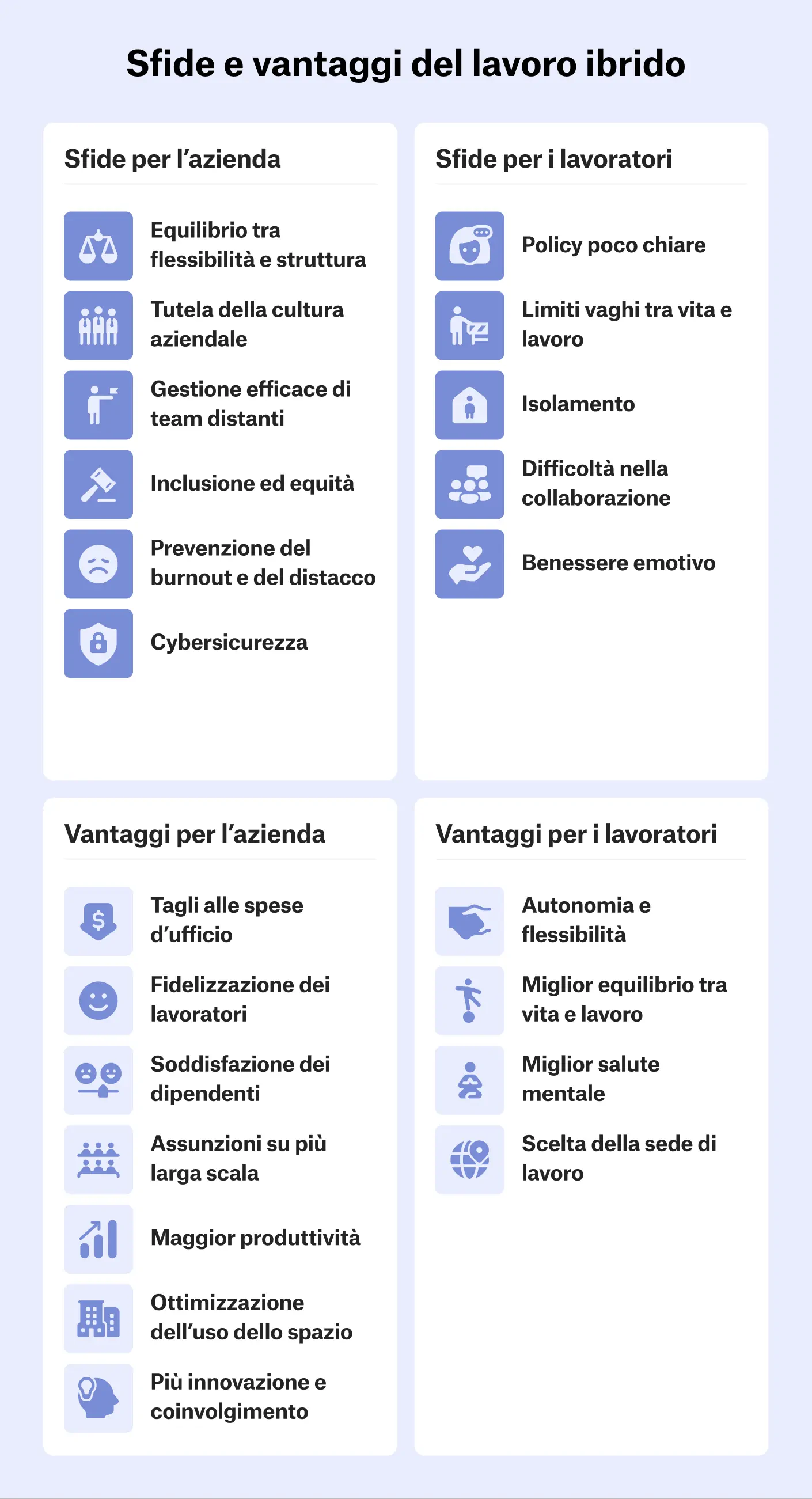
- Riduzione dei costi: non avere più bisogno di grandi superfici per l'ufficio permette di tagliare i costi di affitto e servizi.
- Maggiore fidelizzazione: più flessibilità riduce il rischio di burnout, l'assenteismo e il turnover.
- Maggiore soddisfazione: le policy pensate per i dipendenti creano un clima di fiducia e fedeltà.
- Ampliamento del bacino di talenti: il reclutamento si estende oltre i limiti geografici.
- Miglioramento della produttività: la scelta dell'ambiente di lavoro porta a risultati migliori.
- Uso efficiente dello spazio: la programmazione intelligente ottimizza la capacità dell'ufficio.
- Maggiore innovazione: la combinazione di collaborazione a distanza e di persona stimola il coinvolgimento.
Vantaggi del lavoro ibrido per i dipendenti
- Autonomia e flessibilità: libertà di lavorare nelle ore di massima produttività.
- equilibrio tra vita privata e lavoro: meno pendolarismo e più tempo per le esigenze personali.
- Sostegno alla salute mentale: meno stress e fatica grazie ad accordi flessibili.
- Scelta dell'ambiente: possibilità di lavorare da casa, in spazi di coworking o in ambienti preferiti.
Quali sono le maggiori sfide del lavoro ibrido?
Il lavoro ibrido crea flessibilità e libertà, ma comporta anche nuovi ostacoli e sfide. Secondo Gallup, le tre sfide principali del lavoro ibrido sono l'accesso limitato agli strumenti e alle risorse necessarie (31%), l'indebolimento del senso di connessione con la cultura aziendale (28%) e la riduzione del lavoro di squadra (24%).
Le sfide del lavoro ibrido per i dipendenti
- Politiche poco chiare: confusione su orari, disponibilità e norme di comunicazione.
- Confini tra vita privata e lavoro: confine incerto tra il proprio tempo personale e quello professionale.
- Isolamento sociale: l'interazione limitata con i propri colleghi indebolisce le relazioni e il morale.
- Ostacoli alla collaborazione: strumenti e sistemi condivisi incompleti riducono l'efficienza.
- Benessere emotivo: poca connessione può far sentire i dipendenti isolati.
Una grande sfida per molte aziende è combinare il mondo pre-pandemia con l'approccio full-remote degli ultimi mesi e ottenere il meglio da entrambi.
– Mario Niederhauser, Consultant presso beetroot
Sfide del lavoro ibrido per il datore di lavoro
- Equilibrio tra flessibilità e struttura: i modelli standard non soddisfano le diverse esigenze.
- Erosione della cultura aziendale: la scarsa presenza in ufficio indebolisce l'identità condivisa e l'engagement.
- Lacune della leadership: la gestione di team ibridi richiede nuove capacità di comunicazione e fiducia.
- Inclusione ed equità: i dipendenti che lavorano da remoto rischiano di perdere visibilità e opportunità.
- Rischio di burnout: una scarsa pianificazione aumenta lo stress e il distacco.
- Rischi per la sicurezza informatica: il lavoro distribuito aumenta il rischio di violazione dei dati.
Qualche idea per superare le sfide del lavoro ibrido
Le sfide del lavoro ibrido possono essere superate con un approccio proattivo che bilanci le esigenze dei dipendenti, la cultura e la tecnologia. La chiave è trattare il lavoro ibrido come un sistema da gestire, non come un problema da risolvere, utilizzando dati, policy chiare, progettazione consapevole e leadership inclusiva. Un'attenzione particolare al coinvolgimento dei dipendenti farà sì che i team rimangano in contatto e si sentano adeguatamente accompagnati.
- Raccogli il feedback dei dipendenti: coinvolgi i tuoi team nella definizione delle politiche ibride per garantire che riflettano le reali esigenze e preferenze.
- Sfrutta la workplace analytics: utilizza i dati per ottimizzare gli strumenti, l'utilizzo degli spazi e i modelli di comunicazione.
- Crea linee guida personalizzate: aggiorna regolarmente le policy di lavoro ibrido affiché rispondano alle esigenze in continua evoluzione dei dipendenti e dell'azienda.
- Riprogetta il tuo spazio ufficio: concentrati sulla creazione di spazi adatti alla collaborazione e adatta le dimensioni del tuo ufficio in modo ragionato.
- Ottimizza la tua infrastruttura digitale: investi in strumenti intelligenti (ad esempio, in un'app di Desk Booking e strumenti di comunicazione) che sostengano dei modelli di lavoro flessibili.
- Promuovi una comunicazione attiva: mantieni i dipendenti informati attraverso riunioni regolari, aggiornamenti chiari e opportunità di dare feedback aperti.
- Promuovi una cultura favorevole all'ibrido: assicura pari accesso alle opportunità e alle gratificazioni, indipendentemente dal luogo di lavoro.
- Costruisci un'interazione sociale strutturata: organizza chat virtuali per un caffè, incontri fuori dall'ufficio e attività di team building per ridurre l'isolamento.
- Pensa al benessere dei dipendenti: promuovi l'equilibrio tra vita privata e lavoro attraverso orari flessibili, gestione del carico di lavoro e risorse per la salute mentale.
Come mettere in atto una strategia di lavoro ibrido
Affinché il lavoro ibrido abbia successo, bisogna definire una strategia chiara, una struttura e prevedere un adattamento continuo. Senza un'attenta pianificazione, anche i modelli ibridi creati con le migliori intenzioni possono portare a confusione, disuguaglianza o distacco. Utilizza questa roadmap per progettare e perfezionare il tuo approccio ibrido.
1. Scegli un modello di lavoro ibrido
Decidi cosa significa "lavoro ibrido" per la tua azienda. Sarà office-first, remote-first, orario fisso o at-will? O qualcos'altro di completamente diverso? Adatta il tuo modello di lavoro ibrido per soddisfare i tuoi obiettivi di business, i ruoli e le preferenze della forza lavoro.
2. Definisci un programma di lavoro ibrido
Definisci le aspettative in merito ai giorni in ufficio, alla flessibilità da remoto e alla disponibilità. Assicurati che ci sia coerenza tra i team, pur lasciando spazio alle esigenze individuali e di reparto. Un programma di lavoro ibrido ben definito è un ingrediente fondamentale per un lavoro flessibile di successo.
3. Definisci la tua policy di lavoro ibrido
Definisci una policy chiara sul lavoro ibrido che specifichi i requisiti di ammissibilità, le aspettative, le misure di performance e le linee guida per la comunicazione. Quindi condividi queste linee guida con i tuoi dipendenti per assicurarti che tutti siano sulla stessa lunghezza d'onda e comprendano le aspettative, gli strumenti e i canali di supporto.
4. Rendi possibile una leadership ibrida efficiente
Metti a disposizione dei momenti di formazione per la gestione ibrida, la comunicazione asincrona e la collaborazione digitale. Autorizza manager e team leader a definire aspettative chiare, per gettare le basi della fiducia e misurare il successo in base ai risultati effettivi. La leadership in un ambiente di lavoro ibrido funziona diversamente rispetto al lavoro in ufficio, quindi è necessario prepararsi di conseguenza.
5. Investi negli strumenti giusti
Fornisci ai tuoi team un'infrastruttura digitale affidabile, che includa piattaforme di comunicazione, strumenti di project management e accesso sicuro a file e sistemi, e scegli la soluzione di lavoro ibrido giusta per la tua azienda. L'uso della tecnologia e degli strumenti per il lavoro ibrido (o la loro mancanza) può determinare il successo o il fallimento del lavoro ibrido.
6. Ottimizza il tuo spazio di lavoro fisico
Ripensa il tuo spazio ufficio fisico e riprogettalo per adattarlo all'uso ibrido. Predisponi postazioni di lavoro flessibili, zone per la collaborazione e sale riunioni ben attrezzate per consentire un'interazione in presenza e da remoto senza interruzioni.
7. Monitora, misura e adatta
Sfrutta i feedback, le metriche di performance e l'analisi del luogo di lavoro per valutare come sta funzionando la tua configurazione ibrida. Questo ti consente di perfezionare continuamente policy, orari e strumenti per tenere il passo con l'evoluzione delle esigenze della forza lavoro e dell'azienda, e apportare miglioramenti ove necessario.
Conclusione: vale la pena di provare il lavoro ibrido?
Il lavoro ibrido è una solida strategia a lungo termine per costruire un luogo di lavoro più flessibile, resiliente e incentrato sulle persone. Se fatto bene, può aumentare la produttività, ridurre i costi e mantenere il tuo team coinvolto. Ma per avere successo, non basta tirare a indovinare.
Perché funzioni bene, il lavoro flessibile richiede struttura, chiarezza e la giusta mentalità. Nel prossimo capitolo, approfondiremo uno dei passaggi più importanti: la definizione del tuo modello di lavoro ibrido. Continua a leggere per scoprire diversi tipi di modelli di lavoro ibrido, i loro pro e contro, e capire come scegliere il modello migliore per la tua organizzazione.
FAQ sul lavoro ibrido
I dipendenti preferiscono il lavoro ibrido?
Sì, una schiacciante maggioranza dei dipendenti preferisce lavorare in un ambiente ibrido. Infatti, il 60% dei dipendenti che possono lavorare da remoto preferisce un accordo di lavoro ibrido, mentre solo circa un terzo desidera un lavoro completamente da remoto e meno del 10% preferisce il lavoro completamente in sede (Fonte: Gallup).
Qual è la differenza tra lavoro flessibile e lavoro ibrido?
Il lavoro flessibile si riferisce a qualsiasi accordo che dia ai dipendenti il controllo su come, quando o dove lavorano, come ad esempio orari flessibili o settimane compresse. Il lavoro ibrido è un tipo specifico di lavoro flessibile in cui il tempo è suddiviso tra sedi remote e in ufficio.
Quante persone lavorano in modalità ibrida o da remoto?
A partire dal 2025, Gallup riporta che il 51% dei dipendenti statunitensi che possono lavorare da remoto lavora in modalità ibrida, il 28% completamente da remoto e il 21% completamente in sede. Per il Regno Unito, un rapporto di un consulente Forbes ha mostrato che il 24% dei lavoratori del Regno Unito aveva accordi ibridi, il 39% lavorava esclusivamente da casa e il 25% solo in ufficio.
Come coinvolgere i dipendenti ibridi?
Mantieni una comunicazione chiara con riunioni regolari, aggiornamenti e feedback aperti. Costruisci una cultura favorevole all'ibrido in cui tutti abbiano pari opportunità e si sentano parte della missione più grande. Crea occasioni di incontro come "caffé virtuali" e appuntamenti fuori dall'ufficio. Contribuisci al benessere con flessibilità e risorse per la salute mentale. Festeggia spesso i successi e dai alle persone spazio per crescere, fidandoti che raggiungano i risultati.
Quali tendenze stanno dando forma al futuro del lavoro ibrido e quale sarà il loro impatto sugli spazi ufficio e la cultura aziendale?
Con il lavoro ibrido, gli uffici sembrano più dei centri per la collaborazione che degli spazi dove trovare la propria scrivania ogni giorno, poiché la flessibilità, i migliori strumenti digitali e il risparmio sui costi guidano il cambiamento. Questo cambiamento sta spingendo le aziende a costruire la cultura attraverso incontri mirati, sforzi per il benessere dei dipendenti e stili di lavoro personalizzati che mantengono le persone felici, connesse e produttive.
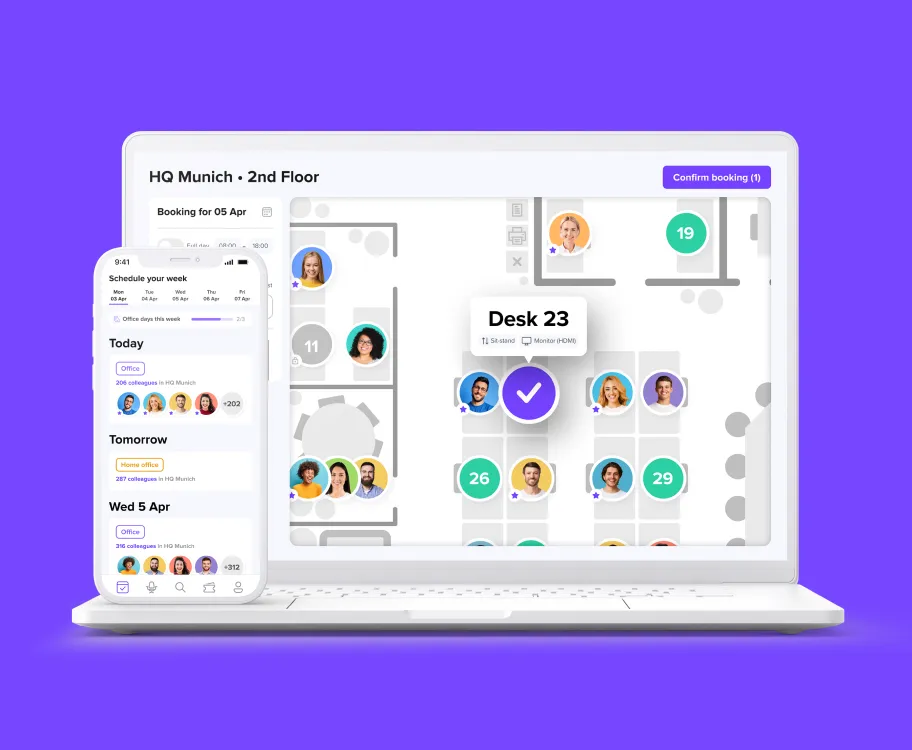
Gestisci facilmente il lavoro ibrido con deskbird
- Coordina le policy ibride, i giorni in ufficio e la presenza del team
- Utilizza i dati in tempo reale per ottimizzare l'utilizzo dell'ufficio ed evitare scrivanie vuote
- Permetti al tuo team di fare chiarezza su chi è presente e chi lavora da remoto
Abbiamo la fiducia di oltre 100.000 dipendenti in tutto il mondo