

15 workplace technology trends shaping the future of work
Technology has become the heartbeat of the modern workplace, driving efficiency, flexibility, and connection. From AI and automation tools to workplace management software, digital tools are shaping how teams collaborate, use office space, and stay engaged. The workplace of the future is here, and it’s data-driven, hybrid, and human-centered.
Key takeaways:
- Technology drives flexibility and performance: AI, automation, and cloud-based platforms streamline workflows and enable smarter, faster collaboration.
- Hybrid is the new standard: Hybrid work has become the default working model in many organizations, highlighting the importance of tools like deskbird that connect people, spaces, and data to optimize flexibility and productivity.
- The future of work is human-centered: As technology advances, emotional intelligence, inclusivity, and sustainability will define workplace success.
The status quo: How technology is shaping the modern workplace
Technology has turned into the cornerstone of the modern workplace, effectively shaping how we collaborate, manage space, and stay productive. From AI and automation to cloud-based platforms and IoT sensors, digital tools are transforming everyday operations into smarter, data-driven workflows and systems. In fact, 91% of businesses plan to increase investment in tech-enabled offices, reflecting how essential these tools have become for efficiency, flexibility, and employee engagement in the era of hybrid work.
What are the latest trends in digital workplace technology?
From AI, automation, and hybrid work tools to immersive learning platforms and smart office technologies, workplace technology is redefining our approach to productivity, flexibility, and employee well-being. As organizations navigate digital transformation, trends like AI-enabled efficiency, cybersecurity resilience, and human-centered design are paving the way for a new era of smarter, more inclusive workplaces.
1. AI makes the four-day workweek more achievable
According to tech.co, 93% of senior leaders at organizations that have deeply integrated AI into their operations are either exploring or have already implemented a four-day workweek. AI boosts efficiency by automating repetitive tasks, helping employees complete more work in less time, thereby enabling shorter workweeks that are both practical and productive.
2. Mobile technology enables true workplace flexibility
Mobile computing has untethered employees from traditional offices, empowering real-time collaboration from anywhere, which is a significant shift that supports diverse working styles and enhances work-life balance. The ability to access work systems and data through any device has driven a cultural shift towards workplace flexibility while improving job satisfaction for today's workforce.
3. Collaboration and cloud tools supercharge teamwork
Cloud platforms and collaboration tools have become the backbone of hybrid teamwork. They centralize communication, streamline workflows, and keep teams aligned across locations. Real-time updates and shared access to resources eliminate silos, speeding up decision-making and improving project efficiency.
4. AI enhances satisfaction and productivity
AI-driven tools are boosting engagement and efficiency by taking over mundane tasks. Employees can now focus on creative and strategic work, improving both job satisfaction and output. As AI adoption expands, its role in shaping smarter, more human-centric workplaces will only grow. When asked, 64% of workers said that access to AI workplace tools would boost their productivity.
5. Cybersecurity challenges grow with digital transformation
As organizations rely on increasingly interconnected systems, cybersecurity risks are rising. IT teams must stay vigilant and ensure that security is embedded into every layer of the organization’s digital infrastructure. Proactive threat detection, continuous updates, and employee awareness are now essential for protecting sensitive data.
🚨Read our full article about cyber risk management!

6. e-Learning drives continuous skill development
Electronic Learning and Development (e-L&D) platforms have made training more accessible and personalized. Employees can upskill anytime and anywhere by following self-paced programs that align with their individual goals. This flexibility fosters lifelong learning and supports adaptability in a rapidly changing job landscape.
7. Digital inclusion strengthens workplace diversity
Workplace technology has become a powerful driver of Diversity, Equity, and Inclusion (DEI). Remote work tools and adaptive technologies enable participation from employees with disabilities or those in remote areas, ensuring everyone can play a part in the professional landscape and contribute without restrictions, regardless of location or personal circumstances.
8. Technology reshapes work-life balance
Digital tools have improved workplace flexibility, but also blurred the line between work and personal life. While tech enables remote work and autonomy, constant connectivity can fuel employee burnout. The challenge ahead lies in using technology to support balance, not disrupt it.
9. Leadership evolves in the digital era
The rise of new workplace technologies demands a new kind of leadership. In today’s day and age, managers must be digitally fluent, adaptable, and empathetic to confidently guide teams through constant change. Strong digital leadership helps foster innovation, trust, and resilience in tech-driven organizations.
👥 Check out our guide on how to effectively lead a hybrid team!
10. Hybrid work tools make flexibility seamless
From desk booking software like deskbird to project management tools and communication apps, hybrid work tools have been pivotal in adopting more flexible working arrangements, bridging the gap between remote and on-site environments. They allow employees to plan their schedules, reserve spaces, and stay connected, supporting both autonomy and teamwork.

11. The “always-on” culture challenges mental health
Technology has also fueled unhealthy patterns such as constant availability and digital overload. The pressure to respond immediately to emails, messages, and other requests can lead to stress and burnout. Building healthier digital habits and promoting mindful disconnection are key to protecting employee well-being.
12. Immersive tech will redefine how we learn and collaborate
Augmented, Mixed, and Virtual Reality (AR, MR, VR) are transforming how employees interact and learn. From immersive training sessions to virtual brainstorming, these tools build a bridge between physical and digital spaces and enable deeper collaboration and hands-on skill development, regardless of location.
13. The metaverse will revolutionize learning and remote teamwork
The metaverse is expected to revolutionize work by creating immersive, interactive spaces that enhance e-learning and development (e-L&D) and online collaboration. It will enable employees to learn through vivid, hands-on experiences that mirror real-life scenarios, boosting skill development and engagement. As for teamwork, the metaverse will break through the confines of current digital communication tools.
14. Automation and AI will reshape the job market
Dell Technologies estimates that 85% of jobs in 2030 haven’t been invented yet, reflecting a seismic shift due to automation, AI, and robotics. These technologies are expected to rebuild the job landscape, replacing some positions while simultaneously generating new ones. As automation takes over routine tasks, new roles will emerge, particularly those demanding complex problem-solving, critical thinking, and creative capacities, abilities that machines can't reproduce. This predicts a new era of human-centric job opportunities and the need for adaptive skill sets.

The future of AI is not about replacing humans, it’s about augmenting human capabilities.
— Sundar Pichai, CEO of Alphabet Inc.
15. Emotional intelligence will define the future of work
With machines and algorithms taking over technical and routine tasks, human-centric capabilities such as creativity, adaptability, teamwork, and understanding become paramount. Employees will need to leverage these abilities to manage critical and creative thinking, effective communication, and provide an empathetic touch that technology cannot replicate. This will make emotional intelligence a vital determinant of professional success in a tech-dominated landscape.

How to start preparing today for the workplace of the future?
The future of work is already here, driven by AI, automation, and hybrid work models that continue to reshape how we collaborate and manage spaces. To stay ahead, companies must take proactive steps to align technology, people, and culture for long-term success.
1. Foster a culture of digital agility
Encourage continuous learning and upskilling to help employees stay comfortable with new tools and emerging technologies. Create an environment where experimentation and innovation are valued, ensuring teams remain flexible in the face of change.
2. Invest in scalable, integrated technology systems
Adopt digital platforms that can grow with your business. Focus on solutions that integrate seamlessly with existing tools, automate routine workflows, and provide real-time analytics to guide smarter decisions and improve operational efficiency.
3. Prioritize cybersecurity and data protection
As workplaces become increasingly digital, safeguarding information is non-negotiable. Implement robust security protocols, train employees in digital hygiene, and ensure compliance with data protection standards like GDPR and ISO 27001.
4. Redesign workspaces for flexibility and well-being
Rethink office layouts to support hybrid collaboration, flexibility, and employee comfort. Incorporate smart office technologies like sensors, ergonomic setups, and designs that focus on employee wellness to make the workspace both efficient and employee-centered.
5. Leverage workplace management platforms for flexible work
Finally, adopt a workplace management tool like deskbird to manage your hybrid work environment efficiently. These platforms help employees book desks, plan their hybrid workweeks, and coordinate in-office days, while giving managers access to real-time space analytics. This makes them a key part of creating a connected, adaptive workplace that’s ready for the future.
Workplace management tools like deskbird are at the heart of the modern office
In the office of the future, technology doesn’t just support people and operations, it connects them. As hybrid work, automation, and digital collaboration become the new standard, organizations need a central system that brings all the moving parts together. This is where workplace management tools come into play.
The importance of workplace management tools in the hybrid era
Workplace management platforms simplify day-to-day operations by automating repetitive tasks, optimizing office space and resource use, and facilitating seamless communication between hybrid teams. They consolidate key functions, such as desk and meeting room booking, visitor management, occupancy tracking, and analytics, into one intuitive system. By orchestrating other office technologies, such as IoT sensors or communication tools, these platforms ensure all the elements of the modern office work together.
deskbird is the all-in-one workplace management platform for hybrid organizations
deskbird’s all-in-one workplace management platform empowers companies to adapt their work environments to the needs of a hybrid workforce and manage their flexible offices effectively. The intuitive, easy-to-use platform combines functionalities that let hybrid teams:
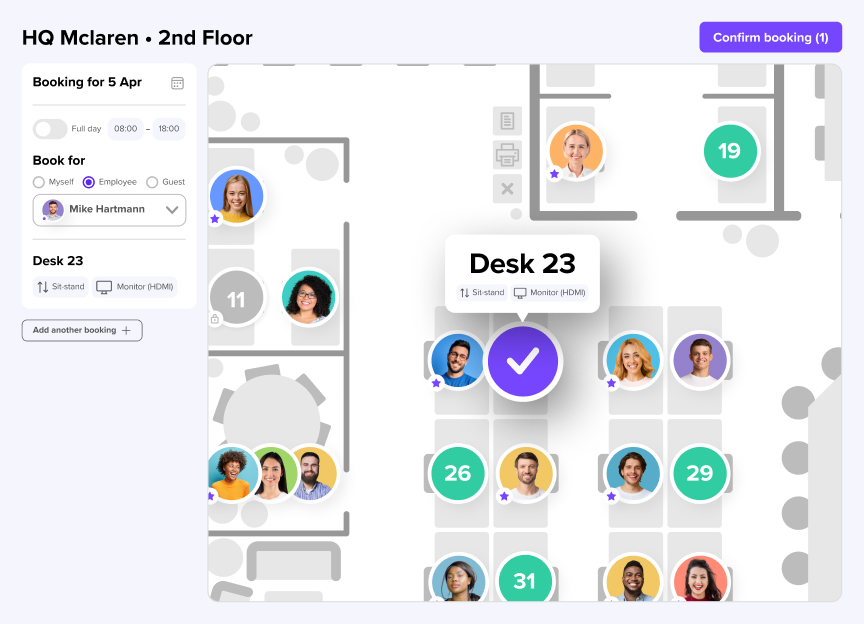
- Book desks and office resources and reserve meeting rooms in advance,
- Plan their hybrid work week and coordinate in-office days with colleagues,
- Visualize office occupancy and layouts through interactive floor plans,
- Create a seamless visitor experience and manage bookings and resources effortlessly, and
- Access workplace analytics to optimize office space and reduce costs.
Workplace technology trends and the new era of work: Balancing technology and the human touch
Technology has changed the way we work. It has redefined our day-to-day activities, expectations, and capabilities. Automation, AI, and virtual collaboration platforms have made work more efficient and allowed us to uncover a world where flexibility and digital literacy are paramount.
Yet, the true transformation lies in how technology empowers people. The organizations that will be most successful in the future will be those that blend innovation with empathy and leverage digital tools to enhance, not replace, human potential. As we look ahead, the modern workplace is set to thrive on adaptability, purpose, and a culture that values both digital fluency and emotional intelligence.

Frequently Asked Questions
What are the top workplace technology trends today?
Today’s biggest workplace technology trends center on AI-driven automation, hybrid work enablement, and smart, connected offices. Companies are adopting AI-native tools for data analysis and workflow optimization, immersive technologies like VR and AR for collaboration and training, and IoT-powered systems that make offices more efficient and sustainable.
How is AI being used in the workplace?
AI is automating repetitive tasks, supporting data-driven decisions, and enhancing employee experience. It can help streamline workflows, improve customer service through intelligent chatbots, and even enable productivity models like the four-day workweek, making workplaces both smarter and more human.
How can companies prepare for future workplace technology?
Businesses can prepare by investing in scalable, integrated systems, fostering digital agility through ongoing learning, and prioritizing cybersecurity. Redesigning offices for hybrid work and adopting workplace management tools further ensures your organization is ready to adapt as technology continues to evolve.
What is the role of workplace management tools like deskbird?
Workplace management tools serve as the orchestrators of the modern office. Platforms like deskbird connect people, spaces, and data and enable effortless desk and room booking, hybrid scheduling, and real-time analytics. They simplify workflows and operations, enhance flexibility, and create a more connected, people-focused workplace.
Run your office with advanced workplace management
Empower hybrid work with real-time visibility, cut wasted space with smart analytics and boost employee satisfaction.