Hybrid work leadership: How to effectively lead hybrid teams
A leadership playbook for managing hybrid teams: set clear expectations, build trust, and measure success based on outcomes.

Hybrid leadership means managing people across office and remote locations with inclusion, trust, and a focus on outcomes. Key skills are communication, empathy, flexibility, and active listening. The biggest risk is proximity bias: favoring in-office employees unconsciously. Leaders who evaluate on results, communicate transparently, and build structured connection keep hybrid teams engaged and high-performing.
Key takeaways:
- Focus on results, not hours or time spent at the desk.
- Lead with empathy and an inclusive mindset to keep all team members equally supported and promote engagement.
- Watch out for presence bias and give employees equal opportunities and recognition regardless of their work location.
What is hybrid leadership?
Hybrid leadership is a management approach designed for teams that work across both office and remote locations. It blends in-person and remote leadership practices with a focus on connection, equity, and outcomes over presence. At its core, it’s a leadership style built for flexibility which blends the strengths and requirements of both in-person and remote leadership, with an emphasis on fostering connection and adapting to the diverse needs of a hybrid workforce to ensure productivity and team cohesion.
How does hybrid leadership differ from traditional approaches?
In contrast to traditional on-site environments, hybrid leaders can't rely on walking around the office to stay in touch with their teams. This difficulty is one reason why only 15% of managers are comfortable leading hybrid teams. Compared to in-office or remote-only leadership, hybrid leaders need to overcome additional challenges that come with flexible work. This includes:
- Collaboration and communication,
- Drop in engagement and connection,
- Tendency towards micromanagement,
- Inequalities due to presence bias,
- Silo formation and isolated teams, and
- Cybersecurity risks.
What skills does a hybrid leader need?
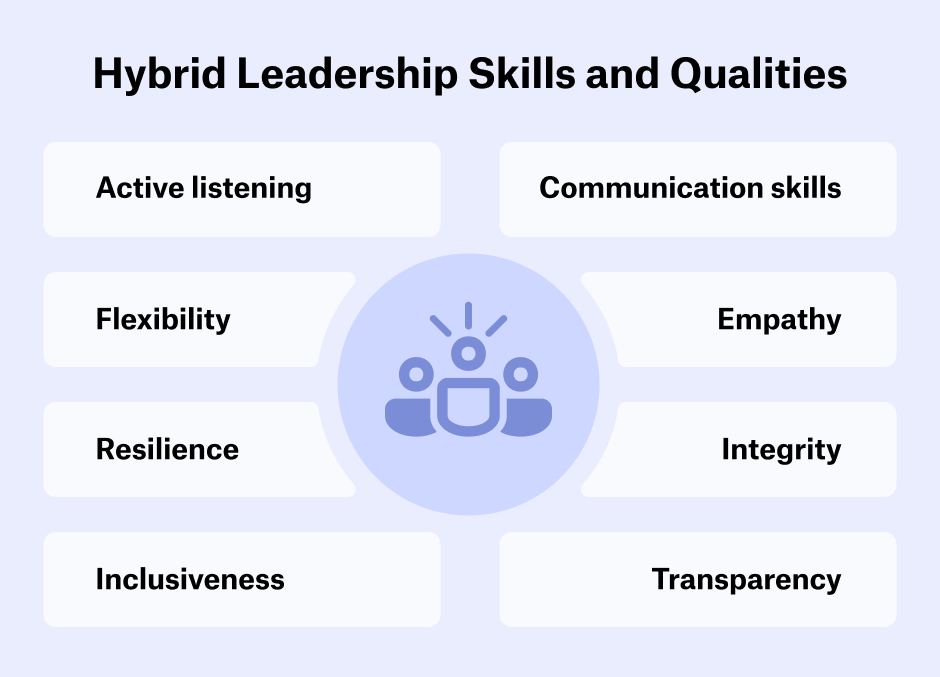
Leading hybrid teams requires a new set of leadership skills and qualities. Due to the intrinsic challenges of hybrid work, hybrid leaders must be more intentional about visibility, connection, and support and show strong communication skills, empathy, flexibility, and inclusiveness.
1. Transparency and strong communication skills
Hybrid leaders need to express ideas in a way that’s easy to understand, whether it’s via video, in an email, or in a face-to-face meeting in the office. This means being concise and to the point, but also making space for dialogue so team members feel included in the conversation.
2. Empathy
Empathy in hybrid leadership is about genuinely understanding your team’s challenges, motivations, and perspectives. When leaders lead with empathy, they make people feel seen and supported, which strengthens morale and engagement. Since 70% of team engagement is attributable to the manager, leadership is a powerful driver.
What I find most important in New Work and New Leadership is humanity, that is, closeness and connectedness. That means actively engaging with my employees as a manager, maintaining contact and asking how people are doing, what they need, where they can use help.
– Nicole Kopp, Founder at GoBeyond
3. Flexibility
Flexibility means being ready to adapt your leadership style, priorities, and processes to suit changing needs and differences between team members. By staying open to new approaches, leaders can keep their teams productive and motivated despite shifting circumstances.
4. Integrity
Integrity is how you build trust in hybrid work environments. Hybrid teams will only have trust in their leader if words match actions. It’s only when leaders deliver on promises and act with honesty that they can reassure their team that they can rely on their guidance and decisions.
5. Inclusiveness
Inclusiveness is a key quality for leaders in hybrid environments because they need to make an intentional effort to make sure that everyone’s voice gets heard. Leaders who have a mindset that values diverse perspectives and who prioritize inclusivity create a sense of belonging that drives engagement and performance.
6. Active listening
Active listening as a hybrid leader means giving your full attention, asking clarifying questions, and showing that you value what’s being said. It’s a powerful way to build trust and uncover hidden messages and cues that might otherwise be overlooked.
7. Resilience
Resilient leaders stay calm, positive, and focused on solutions—even when hybrid work throws tech hiccups or sudden schedule changes at them. This steady mindset not only helps solve problems faster but also inspires confidence in your team.
Hybrid leadership best practices
In order to effectively lead a hybrid team, managers need to follow an outcome-based leadership and performance management approach, prioritize inclusive and transparent communication, supply the right tools, be available for their teams, and actively build connection and team culture.
1. Follow an outcome-based leadership approach
Outcome-based leadership means managing and evaluating teams based on results they deliver rather than how many hours they work, where they work from, or how visible they are to their manager. In practice, this approach involves setting clear goals and deliverables and measuring project success by outcomes.
2. Keep performance management in your hybrid team fair and transparent
Performance management in a hybrid team should focus on what people achieve, and not on how many hours they work in a day. Set transparent, measurable objectives and keep expectations the same for both remote and in-office team members. Have regular check-ins (not just the yearly review) to talk about progress, share feedback, and tackle any issues that might turn into roadblocks early.
3. Build trust in remote teams
Be consistent in your words and actions and transparent about your decisions. Show empathy for different working situations and create regular opportunities for two-way communication. Nurturing employee trust creates a stronger sense of connection, fuels collaboration, and keeps team members engaged and confident in the team’s overall direction.
For a hybrid work model, the values of trust and reliability are particularly important. I need to have confidence that my employees will work reliably at home, even though I'm not standing right behind them looking over their shoulder.
– Nicole Kopp, Founder at GoBeyond
4. Review your communication strategy
Adapt your communication strategy by asking yourself if your current setup really supports your workflows, if the rules are clear, and if employees have access to the communication tools they need. When communication is clear and supported by the right tools, hybrid teams can work together effectively—no matter where they work.
5. Align technology with workforce needs
Review your current tech stack to ensure that it supports equal productivity from all work locations and that it’s easy to use for everyone. The right combination of communication and project management tools and a well-working desk booking system can make a big difference in hybrid efficiency.
6. Be available and prioritize an employee-centric approach
Hybrid leaders need to be equally available to both remote and on-site employees. Regular check-ins show you care about their well-being and help you understand how to make their work easier and more effective.
7. Strengthen team bonds and hybrid team culture
To keep team bonds strong, you need to make additional efforts to foster connection. A strong corporate culture paired with regular team activities (e.g., volunteering, hiking, or gaming tournaments) helps employees build genuine relationships.
Hybrid team communication tips
To improve hybrid team communication, you need to set clear guidelines and expectations for communication standards and technology use, make hybrid meetings more inclusive for remote joiners, coordinate team-based in-office days, and promote an open feedback culture.
- Set clear guidelines: Define communication channels, response times, and meeting etiquette in your hybrid work policy.
- Make meetings inclusive: Ensure remote participants are actively involved through tech checks, shared tools, and equal speaking opportunities.
- Coordinate office days: Align schedules so teams can connect in person for spontaneous collaboration and stronger relationships.
- Encourage feedback: Collect input regularly through conversations and surveys to adapt leadership and improve team experience.
How to avoid proximity bias through inclusive hybrid leadership
Proximity bias is a common issue in hybrid work environments. It happens when leaders unconsciously give more opportunities or recognition to people they see more often in the office. This can create a “two-tier” culture where in-office employees get better assignments, more feedback, and often also faster promotions. Leaders can prevent proximity bias by applying inclusive practices that ensure equal opportunities, recognition, and visibility for both remote and in-office employees.
- Evaluate fairly: Base recognition, performance reviews, and promotions on measurable output and impact, not physical presence.
- Balance recognition: Regularly check whether praise, feedback, and high-value assignments are equally distributed across remote and on-site staff.
- Design inclusive meetings: Use practices like calling on remote participants first, rotating speaking opportunities, and tracking airtime to ensure equal voice.
- Communicate intentionally: Share key updates in writing and through multiple channels so all employees have equal access to information.
- Train for bias awareness: Educate managers and team leads on unconscious bias and equip them with tools to spot and correct proximity-driven behaviors.

How deskbird supports hybrid team management
deskbird supports hybrid team management by giving leaders and employees clarity on schedules, easy room and desk booking, coordinated in-office days, policy compliance tools, and analytics on space usage and employee preferences.
1. Clarity on your team’s schedule
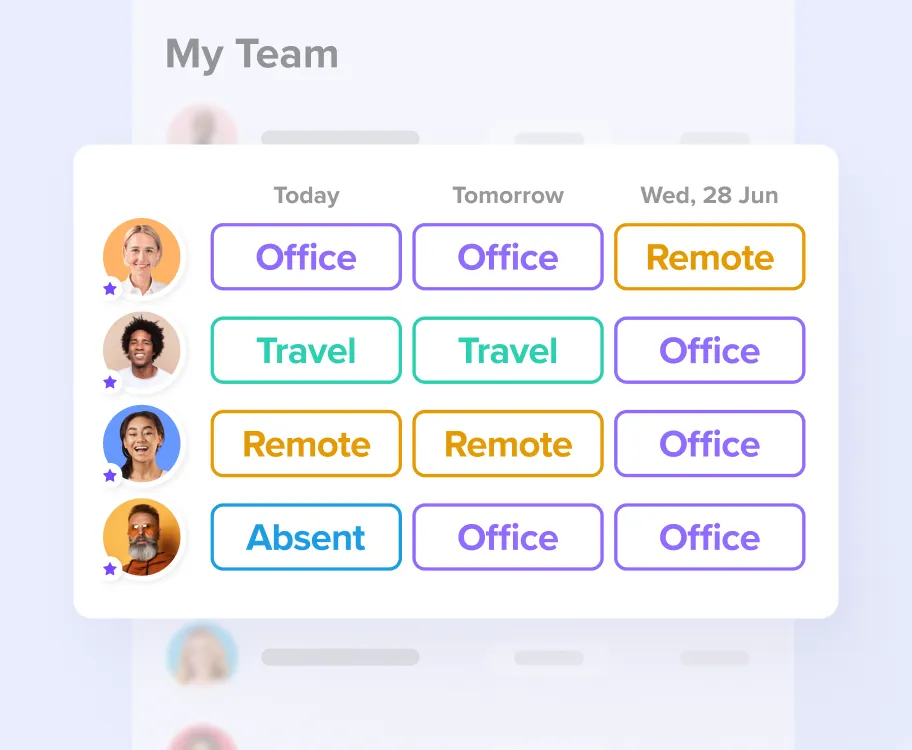
In hybrid teams, knowing who’s in the office and who’s working remotely is key. deskbird’s week planning feature lets you instantly see where everyone is working and when, with notifications if plans change so you can adjust accordingly.
2. Simplified workspace booking
A flexible office needs a smooth desk and room booking system. With deskbird, employees can reserve the desks, meeting rooms, or resources that best fit their needs even inside tools like Microsoft Teams. Whether that’s a desk in a quiet corner, a spot in the open space, or a collaborative meeting area.
3. Coordinated in-office days for teams
deskbird makes it easy to align schedules so teammates can come in on the same days for projects that benefit from in-person work. By sharing and viewing each other’s planned in-office days, teams can coordinate to boost productivity and connection.
4. Streamlined hybrid work policy management
Leading hybrid teams also involves monitoring if company policies around remote and in-office days are followed and if the set rules work for everyone. With hybrid work policies in deskbird, managers and team leaders can easily define attendance rules for their teams, track compliance, and approve schedule changes as needed.
5. Analytics to understand office utilization and employee preferences
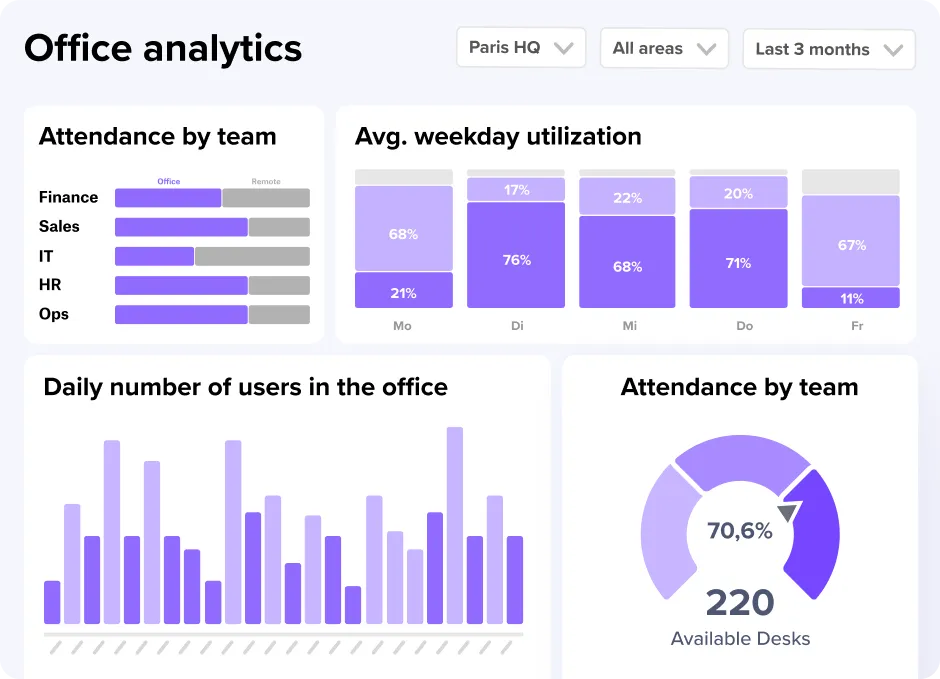
deskbird’s analytics help you understand exactly how your office space is used and gain insights into your team’s booking behavior. You can spot patterns (e.g., a data analyst always booking the same quiet desk in the corner) and make adjustments to improve comfort, efficiency, and the overall employee experience.
6. Cost savings that can be reinvested in your hybrid team
Whether through reduced office space or lower cleaning, utility, and maintenance costs for unused areas, deskbird helps businesses save money while embracing flexible work. The money you save by shifting to a hybrid work model can be used for projects, events, or initiatives that promote employee well-being or team bonding.
Conclusion: Hybrid work demands a new type of leadership
If they want to thrive in a hybrid environment, leaders need to combine flexibility, structure, and empathy and tailor their leadership style to meet the needs of teams who work in different locations and at different times. In hybrid settings, communication, trust, and well-being are essential to leadership success, as are tools and technology.
The right tools make collaboration easier, keep performance tracking fair, and help leaders stay connected without micromanaging their teams. In the next chapter, we'll dive deep into hybrid work software and tools. Read on to discover how hybrid work solutions optimize space, reduce friction, and support every team member.
Hybrid Work Leadership FAQs
What are the characteristics of a hybrid leader?
A successful hybrid leader is adaptable, communicative, and inclusive. They focus on outcomes over presence, build trust across locations, and ensure all team members feel equally supported, connected, and valued, whether they’re in the office or working remotely.
Which type of leadership style is best in today's hybrid working environment?
An outcome-based, inclusive leadership style works best in hybrid setups. It balances flexibility with clear expectations, prioritizes results over hours logged, and actively removes barriers between remote and on-site employees.
What is proximity bias and how does hybrid leadership address it?
Proximity bias is the tendency to favor employees who are physically visible in the office, giving them better assignments, more feedback, or faster promotions than remote colleagues. Hybrid leaders address it by evaluating performance on measurable outcomes rather than presence, distributing recognition equally across locations, designing inclusive meetings where remote participants have equal voice, and training managers to identify and correct bias-driven decisions.
What skills are essential for managers to possess in the hybrid working model?
Core skills include clear communication, empathy, adaptability, active listening, and resilience. Managers also need to be comfortable with digital tools, practice inclusivity, and focus on results to keep hybrid teams productive and engaged.
How can leaders build trust and connection in hybrid teams?
Leaders build trust by being consistent, transparent, and empathetic. Regular check-ins, clear communication, and active listening help employees feel supported and included. When leaders follow through on commitments and recognize contributions equally across locations, they create stronger connection, engagement, and team loyalty in hybrid environments.
Confidently manage your hybrid teams with deskbird
- Help employees coordinate better and make the most of office days
- Gain team-wide visibility into who’s working where, every day
- Empower your teams to plan their hybrid week with confidence
Trusted by 100,000+ employees worldwide