

Signs of micromanagement and how to address them
When a manager demands approval for every email, redoes completed work, or requires end-of-day status reports for tasks that don't need them, they're not being thorough. They're micromanaging. This controlling leadership style shows up in recurring manager behaviors, like requiring validation for every step, refusing to delegate, and obsessing over details, as well as employee reactions, like losing initiative, disengaging, or quitting. This article explains how to recognize micromanagement from both sides, why it happens, and what employees and managers can do to shift toward trust-based leadership that supports autonomy without losing visibility.
TL;DR
Micromanagement shows up in two ways: manager behaviors (demanding approval for every step, refusing to delegate, obsessing over details) and employee reactions (losing initiative, disengaging, or quitting). The root causes often include fear of failure, lack of trust, or pressure from above. To address it, employees can proactively build trust and set communication expectations, while managers should focus on outcomes rather than oversight. Workplace tools that provide transparency without surveillance help teams collaborate without the control.
What is micromanagement?
Micromanagement is a leadership style where managers excessively control or closely observe their employees' work. Rather than focusing on outcomes, a micromanager fixates on how tasks are completed. They often require approval for every step along the way.
This differs from appropriate supervision. Good managers provide guidance, set expectations, and check in periodically. Micromanagers hover, second-guess decisions, and struggle to let employees work independently.
[Table1]

12 leadership practices that are signs of micromanagement
Leaders who micromanage their teams are often controlling, give overly detailed instructions, refuse to delegate tasks to others, and don't believe employees can accomplish projects independently. Here's an overview of typical leadership behaviors that are signs of micromanagement.
1. Requiring validation for every step
The most common sign of micromanagement is the need for supervisors to validate every action their team members take. They want to know everything beforehand. They can quickly get irritated if projects move forward without their approval. This leadership style is often called "helicopter management" and it lleaves employees feeling oppressed and distrusted, and it negatively impacts innovation, engagement, and performance.
2. Resisting change
Micromanagers reject new ideas simply because "it's always been done this way." This frustrates employees who come up with new ideas to improve processes. It also hurts the company. First, talented people look for new job opportunities where their opinions and ideas will be considered. Second, competitors who listen to their staff and accept that they can have great significance develop faster and stronger than you.
3. Giving overly detailed instructions
Micromanagement does not leave room for creativity and autonomy. Micromanagers often give their team members thorough and complex instructions before assigning tasks or projects. They have a clear idea of how things must be done, and they don't think it could be achieved otherwise. Giving recommendations is fine as long as it helps employees complete that mission and you encourage autonomy and initiative.
Discover how deskbird helps you boost hybrid work productivity and maximize efficiency.
4. Never being satisfied with deliverables
Constantly pointing out flaws instead of recognizing achievements is classic micromanagement.
By trying to control every step, micromanagers aim to avoid failure at all costs. They believe that if they catch every mistake, nothing will go wrong. But great supervisors understand that failure is an inevitable step to growth and success. Your team members sometimes forget something or could have done something differently. Focusing only on shortcomings makes employees feel undervalued and discourages ownership. Blaming a team because they failed to meet their goal does not help them learn or improve their way of working.
5. Obsessing over details instead of results
Instead of aiming for outcomes, micromanagers get stuck in every decision and detail. Wanting to be cc'd on all emails or attending every meeting reflects distrust and drains productivity. This is one of the biggest differences between micromanagement and macromanagement where managers focus on the destination and let their staff figure out the journey.
6. Withholding information from employees
Micromanagers often leave their employees in the dark about what's happening in the organization. Instead of promoting a transparent communication strategy, they keep information to themselves. Employees end up not knowing the big picture of their work. This creates inefficiency, with employees redoing tasks because they didn't get the needed input in the first place.

7. Dodging accountability
Team leaders who micromanage their people take credit when things go well but blame employees when they don't. This double standard erodes trust and divides teams. Real leaders share responsibility for both success and failure. Supporting each other in good and bad moments helps employees feel connected and motivated to thrive.
8. Refusing to delegate
Struggling to trust others, micromanagers prefer to do tasks themselves. They tend to believe that their coworkers cannot complete projects to the same standards, or even better than them. They worry about the consequences. Yet trusting employees in their abilities is essential. It creates reliable relationships, allows them to grow, and frees you to focus on other tasks.
Read more about the importance of trust in the workplace.
9. Redoing other team members' work
Micromanagers often redo tasks because they believe only their way is right. This typical micromanaging practice wastes time and damages morale for both employees and the company. They lose time because of their lack of trust in their coworkers. They end up creating a toxic work culture where people feel entirely unvalued and unrecognized for their skills.
10. Struggling with remote work
Flexible work exposes a micromanager's need for constant control. Without in-person visibility, they struggle to trust their team.
This shows up as demands for all-day online status, endless reports, or invasive monitoring tools ("bossware") that track idle time and screenshots. Others enforce badge-swipe quotas or tighten hybrid policies through tracking: a pattern called "hybrid creep."
These tactics signal distrust and undermine the foundation of healthy hybrid culture.
11. Demanding constant updates
Frequently requesting news regarding a project is a common sign of a micromanagement style. Leaders worry about project progress and missing deadlines. They panic if they can't control what is going on.
This often shows up as mandatory end-of-day status reports, daily logs, or multiple check-ins throughout the day. By acting like this, they put pressure on their peers and stress them out, too. Short periods of stress can happen. Constant updates shouldn't be part of the daily atmosphere at work.

12. Failing to give constructive feedback
A typical attribute of micromanagers is being quick to criticize but slow to share constructive feedback. They also struggle to listen to feedback from their team. As shown by research from Gallup, only 26% of employees strongly agree that the feedback they receive helps them do better work. As a manager, you cannot expect your team members to grow and meet your requirements without discussing their strengths and weaknesses with them.
Check out our customers' feedback about the deskbird app.
7 employee behaviors that signal micromanagement
Micromanagement shows through more than a manager's behavior. It also becomes visible in how employees react. A majority of employees have worked under a micromanager at some point, with different consequences on their behavior. When people feel over-controlled, they lose initiative, become disengaged, and eventually quit.
1. Giving up on initiative
Micromanaged employees stop proposing ideas and wait for instructions instead. They know their efforts will likely be overruled. So they seek approval for every step rather than acting autonomously. This leadership style kills the spirit of initiative among the workforce. In fact, research consistently shows that micromanagement significantly lowers employee morale, with studies reporting that the vast majority of micromanaged workers experience decreased motivation and engagement.
2. Showing low engagement
A lack of trust drains motivation. Over time, controlled employees lose energy and commitment, showing up just to complete minimum tasks. They come to work because they have to, not because they want to. You start to see workers doing the minimum amount of work requested and not going the extra mile. They know their ideas will be ignored anyway. Employee engagement falls because they no longer feel ownership of their work.
A silent team that only listens and doesn't give feedback is a sign of a toxic workplace. Employees who stay silent are demotivated, disengaged, or afraid of their boss. They become passive listeners instead of contributors, either out of fear, discouragement, or simple resignation. This silence stifles collaboration and slows growth.
3. Seeking approval over results
When pleasing the boss matters more than achieving outcomes, employees shift focus away from customers or company goals. Every interaction with the manager feels like an evaluation. This traps them in performance anxiety rather than productivity.
This often shows up when teams rely on employee productivity tracking software. Employees focus on appearing busy or keeping their status "green" rather than doing meaningful work.
4. Missing growth opportunities
Micromanagement is an obstacle to personal and professional growth. Micromanaged employees are rarely trusted to handle new responsibilities or projects. This leads to frustration, stagnation, and declining motivation to perform. People want to develop their skills and improve their career paths by learning new tasks. Micromanaged teams tend to be more limited in this regard.
5. Feeling unvalued and unrecognized
Micromanaged workforces often suffer from a lack of recognition from leaders. Micromanagers struggle with acknowledging good work and sharing it with their team. This makes coworkers feel bitter. Their efforts seem taken for granted, unseen, unappreciated, and unvalued. Send an employee satisfaction questionnaire focusing on leadership to detect signs of micromanagement early.
6. Deciding to quit
High turnover is often linked to micromanagement. When employees don't feel trusted, supported, or able to grow, they look elsewhere. According to a Trinity Solutions survey, 69% of employees considered changing jobs due to micromanagement, and 36% actually did.
If workers keep quitting, the leadership style in place is likely the issue. Those who don't leave officially often quiet quit instead, disengaging mentally while staying on the payroll.
7. Experiencing burnout and unhappiness
Constant control damages mental health. It leads to low job satisfaction and employee happiness levels in companies with micromanaging leadership. Employees lose confidence, feel infantilized, and struggle with stress until dissatisfaction turns into burnout. This hurts individuals and negatively impacts overall team performance.
Why do managers micromanage?
Understanding why micromanagement happens helps address it at the root. Most micromanagers don't set out to control their teams. The behavior often stems from deeper issues:
- Fear of failure: Managers who've been blamed for team mistakes overcorrect by trying to control every outcome.
- Lack of trust: Some managers struggle to believe others can meet their standards, so they hover instead of delegate.
- Past experiences: Managers who were micromanaged themselves repeat the pattern without realizing it.
- Pressure from above: When senior leadership demands constant updates, middle managers pass that pressure down to their teams.
- Perfectionism: A need for everything to be "just right" makes it hard to let go of details.
- Unclear expectations: When goals aren't well-defined, managers fill the gap with excessive oversight instead of better communication.
Recognizing these drivers is the first step toward change. Micromanagement is often a symptom of organizational or personal anxiety rather than malicious intent.
How is micromanaging toxic?
Micromanagement damages both employees and organizations. It undermines trust, limits creativity, and creates a toxic cycle. People feel disengaged and unmotivated. Over time, this leadership style reduces performance, weakens culture, and increases employee turnover. The most common negative effects of micromanagement include:
- Loss of creativity and innovation: Employees stop suggesting new ideas when they know they won't be valued.
- Lower self-confidence: Constant oversight makes people doubt their skills and second-guess decisions.
- Rising frustration: Employees feel their efforts don't matter, which fuels resentment.
- Declining motivation and purpose: Without trust or recognition, people only do the bare minimum.
- Falling productivity: Energy goes into meeting manager demands instead of achieving results.
- More interpersonal conflicts: Pressure and mistrust create tension among teams.
- Stress, anxiety, and burnout: Excessive control takes a toll on employee mental health and wellbeing.
What strategies can managers use to avoid micromanaging their teams?
To build a thriving workplace, managers must replace control with trust, autonomy, and open communication. Employee-centric leadership empowers teams to take initiative, grow, and perform at their best. Shifting from micromanagement to trust-based management practices is essential for long-term success. Here are some strategies and tips to counteract micromanagement.
- Adopt macromanagement: Focus on outcomes, not details. Give employees ownership, set expectations, and allow flexibility to drive creativity and accountability.
- Put employees at the center: Recognize contributions, encourage initiative, and create space for learning to build motivation and engagement.
- Support flexible and hybrid work:Trust is the foundation. Autonomy unlocks the real benefits of flexibility, such as higher productivity, satisfaction, and collaboration.
- Use workplace management tools that empower, not surveil: Adopt platforms that give employees control over their schedules and workspace while providing managers with transparency. Choose tools like deskbird that improve the employee experience without making people feel monitored or micromanaged.
- Invest in leadership training: Help managers spot micromanaging habits and learn healthier strategies that empower teams.
How employees can respond to micromanagement
If you're being micromanaged, you're not powerless. Here are practical strategies to deal with a micromanager while protecting your wellbeing and career:
- Build trust proactively. Share updates before your manager asks. Propose a regular check-in schedule for alignment. This reduces their anxiety and demonstrates reliability.
- Document your work. Keep records of your progress, decisions, and results. This protects you if issues arise and provides evidence of your contributions.
- Have a direct conversation. Talk to your manager about how you work best. Focus on outcomes, not accusations. For example: "I do my best work when I have space to problem-solve, then check in at key milestones."
- Escalate if needed. If micromanagement affects your health or performance and direct conversation hasn't helped, involve HR or a skip-level manager. Document specific examples first.
Not every micromanager will change. Sometimes the best response is protecting your boundaries while exploring other opportunities.
How deskbird supports trust and autonomy in hybrid work

Workplace management tools give employees the freedom to organize their workday. They also ensure managers keep visibility on space usage and collaboration. The key is transparency without surveillance.
With deskbird, teams can book desks, rooms, or parking spots in seconds. They can see who is on-site and plan their schedules without constant manager oversight. Employees control their own week planning. They choose when to come in and coordinate team days with colleagues. Managers get visibility into office attendance and space utilization through workplace analytics. This happens without the invasive tracking that erodes trust.
This approach stands in contrast to "bossware" tools. Those monitor idle time or enforce green status availability. deskbird provides the information leaders need to make smart decisions about space and collaboration. It treats employees like adults who can manage their own time.
TwentyCi faced the challenge of managing hybrid work while maintaining team connection and visibility into who would be in the office. By implementing deskbird, they achieved 80-85% adoption without chasing people, and employees now easily coordinate their schedules weeks in advance. The Head of People at TwentyCi summed up their philosophy:
Trust your people. Embrace flexibility and treat employees like grown-ups, and most of them will repay your trust in productivity.
Rob Taylor, Head of People at TwentyCi
This balance of autonomy and transparency builds trust and strengthens collaboration. It makes hybrid work smoother and more cost-efficient.
Are you ready to give more autonomy to your coworkers and develop an employee-centric culture? Request a free demo of the deskbird app to discover how to improve your hybrid teams' experience while saving costs.

Frequently Asked Questions
How can workplace management tools help mitigate micromanagement?
What's the difference between healthy oversight and micromanagement in hybrid work?
Can micromanagement be unintentional?
How do I talk to my boss about micromanagement?
Is employee monitoring the same as micromanagement?
How does micromanagement affect remote and hybrid teams?
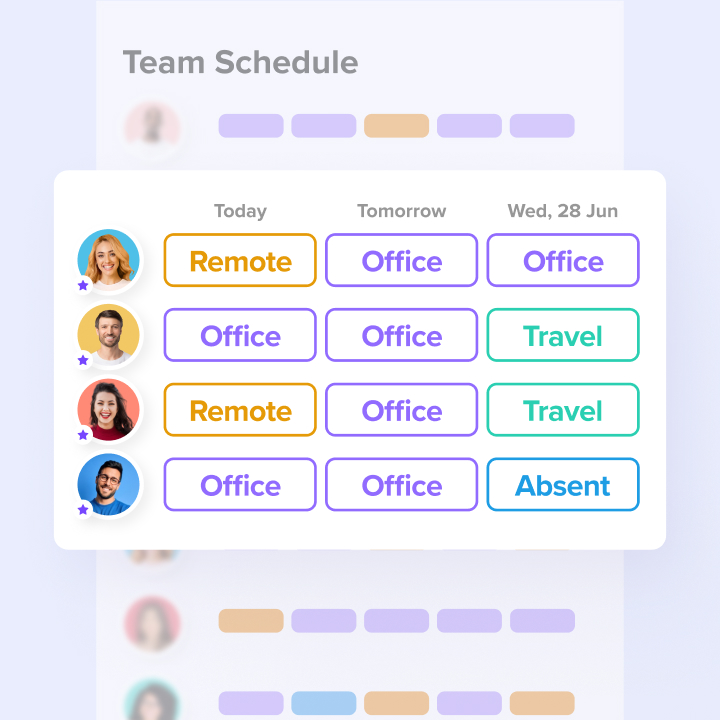
Give your team autonomy without losing visibility
- Employees book desks, plan schedules, and coordinate team days independently.
- Managers get real attendance and space data without invasive tracking.