

Sustainability in the workplace: 27 smart ideas
Sustainability in the workplace is about reducing your business’s environmental impact while boosting efficiency and employee well-being. Smart strategies range from using green technology and creating energy-efficient offices to supporting eco-friendly commuting options. Embedding sustainable practices into your daily operations helps you cut costs, strengthen your company culture, and improve the overall workplace experience.
Using technology to increase workplace sustainability (Ideas 1–6)
Technology is one of the most effective levers if you want to make your office greener. From smart energy systems to digital collaboration, the right tools can cut emissions and make sustainable habits easier for your employees.
Idea 1: Use smart and innovative technology
Smart office technology has made reducing energy consumption and carbon emissions easier, from sensor devices to intelligent plugs and automated facility systems. Tools for measuring sustainability are excellent for analyzing your economic, social, and environmental KPIs (Key Performance Indicators). AI technology also has a lot of solutions to offer to reverse our impact on the planet.

Idea 2: Switch to digital work
Digitalization saves paper and enables remote work, which reduces commuting-related emissions. Flexibility enables people to work from home more often and, therefore, reduces pollution caused by commuting. Research shows that working from home reduces greenhouse gas emissions by 29.11% compared to working in the office.
Idea 3: Reduce digital pollution
Digital activity also has a footprint, but small changes in habits can reduce digital pollution significantly. One e-mail emits 10 g of CO₂, and 35% of our e-mail box remains unopened. Nudge your staff to unsubscribe from irrelevant newsletters, minimize unnecessary emails, and use sustainable search engines like Ecosia.
Idea 4: Choose green web hosting
Switching to a sustainable hosting provider cuts energy waste and reduces reliance on fossil fuels. Traditional hosting consumes huge amounts of electricity, often from non-renewable sources. Green web hosting services use renewable energy, optimize data center cooling, and invest in eco-friendly practices. Going for a green option sends a clear message about your environmental commitment.
Idea 5: Go paperless
Reducing paper use conserves forests, water, and energy, while cutting office waste. Move to digital collaboration platforms, electronic signatures, and cloud storage. Where paper is still necessary, consider sustainable alternatives like erasable stone paper notebooks. A paperless office lowers costs, increases efficiency, and supports corporate sustainability goals.

Idea 6: Adjust screen brightness and use dark mode
According to Harvard, lowering screen brightness from 100% to 70% can save up to 20% of monitor energy use. Encourage employees to adjust display settings or switch to dark mode. This reduces electricity demand, extends device lifespans, and minimizes eye strain.
🌍 Learn more about digital transformation and sustainability!
Implementing sustainability across your office space (Ideas 7–10)
When you create a green workplace, you need to think beyond desks and meeting rooms. Kitchens, bathrooms, and common areas all offer opportunities to cut waste and save energy and implement sustainability across every corner of your office.
Idea 7: Shift to a green kitchen
A sustainable canteen or cafeteria reduces waste and promotes healthier, eco-friendly choices. Swap disposable cups, cutlery, and paper towels for reusable alternatives. Introduce refillable coffee pods, loose-leaf tea, and water dispensers instead of bottled water. You can also partner with local suppliers to offer organic, vegetarian, and vegan meals.
Idea 8: Choose eco-friendly cleaning products
Green cleaning products protect both employee health and the environment. Look for certified, eco-labeled cleaning solutions that are free of harmful chemicals. Replace disposable wipes with reusable cloths and mops to reduce waste and work with cleaning vendors who follow sustainable practices.
Idea 9: Make bathrooms zero-waste and energy-efficient
Smart bathroom upgrades lower water use, cut energy costs, and reduce waste. Install motion-sensor taps and water-efficient faucets to conserve water. Replace paper towels with energy-efficient hand dryers and use recycled or compostable bin liners.

Idea 10: Promote the 3 Rs
Embedding the “reduce, reuse, recycle” mindset builds a long-term culture of sustainability. Encourage employees to cut down on single-use items, repurpose office supplies and devices, and recycle consistently. Provide clearly labeled recycling bins and run awareness campaigns to keep the message alive.
☘️ Check out our 17 green challenges for the office!
Turning your office into a sustainable hub (Ideas 11–16)
A truly sustainable office goes beyond isolated initiatives. By rethinking energy use, office equipment, and employee habits, you can build a workspace that minimizes waste and maximizes efficiency.
Idea 11: Print less, or double-sided when unavoidable
Cutting down on printing saves paper, energy, and costs. Most documents can be stored and shared digitally with secure cloud tools. When printing is necessary, make double-sided and black-and-white settings your default. Pair this with awareness campaigns and print-quota policies to get employees to adopt paperless habits.
Idea 12: Switch all lighting to LEDs
LEDs slash energy use while improving light quality and longevity. LED bulbs consume up to 80% less energy than traditional bulbs and last far longer, reducing both costs and waste. Better lighting also enhances employee comfort and productivity.
Idea 13: Power your office with renewable energy
Choosing green energy dramatically reduces your office’s carbon footprint. Switching to a renewable energy provider cuts emissions linked to electricity use. You can also install on-site solutions like solar panels.

Idea 14: Build a workplace sustainability community
Engaging employees accelerates culture change and impact. Create a green team or sustainability workplace community where employees share ideas, host workshops, and launch eco-initiatives. This fosters ownership, strengthens team spirit, and deeply integrates sustainability into your company culture.
Idea 15: Consider a BYOD (Bring Your Own Device) policy
BYOD policies reduce e-waste and cut hardware costs. Allowing employees to use personal devices, supported by strong IT security, minimizes the need for extra equipment. Encourage repair and reuse of devices, aligning with the “reduce, reuse, recycle” principle.
Idea 16: Eliminate phantom power use
Unplugging devices prevents hidden energy waste. Electronics still draw power in standby mode, which is known as phantom energy. Educate employees on unplugging laptops, chargers, and monitors when not in use. Provide smart power strips or automatic shut-off plugs to make the habit effortless.
👉 Read our complete guide about sustainability in the office!
Encouraging sustainable commuting & travel options (Ideas 17–21)
How employees and teams move to and from the office has a huge impact on your company’s carbon footprint. By promoting greener commuting habits and rethinking business travel, you can reduce emissions and support employee well-being.
Idea 17: Choose ground transportation over flying
Flying creates the highest transport emissions, so opt for trains, carpools, or EVs instead. Whenever possible, replace business flights with train travel or shared car journeys. Encourage “super-commuters” to work remotely more often to cut their impact. According to a study, a 10 percent increase in people working remotely could reduce carbon emissions by 192 million tons per year.

Idea 18: Promote public transport for daily commutes
Buses, trains, and subways significantly cut CO₂ emissions compared to driving alone. Subsidize employee transit passes, provide clear commuting info, or reward staff who use public transport. These small incentives can shift commuting behavior while easing parking demand and lowering stress for workers.
Idea 19: Encourage biking and walking when possible
Active commuting is the greenest option. Install bike racks, showers, and safe storage to make cycling more convenient. Promote walking for those living nearby and consider offering mileage reimbursement for bike commutes. Healthier employees, lower emissions, and reduced traffic congestion make this a triple win.

Idea 20: Build a car-sharing community
Carpooling reduces emissions, saves money, and strengthens team connections. Match employees who live in the same areas using internal tools or apps. Support carpools with designated parking spots or fuel vouchers.
Idea 21: Keep corporate events local
Local events cut travel emissions while supporting nearby communities. Instead of flying to distant retreats, explore regional venues for company retreats and client events. Staying local reduces costs and showcases hidden gems near your headquarters.
💜 Have a look at our corporate event planning checklist for a successful gathering!
Boosting workplace sustainability through communication and action (Ideas 22–27)
Sustainability is most effective when it’s measured, communicated, and shared. By tracking your impact, engaging employees, aligning partners, and seeking certifications, you can build credibility and inspire change inside and outside your organization.
Idea 22: Measure your carbon footprint and set clear goals
Use carbon footprint calculators and sustainability KPIs to identify where your biggest impacts lie. From there, set realistic, measurable goals (e.g., reduce energy use by 20% in two years). Regular reporting helps you track progress and keep sustainability a continuous effort rather than a one-off project.
Idea 23: Share sustainability updates and tips with your team
Transparent communication motivates employees to take part. Hold quarterly meetings, send green newsletters, or launch a Slack channel for sustainability tips. Offer training so employees can apply eco-friendly practices at work and at home.

Idea 24: Align partners and suppliers with your standards
Sustainability requires collaboration across your supply chain. Build a sustainable business model and clearly communicate your environmental expectations to suppliers and partners. Include green requirements in contracts and prioritize vendors who share your values.
Idea 25: Inspire other organizations to act
Sharing your success stories amplifies your impact. Publish case studies, speak at industry events, or contribute articles about your green initiatives. By showing tangible results, you encourage other companies to adopt similar practices, multiplying the effect of your efforts across the corporate landscape.
Idea 26: Host workshops, webinars, and events
Education drives engagement and innovation. Organize sustainability-focused sessions to spread knowledge, brainstorm solutions, and motivate employees. Invite external experts for fresh perspectives. Events like these help embed sustainability into your culture while sparking new ideas.
Idea 27: Earn an environmental certification
Certifications validate your commitment and build trust. Frameworks like ISO 14001 or B Corp certificationprove that your company follows recognized sustainability standards. They strengthen your credibility with customers, partners, and employees while keeping your business accountable to continuous improvement.
How do workplace management platforms like deskbird help achieve sustainability goals?
The experience of Museums Galleries Scotland (MGS) shows how a workplace management platform like deskbird can reduce your office’s carbon footprint. Already committed to Scotland’s Net Zero 2045 initiative, MGS used deskbird to measure and reduce the carbon emissions generated by employee commutes. With deskbird, they gained access to both the evidence and the tools to turn daily commuting choices into measurable progress and was able to:
- Track real commuting behavior: In just 21 days, deskbird logged 502 journeys from 35 employees, covering trains, buses, cycling, and walking.
- Quantify emissions accurately: The analysis showed 123.6 kg of CO₂e (carbon dioxide equivalent) in one month, which was already 3.6 times lower than if all staff had commuted daily, proving the impact of hybrid work and greener travel options.
- Provide anonymized, transparent data: Employee commute data was tracked without breaching privacy, then linked to official emissions metrics.
- Identify trends and adapt: Insights revealed commuting patterns and seasonal shifts, allowing MGS to anticipate changes and adjust office usage or promote alternatives.
- Support informed decision-making: Data enabled leadership to demonstrate the value of hybrid work policies and align operations with sustainability goals.
Request a free demo to discover how deskbird can help you monitor and reduce your carbon footprint.

Frequently Asked Questions
What is sustainability in the workplace?
Sustainability in the workplace refers to practices that minimize environmental impact, optimize resource use, and support long-term business viability. It includes reducing energy consumption, cutting waste, encouraging greener commuting, and fostering employee awareness. The goal is to balance economic efficiency, environmental responsibility, and employee well-being within your everyday office operations.
What are examples of sustainability at work?
A simple workplace sustainability example is switching to LED lighting, which uses up to 80% less energy and lasts longer than traditional bulbs. Other examples include adopting desk booking systems to reduce unused office space, providing bike racks to encourage greener commutes, or hosting company-wide zero-waste days.
What are the 3 pillars of sustainability in organizations?
The three pillars of sustainability are environmental, social, and economic responsibility. Environmental sustainability focuses on reducing emissions and conserving resources. Social sustainability emphasizes employee well-being, equity, and community impact. Economic sustainability ensures business growth and financial health without depleting resources. Together, they create a balanced, future-proof workplace strategy.
How can companies reduce energy consumption and waste in offices?
Companies can cut energy and waste by adopting smart office technology, switching to renewable energy, and reducing paper usage through digital tools. Simple actions like turning off unused devices, installing motion-sensor lights, and promoting recycling also make a difference. Engaging employees ensures these sustainable habits become part of daily culture.
How do workplace management platforms like deskbird help achieve sustainability goals?
deskbird supports sustainability by capturing commuting patterns, tracking hybrid attendance data, and quantifying carbon emissions from travel. These insights let companies encourage greener travel, optimize office usage, and align operations with environmental targets.
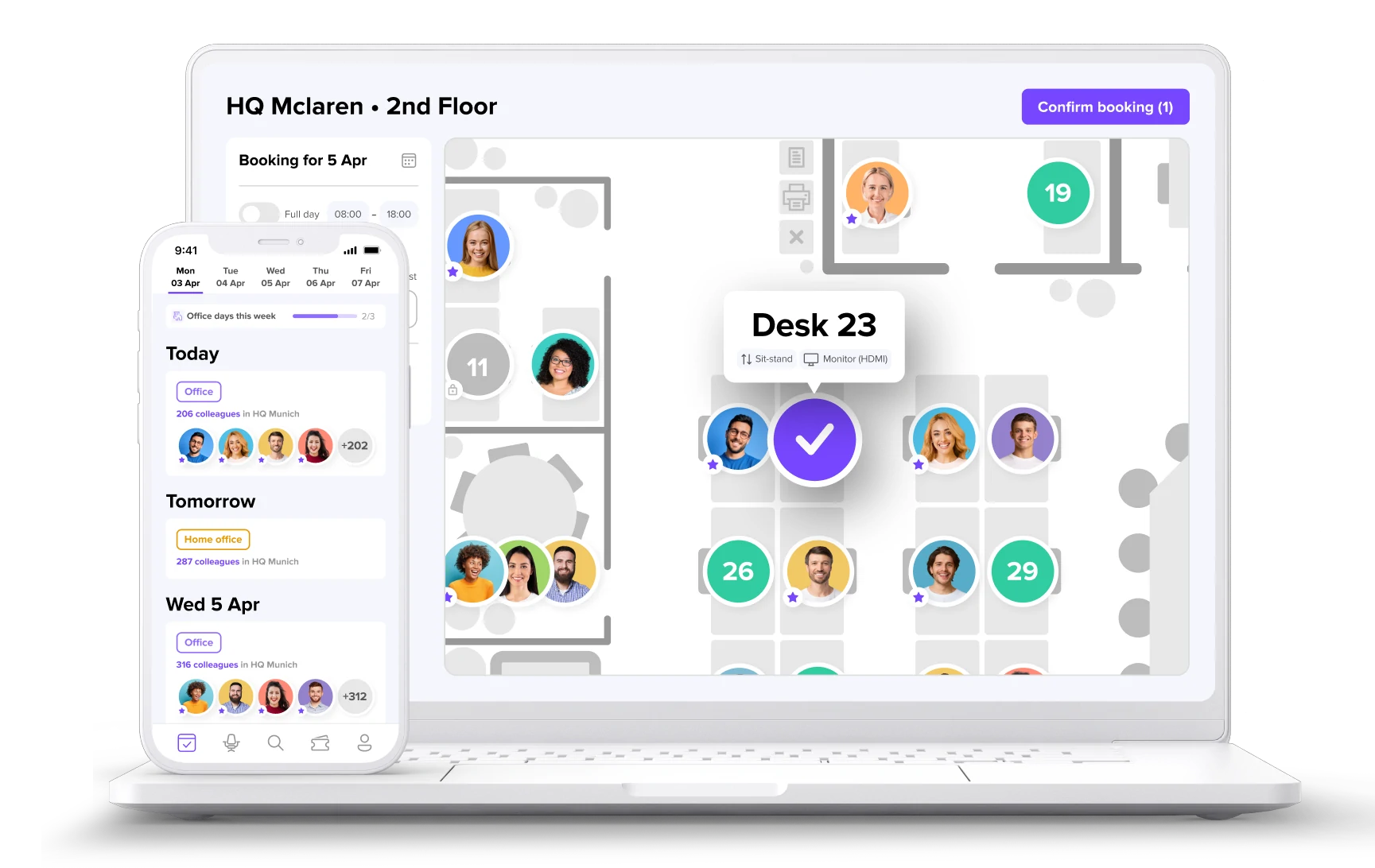
Build a sustainable, smarter workplace
- Reduce energy waste with optimized space usage
- Encourage green habits through flexible scheduling
- Track workplace impact with powerful analytics tools