
The best space management software in 2026
Discover the best space management software solutions designed to automate workflows, reduce real estate costs as well as understand and optimize usage.
Managing your office space
Managing hybrid office space without the right software is like navigating a city without GPS: technically possible, but frustrating and inefficient. Whether you're trying to reduce real estate costs, improve employee coordination, or simply understand how your office space is actually being used, the right space management software makes all the difference.
This guide cuts through the noise. We'll compare the top tools, explain what separates good from great, and give you a practical framework to make a confident choice, whether you're a small startup or a 10,000-employee enterprise.
What "space management software" means (and what it doesn't)
Here's where most people get confused: "space management software" isn't a single category. It's an umbrella term covering several distinct functions. Understanding this prevents you from buying the wrong tool.
The space management category
1. Space planning & allocation
Tools focused on how space is designed and assigned: floor plan creation, move/add/change (MAC) management, scenario planning, and space standards. These often integrate with CAD/BIM systems and serve real estate and facilities teams managing large portfolios.
Examples: SpaceIQ, OfficeSpace, Archibus.
2. Reservations & booking
Platforms focused on who uses space and when: desk booking, room scheduling, parking, visitor management. These prioritize employee experience and day-to-day coordination.
Examples: deskbird, Robin, Skedda
3. Utilization intelligence
These are systems focused on measuring how space is actually used: booking data, occupancy sensors, badge data analysis, utilization dashboards, and forecasting.
Examples: deskbird, VergeSense, Density, XY Sense (sensor-focused)
4. Workplace operations layer
Tools that orchestrate policies, approvals, and services: booking rules, neighborhood assignments, catering requests, maintenance workflows. Often layered on top of booking systems.
- Example tools: ServiceNow (broader ITSM), iOFFICE
What about coworking management?
Coworking Management Software (like Nexudus, OfficeRnD) is an adjacent category handling billing, member portals, and access for coworking operators. If you're managing your own corporate office, not running a coworking or flex operator business, this is not what you need.
The practical takeaway: Most hybrid workplaces need a tool that handles booking well and provides enough utilization data to make informed decisions. You don't necessarily need a full IWMS (Integrated Workplace Management System) unless you're managing a large real estate portfolio. For hybrid offices prioritizing adoption and coordination, an integrated booking + analytics platform typically delivers faster value than assembling separate tools.

Benefits of a space management platform
Desk sharing supports a modern, people-first workplace, but you can’t run desk sharing on spreadsheets. You need a system that’s reliable, frictionless, and built for hybrid teams. The right platform becomes the single source of truth for where work happens. When implemented well, you get:
- Reduced office space costs. Use space based on actual demand instead of fixed seating. Desk sharing can save up to 30% on office expenses, primarily due to decreased requirements for physical space, as not all employees need to be in the office simultaneously.
- Impact on office space and design. With accurate data for planning, facility managers and office admins can plan space and optimize workplaces with intent.
- Fewer operational costs. When implemented well, a hybrid model with hot desking lead to more efficient allocation of cleaning and energy-consumption resources.
- Reduced IT and commute subsidies. In the long run, desk sharing software is set to reduce IT and commute costs, further adding to the cost-effectiveness of this approach.
The best space management software in 2026
1. deskbird
Best for: Hybrid workplaces prioritizing Microsoft 365/Google integration, fast adoption, and practical utilization insights.
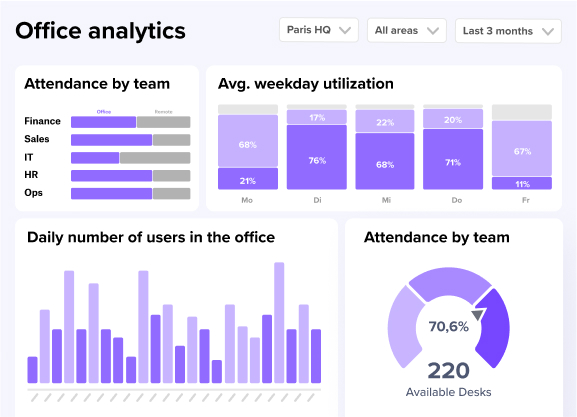
deskbird combines desk and room booking, parking, and visitor management into a single interface. The interactive floor plans update easily, and the analytics go beyond basic booking counts to show actual utilization patterns. Built and hosted in Europe, the platform meets GDPR requirements out of the box.
Core capabilities:
- Desk and room booking with flexible policies
- Interactive floor plans with self-service editing
- Week planning for team coordination
- Utilization analytics based on booking + check-in data
- Office events and resource management
deskbird Pricing
deskbird offers a Starter plan at €0 per user/month (for up to 15 users and one location) which gives full core functionality. Paid plans start at €2.50/user/month and can be complemented with add-ons for room bookings, visitors and user management.
deskbird is incredibly user-friendly and intuitive, making it easy for our team to book desks and meeting rooms efficiently. The real-time availability feature ensures we always have the latest information, reducing the chances of double bookings.
deskbird's G2 review
2. Robin
Robin handles Outlook and Google Calendar integration well, offers visitor check-in, and supports neighborhood-based booking. The mobile experience works smoothly.
However, larger organizations sometimes find the analytics too surface-level for making space optimization decisions.
3. OfficeRnD
OfficeRnD handles both traditional office setups and coworking-style arrangements. The platform offers member portals, resource booking beyond desks, and API-friendly integrations. The tradeoff: it may feel complex if you only want straightforward hybrid booking.
4. Skedda
Skedda originally targeted shared-space booking (gyms, labs) and now provides desk- and resource-booking capabilities for offices and hybrid work. It may appeal to organisations seeking a simpler, cost-conscious tool, though the depth of workplace analytics, check-in automation and team-coordination features might feel to some users as more limited compared to other platforms.
5. Envoy
Best for: companies where visitor management comes first, with desk booking as a secondary feature.
Envoy is known forvisitor registration, check-in flows, and access control integration. Desk booking exists but isn't the core focus. If desks and rooms are your main priority, you might end up paying for visitor features you don't fully use.
How to choose the right office space management platform
The best space management software for your organization depends entirely on what you're actually trying to solve. Are you managing desk bookings for a single office? Planning space allocation across a global portfolio? Proving to leadership that you need less (or more) square footage?
Ideally, you want to follow a buyer framework that match real maturity of your workplace: the right tool depends on where you are today, not where you might be in three years.
Features to look for in space management software
Not every platform delivers the same capabilities. Here's what separates tools people actually use from tools that collect dust.
- Calendar integration: Bidirectional sync with Outlook, Exchange room mailboxes, Google Calendar, and Teams matters. One-way sync creates booking conflicts nobody wants to untangle.
- Desk and room booking in one interface: Separate tools for desks and rooms means lower adoption. People want one place to plan their office day.
- Interactive floor plans: Visual maps help employees find colleagues and available spaces. Check how easy it is for admins to update layouts when furniture moves or teams reorganize.
- No-show prevention: Check-in requirements, automatic release rules, and reminders reduce phantom bookings that skew your data.
- Utilization analytics: Basic booking counts don't tell you much. Look for data on actual attendance versus reservations, peak days, and underused zones.
- Mobile booking: If booking takes more than a few taps, people skip it. Zero-training mobile experiences drive adoption.
- SSO and security: Single sign-on through Okta or Azure AD simplifies access. GDPR compliance matters for European operations.
👉 Want to see how deskbird handles hybrid booking and analytics? Book a demo to explore the platform with your specific setup in mind.
How to evaluate integrations
"Will it work with our environment?" is the question that matters most during evaluation. Vendor marketing pages don't always give you the full picture.
For Microsoft 365 environments, ask specifically about Exchange room mailbox compatibility. Some tools sync with Outlook calendars but don't properly handle room resources. The result? Double-booking headaches and frustrated employees.
Questions worth asking vendors:
- Does calendar sync work bidirectionally, or does it only push bookings one way?
- How does the system handle conflicts when someone books directly in Outlook?
- What SSO providers do you support, and is SSO included in pricing or extra?
- How do permissions sync with Azure AD groups?
For Google Workspace, confirm the tool supports Google Calendar resource booking and works with Google Groups for permission management.
How to compare pricing models
Space management software pricing varies widely. Understanding the models helps you compare quotes without getting surprised later.
Common pricing structures:
- Per user: Everyone with access pays, regardless of how often they book
- Per active user: Only people who actually make bookings pay
- Per resource: Pricing based on number of desks, rooms, or locations
- Tiered modules: Base platform plus add-ons for analytics, visitor management, or advanced integrations
When comparing quotes, ask about implementation fees, SSO costs (sometimes extra), analytics tier limitations, floor plan setup services, contract terms, and data retention policies. A lower per-user price with expensive add-ons may end up costing more than a higher base price with features included.
Why hybrid teams end up choosing deskbird
deskbird focuses specifically on making hybrid work simple for employees and transparent for management. The platform combines desk booking, room reservations, interactive floor plans, and workplace analytics in one interface.
Organizations typically choose deskbird when they want:
- High adoption: Booking through MS Teams, Slack, Outlook, or mobile takes seconds, not training sessions
- Accurate data: Check-in features and governance rules ensure utilization numbers reflect what's actually happening
- Actionable insights: Analytics show which spaces to keep, resize, or repurpose
- European privacy standards: Built and hosted in Europe with GDPR compliance baked in
If you need full IWMS capabilities like lease administration or maintenance management, deskbird pairs well with dedicated facilities tools rather than replacing them.
Choosing the right space management system
Focus on what matters: reliable integrations, top-notch usability, and data you can trust. Once you get these three, managing the space in your office becomes seamless and smart real estate decisions flow.
Also, prioritize based on your existing tech tack. Microsoft 365 shops want strong Exchange and Teams integration. Google Workspace teams want native Calendar support. Both benefit from SSO.
Finally, think about outcomes. Do you want to reduce office costs? Increase attendance? Give employees flexibility? The best platform is the one your team actually uses, which means adoption matters more than feature lists.
If you're ready to see how deskbird handles hybrid workspace management, with the calendar sync reliability, interactive floor plans, and practical analytics that workplace teams actually need, just a book a demo.
Disclaimer
Software listed in this article, and corresponding pricing and functionalities, are based on publicly available information as of 12-01-2026 and our own assessment and are subject to change. Information provided without guarantee. If something is mapped out incorrectly, please contact us here.
Make every square meter count
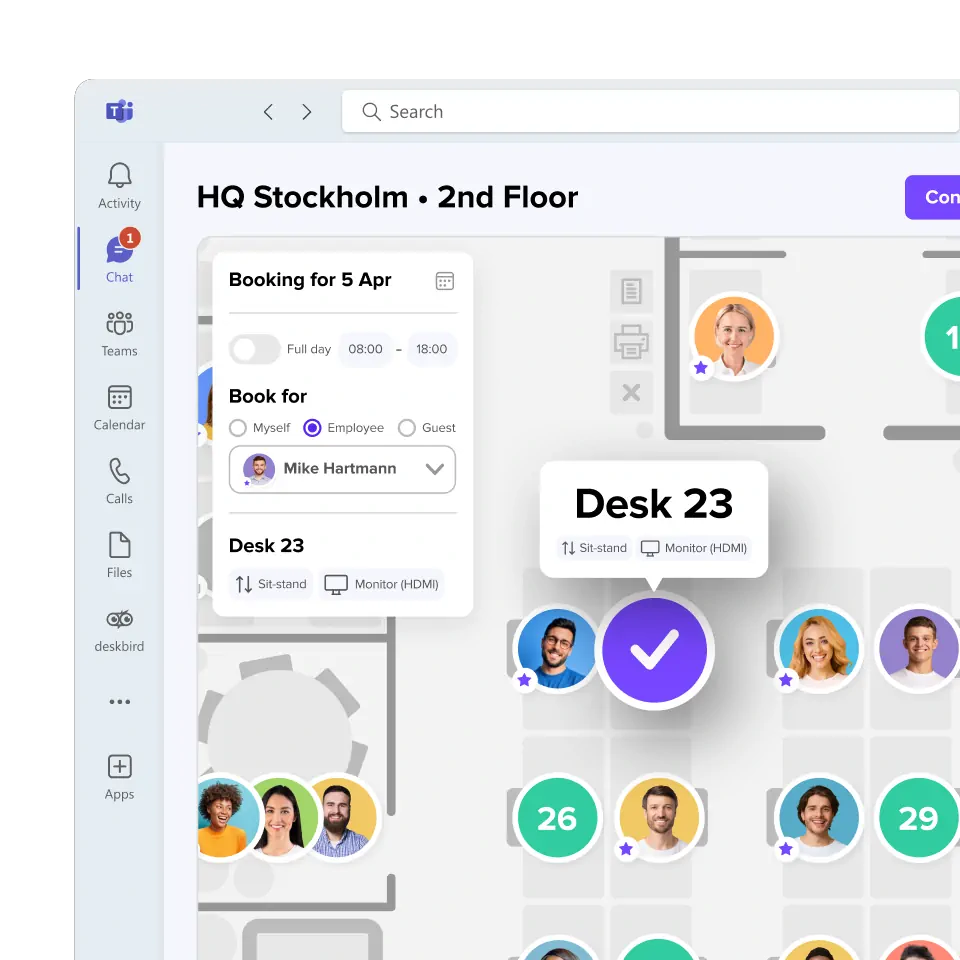
deskbird is the platform chosen by modern workplace leaders to get insights on office usage and use them to continuously evolve and optimize their office.
Frequently Asked Questions
More on space management software for your office.
What is office space management software?
Office space management software is a digital tool that helps you plan, book, and optimize how every square meter of your office is used, especially in hybrid setups.
What are the benefits of adopting space management software?
The main goal of space management platforms in offices is to cut wasted space and costs while giving employees a smoother, more predictable office experience.
How long does it take to implement space management software, and who needs to be involved?
Modern booking-focused tools can go live in 2–4 weeks for straightforward deployments. Complex enterprise rollouts with custom integrations and global locations typically take 60–90 days. Key stakeholders include IT (SSO, integrations), Facilities (floor plans, capacity), HR/Workplace (policies, communications), and Security/Legal (privacy review). The biggest variable is usually internal decision-making speed, not technical complexity.
What features should the best space management software include for hybrid work?
The best space management software for hybrid work should cover booking, coordination, analytics, and governance in one place, while staying dead simple for employees to use. It also needs strong integrations and privacy controls so it fits enterprise it and works councils from day 1.
What’s the difference between workplace management platforms and IWMS tools?
Workplace management platforms focus on day-to-day hybrid work experience like desk and room booking, week planning, and workplace utilisation analytics.
IWMS tools are broader and more “back-office”, centralising corporate real estate and facilities operations like leases, maintenance, capital projects, and energy/sustainability alongside space data. I
In practice, many companies use a workplace management platform for employee-facing coordination and an IWMS for enterprise facilities and real estate control.
