6 best Skedda alternatives & competitors
We compare the top Skedda competitors in detail and highlight what each management platform offers to help you choose the best fit for your workplace.

Quick verdict
While Skedda covers space booking well, companies may find it lacks depth in attendance management, HRIS connectivity, and employee-level attendance insights. deskbird stands out as the top Skedda alternative for mid-market and enterprise teams, offering desk and room booking, hybrid attendance management, visitor management, workplace ticketing, and analytics in a single EU-hosted, GDPR-compliant platform.
Skedda alternatives: table overview

Robin
Eptura Engage
Kadence
Envoy
Tactic
Why look for a Skedda alternative?
Skedda has evolved from a simple scheduling tool into a broader platform, with desk and room booking, utilization analytics, and more recently, visitor management. For teams that primarily need space booking with a clean self-service experience, it covers the basics well.
That said, Skedda's roots in venue booking for universities, sports clubs, and community organizations shape what it's built for. Its free trial and SMB-first pricing model signal a tool designed around simple, low-volume use cases. For teams managing hybrid work at scale, that gap shows.
If your workplace is growing or becoming more complex, you might need a Skedda alternative that can:
- Support hybrid attendance management and approval workflows, not just basic booking rules
- Integrate deeply with your tech stack with zero IT overhead
- Give you reliable utilization data to justify real estate decisions
- Manage people and spaces together, through attendance insights, check-ins, and team coordination
Best Skedda alternatives and competitors
1. deskbird
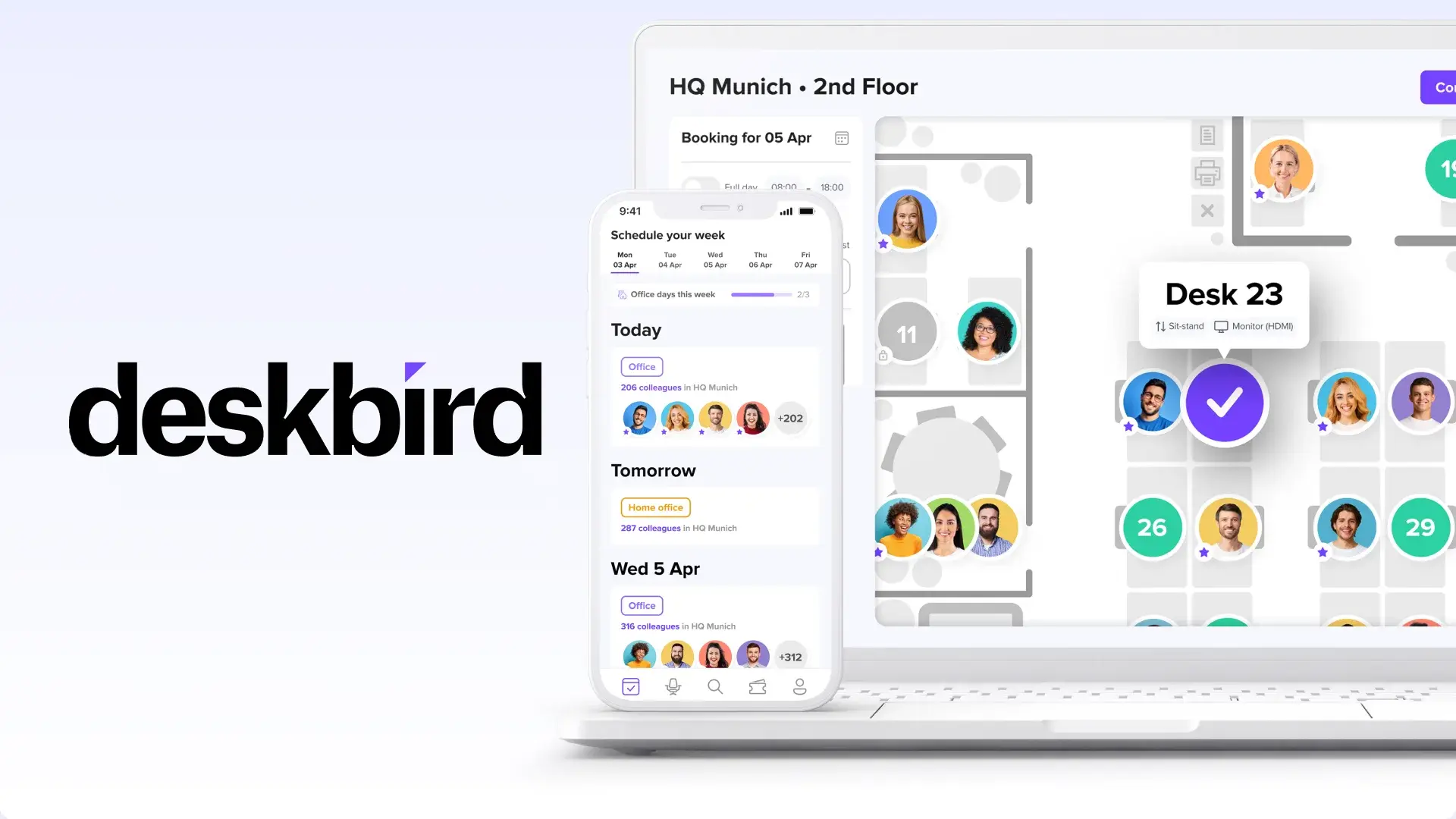
deskbird is a workplace management platform built for mid-market and enterprise teams running hybrid work. It brings together desk and room booking, visitor experience, analytics, and workplace ticketing, all in one platform. Where other tools require stitching together point solutions, deskbird gives IT, facilities, and HR teams a single, integrated system that employees actually use.
The adoption argument is deskbird's core edge. Utilization data is only accurate if employees book consistently. With deskbird's 90%+ adoption rate, you have a reliable foundation to make real estate decisions based on real insights.
Why do hybrid teams choose deskbird over Skedda?
deskbird stands out as the top Skedda alternative for managing internal hybrid workplaces. deskbird manages the full hybrid workplace: who's coming in, where they sit, whether it matches your schedule, and what your space data says. Team coordination views and real-time dashboards reduce ghost days and help teams make the best use of their in-office time.
For IT teams, that means zero-maintenance provisioning via SCIM, Azure AD/Entra ID, and Okta, no new apps, no training sessions, native in Microsoft Teams and Outlook. For facilities teams, that means utilization data you can act on, not just booking logs.

Enterprise-grade integrations
Native HRIS integrations alongside systems like SSO, SCIM, Slack, Outlook, and Google Calendar.

Hybrid work management
Set attendance targets, manage approval flows, track in-office attendance, and run utilization reports.

Intuitive, fast rollout
Teams can get up and running without training sessions, complex configuration or technical overhead.

Built for enterprise security
deskbird is ISO 27001 certified, SOC 2 Type II audited, and GDPR-compliant. Built and hosted in Germany.
deskbird pricing
deskbird offers transparent pricing starting at €2.75/user/month (annual) or €3.50/month (monthly). Plans include room bookings, visitor management, and hybrid working features, with no annual contract required to get started. For companies moving from Skedda, the ROI case is straightforward: better adoption drives more accurate data, which drives better space decisions.
Deskbird is incredibly easy to use and quick to implement. The user interface is clean and intuitive, so our team had no trouble adapting to it. Booking desks, checking who’s in the office, and managing our hybrid schedules has become much more organized. The setup process was smooth, and the customer support team was responsive and helpful throughout.
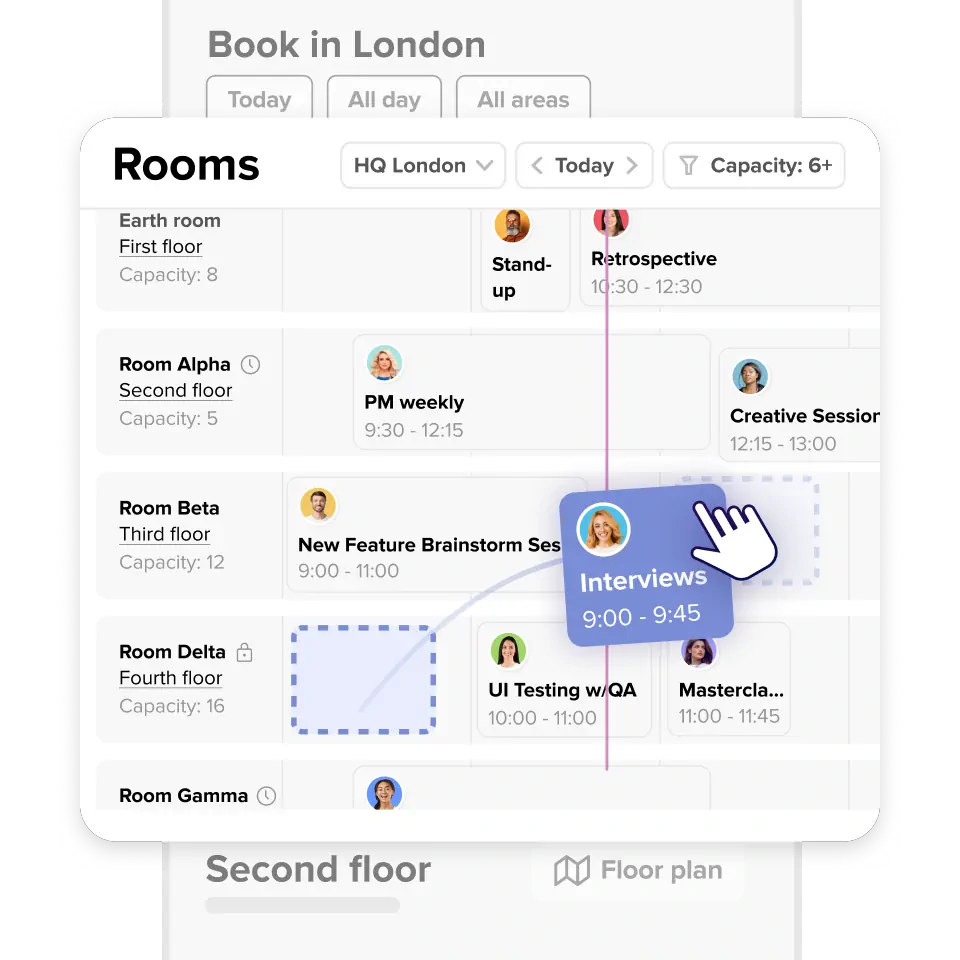
The workplace platform fueled by adoption
- Coordinate hybrid policies, in-office days and team presence
- Integrate with 100+ tools, with zero-maintenance for IT teams
- Make space decisions backed by real usage data
2. Robin
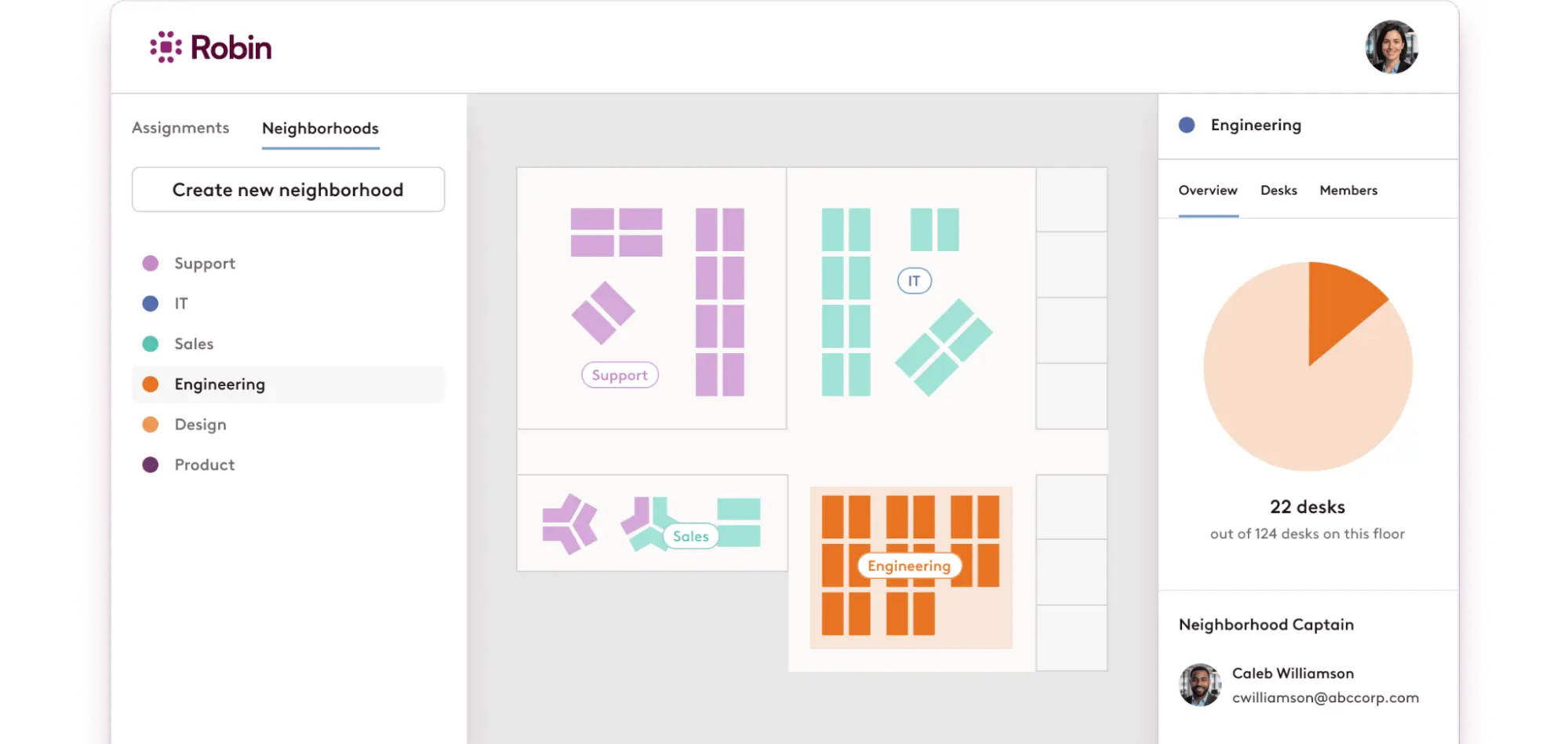
Robin brings together desk and room booking, visitor management, wayfinding, and workplace analytics into a comprehensive solution for hybrid work environments. Its feature set supports both employee experience and space optimization, particularly for companies looking to layer digital signage and deeper data insights into their office setup. Unlike Skedda's venue-booking focus, Robin is designed for internal teams managing occupancy, attendance, and space utilization at enterprise scale.
Some users report the app is sometimes a bit clunky and can compile a few UI issues.
Robin pricing
Robin's pricing is not disclosed on their website. Subscriptions are billed annually, and Robin's own site states the platform is built for companies with 500 employees or more. Unlike Skedda, which publishes plans starting at $99/month, Robin requires custom quotes for evaluation.
Robin potential drawbacks
- Opaque pricing with mandatory annual contracts
- Steep learning curve, implementation time and training requirements
- Enterprise-focused as it's designed for companies with 500+ employees
Robin pros
- Wayfinding - Guests and employees can easily find the right place at the right time
- Calendar integrations (Outlook, Google)
- Advanced reporting capabilities for space optimization and utilization trends
3. Eptura Engage
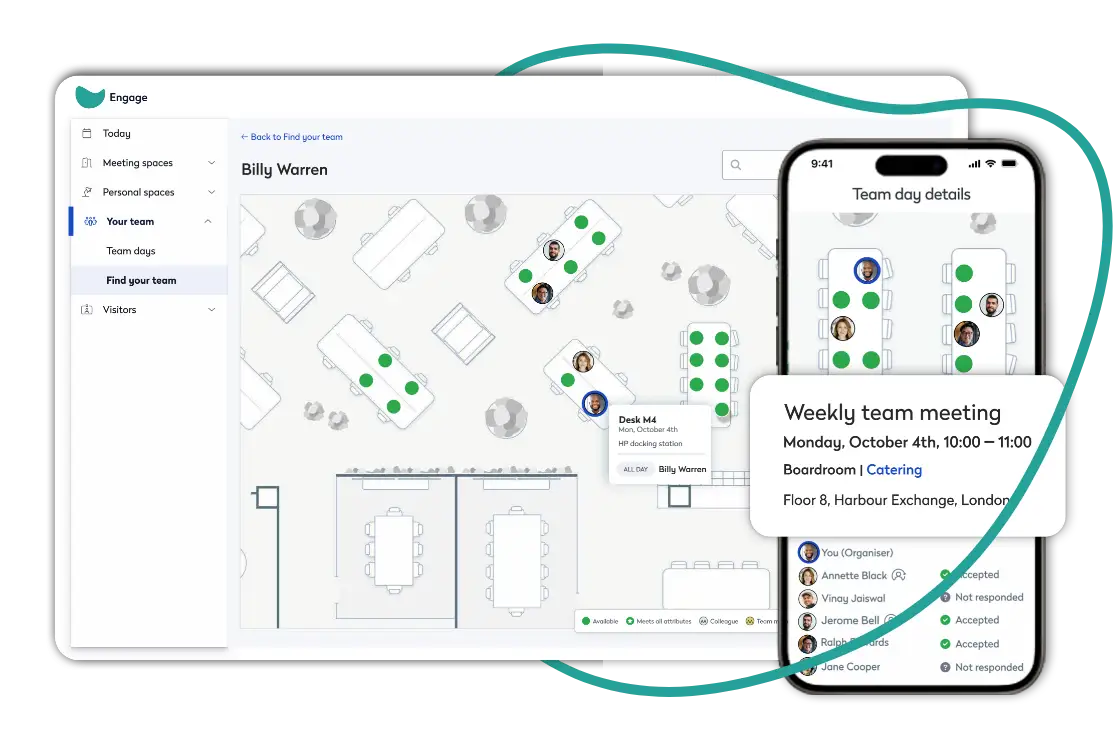
Eptura Engage is a workspace management platform focused on meeting rooms, desks, visitors, and enterprise collaboration. It emphasizes planned collaboration, wayfinding, AI-assisted booking, and space usage insights for large-scale workplaces. Unlike Skedda's lightweight venue-booking approach, Eptura Engage is purpose-built for complex enterprise environments with advanced meeting management.
Despite overall positive feedback, some users report the UI may feel dated and note resource-consuming configurations needed to resolve issues.
Eptura Engage pricing
No public prices exist across any Eptura product. Every quote requires a sales demo and a minimum one-year contract, which makes costs harder to forecast for growing teams.
Eptura Engage potential drawbacks
- Pricing not publicly displayed, no free trial available
- Setup and customization can take time, with increased admin work
- Reviewers mention complex configurations and non-intuitive UI
Eptura Engage pros
- Strong integration with Microsoft 365; view in‑office schedules in calendar tools
- Detailed wayfinding and floor maps help users locate rooms, desks, or colleagues
- Real‑time occupancy, sensor data, and automated check‑ins

4. Kadence

Kadence is a hybrid work platform built around automation and coordination. It supports check-ins, floor plans, attendance tracking, and booking, powered by Kadence AI, a conversational assistant embedded in Microsoft Teams and Slack that books desks and rooms, invites visitors, and surfaces teammate presence on request. Kadence recently launched SpaceOps, a space scenario planning tool for portfolio and floor decisions built on occupancy data.
Kadence rebuilt its visitor management system, adding kiosks, badge printing, AI-assisted invites, and audit-ready records, though kiosk support still runs on Kadence's own hardware only. Kadence's US-based infrastructure still lacks a confirmed EU data residency commitment, and some users report integration friction with Microsoft and SAP.
Kadence pricing
Kadence prices are not publicly displayed, requiring custom quotes for evaluation. Annual billing is required, and floor plan setup is charged separately at $250 per floor, which contrasts with platforms like deskbird that publish their pricing clearly.
Kadence potential drawbacks
- Low control over office access as visitor and event workflows are basic or missing
- No kiosk display support without proprietary hardware
- Lacking privacy standards eg. no EU-hosting transparency
Kadence pros
- Automatic occupancy tracking and smart suggestions using Kadence Agent
- Interactive floor plans and “office neighborhoods” for team coordination
- Smooth check-in process and live office views
5. Envoy
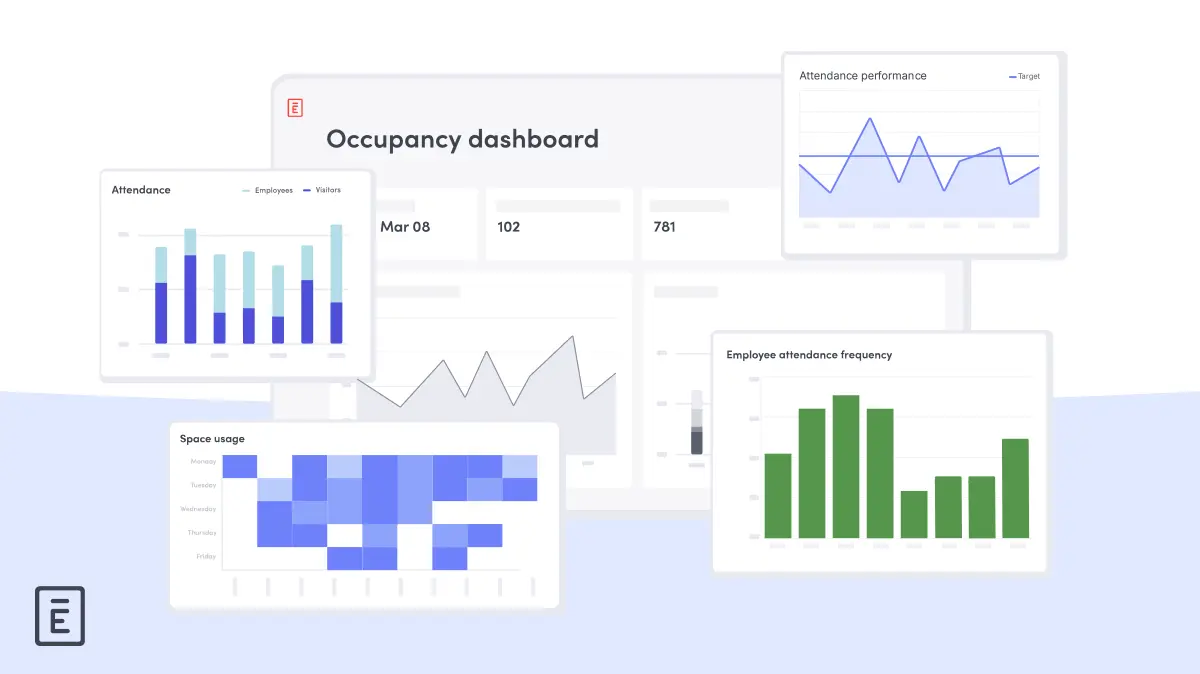
Envoy is a workplace platform best known for visitor management and front-desk solutions, including badge printing, watchlists, and emergency alerting. It also offers desk and room booking, mobile check-ins, and analytics aimed at improving office flow and safety.
While this Skedda alternative is popular for managing external access, some users may find it lacks structured hybrid work coordination features like in-office policies or EU-level privacy standards options. Reviewers also mention admins finding Envoy hard to navigate and use and that the interface can be slow.
Envoy pricing
The base plan for Envoy Workplace starts at $60/bookable resource/year and does not include visitor management (Envoy Visitors). Other capabilities such as cdeliveries, access control or evacuations are priced per location, which can make total costs unpredictable.
Envoy potential drawbacks
- Pricing for add‑ons and premium visitor/security features can rise steeply
- Feature gaps around privacy standards (no EU-hosting transparency) and hybrid presence rules
- Reviewers mention it’s not as intuitive for admins as it is for users
Envoy pros
- Strong visitor management and front-desk compliance
- Intuitive mobile booking experience
- Reliable analytics on room usage and office space demand
6. Tactic
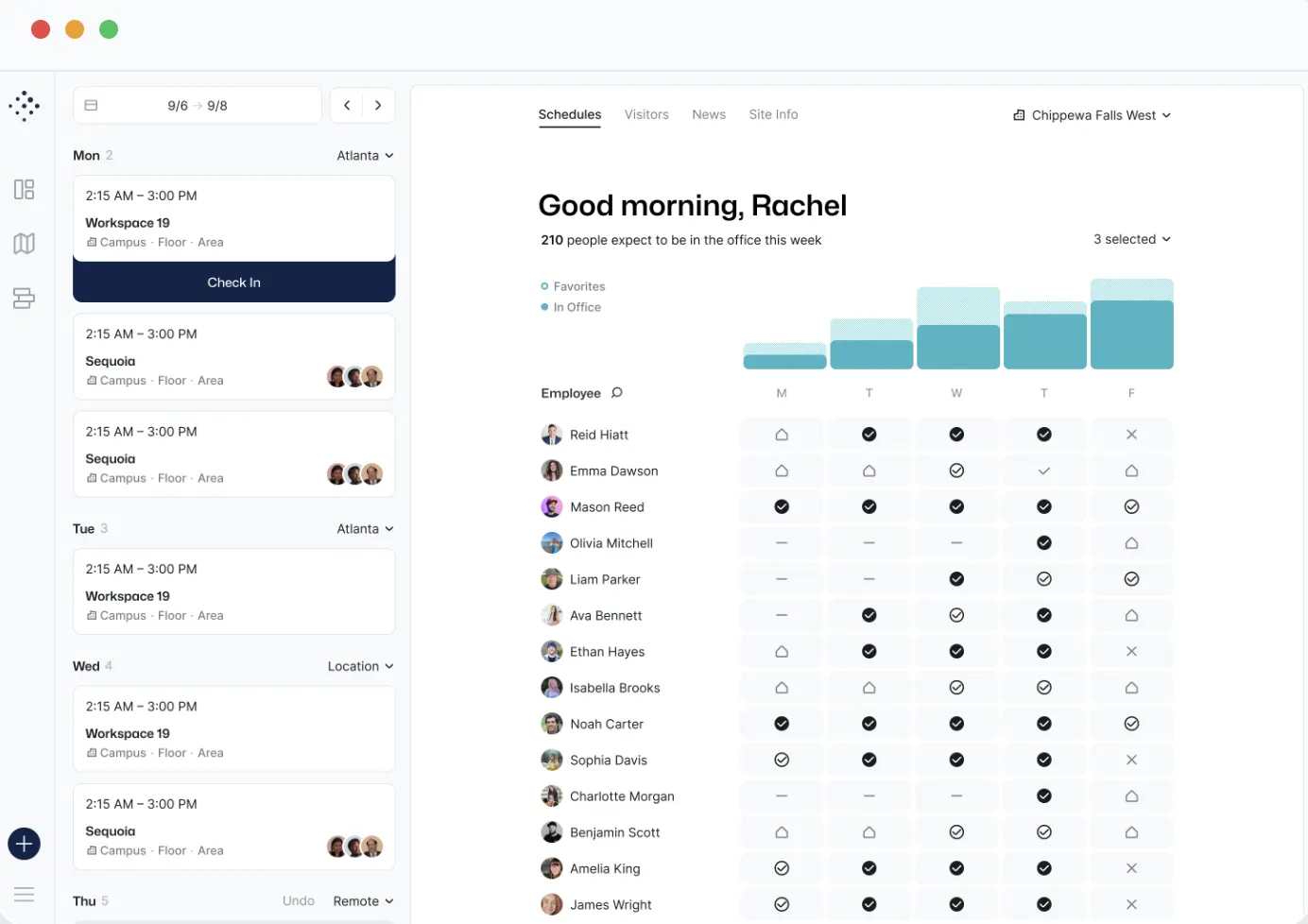
Tactic is a hybrid workplace platform covering desk and meeting room booking, visitor management, and office space analytics. It features interactive office maps, amenity management, team neighborhoods, and real-time availability. Like Skedda, Tactic handles real-time space visibility and booking well, but is positioned for internal teams rather than public-facing venues.
Despite the claim to support hybrid teams, there is currently no out-of-the-box functionality to follow hybrid policy workflows and to apply it across multiple locations -a gap that becomes apparent in more complex organizational setups. Booking issues and lack of user-friendly UI seem to be concerns mentioned across reviews.
Tactic pricing
Prices are not publicly displayed, requiring custom quotes. However, there are some estimates. A single-location, 100-desk Desk Booking setup estimates around $3,600–$4,800/year.
Tactic potential drawbacks
- No native policy enforcement or hybrid rule setup available
- Event & employee engagement functionalities not supported
- Multi-site setup and custom workflows require significantly more effort to setup
Tactic pros
- Interactive office maps with neighborhoods and team maps
- Strong analytics for space usage
- Calendar sync and user interface usability
Which is the best Skedda alternative for your team?
Skedda works for simple space booking. However, if you're managing hybrid work across a mid-market or enterprise organization, you need an alternative platform built for that level of complexity: structured attendance management, reliable utilization data, and integrations that don't create IT overhead.
deskbird stands out by combining everything teams need to manage modern hybrid work. One platform covers everything: desk booking, room management, visitor experience, workforce management, workplace ticketing, and analytics, with a 90%+ adoption rate.
Disclaimer
Software listed in this article, and corresponding pricing and functionalities, are based on publicly available information as of July 2026 and are subject to change. Information provided without guarantee. If something is mapped out incorrectly, please contact us.
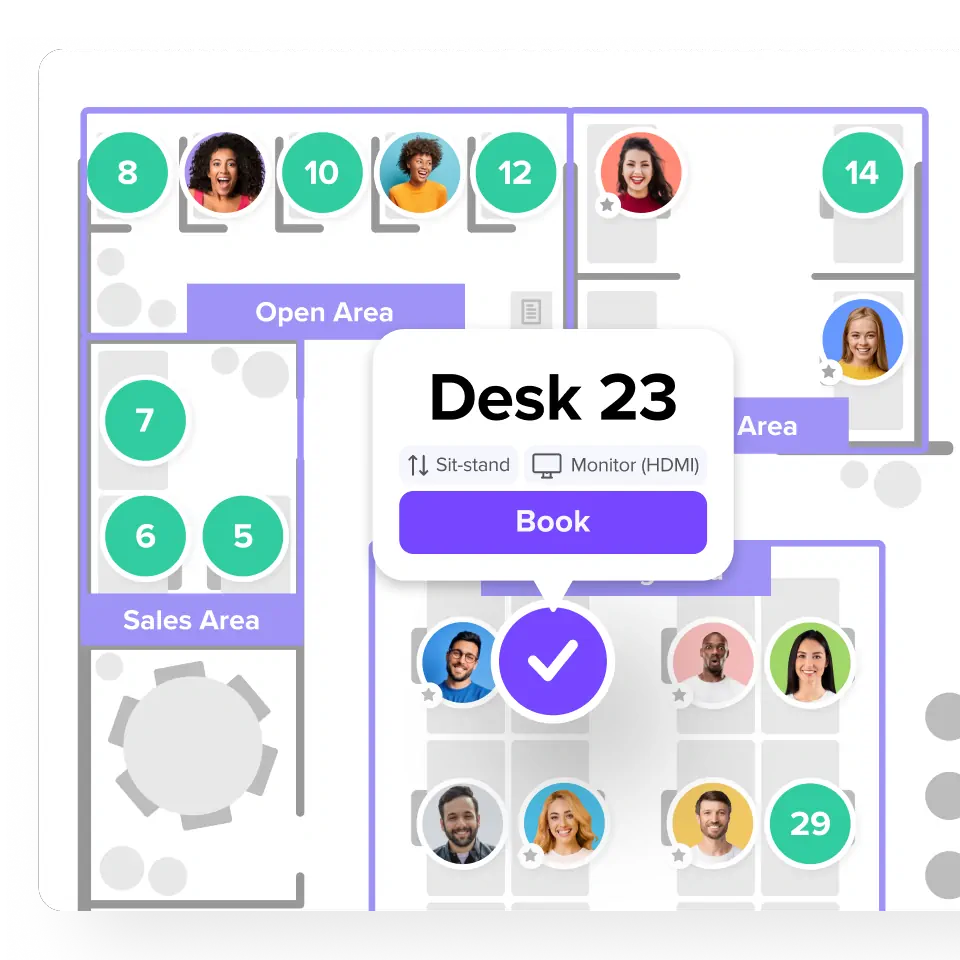
Choose the employee-first platform
- Coordinate hybrid policies, in-office days and team presence
- Improve employee experience when booking office resources
Frequently Asked Questions
More about Skedda and alternative platforms.
Why look for an alternative to Skedda?
Skedda is a capable booking tool for straightforward scheduling needs. But teams managing hybrid work at scale often find it lacks the depth required for internal workplaces: no structured attendance management, limited HRIS integrations, and utilization data that doesn't connect to people-level attendance insights.
How does Skedda pricing compare to its alternatives?
Skedda publishes its pricing, with plans starting at $99/month for 15 spaces, rising to $199/month for 25 spaces. That transparency is useful, but the per-space model can become expensive as your office grows. Some alternatives, like Robin, Kadence, and Eptura, don't publish pricing at all and require custom quotes; others, like Tactic, publish per-module rates. deskbird takes a different approach: per-user pricing starting at €2.75/user/month (annual) or €3.50/month (monthly), with no annual contract required. For mid-market and enterprise teams, that model is easier to forecast and scales without surprises as headcount or locations change.
What is the best alternative to Skedda for hybrid work?
deskbird stands out as one of the most complete alternatives to Skedda for hybrid workplace management. It's designed for mid-market and enterprise teams that need to coordinate in-office attendance, apply hybrid schedules, and make real estate decisions from reliable utilization data. With a 90%+ adoption rate, native Microsoft integrations, and a platform that covers desk booking, room management, visitor experience, workplace ticketing, and analytics, deskbird gives IT and facilities teams a single system to run from.
What’s important to look for in a Skedda alternative today?
The strongest Skedda alternatives go beyond basic booking to support structured hybrid work. Key things to evaluate: attendance management, employee coordination tools like who's-in views and team scheduling, reliable check-in data rather than just booking intent, integrations with your calendar, HR, and identity systems, and enterprise security credentials, ISO 27001, SOC 2, GDPR compliance, and EU-hosted data for European teams. Adoption rate matters too: a platform no one uses produces data no one can trust.
How do Skedda alternatives support hybrid policy compliance and attendance tracking?
Most booking tools record who reserved a desk. Few connect that to whether employees are actually meeting in-office day targets. deskbird lets HR teams set hybrid schedules, track real attendance via check-ins, and surface patterns across teams and locations, without manual reporting or chasing managers for data.