

15 employee expectations examples: What your team really wants
Replacing an employee is expensive and disruptive, costing organizations significantly when expectations go unmet. Employees today expect more than a paycheck: They want flexibility, recognition, transparent communication, and real career growth opportunities. This article covers 15 specific employee expectations modern workers have, from hybrid work schedules and workplace technology that actually works to meaningful feedback and values alignment. You'll also learn how to measure whether you're meeting these expectations through satisfaction metrics, one-on-ones, and pulse surveys.
TL;DR
Employee expectations have shifted dramatically. Flexibility, recognition, transparency, and career growth opportunities are now non-negotiable for most workers. This article covers 15 specific expectations modern employees have, from hybrid work schedules and workplace technology that actually works to meaningful feedback and values alignment. You'll also learn how to measure whether you're meeting these expectations through satisfaction metrics, one-on-ones, and pulse surveys.
What are employee expectations and why do they matter?
Employee expectations are the standards and conditions workers believe their employer should provide. These typically include fair compensation, job security, opportunities for growth, and a supportive work environment. Workers also value recognition, a healthy work-life balance, and transparent communication from management.
Businesses often focus on different priorities: productivity, performance, profitability, and achieving strategic goals. They tend to emphasize efficiency, innovation, and staying ahead of competitors. Organizations seek committed and skilled employees who contribute to the company's success. Employees want a workplace that meets their personal and professional needs.
Bridging the gap between these workplace expectations is essential for fostering a harmonious and productive workplace. When expectations go unmet, turnover costs can reach 50-200% of an employee's annual salary.
15 examples of what employees expect from employers
1. Flexibility: hybrid schedules and work-life balance
This is the most important employee expectation on this list. Over the last few years, workers have discovered the benefits of flexibility and a better work-life balance. The rise of flexible hybrid work emerges as a key answer to spreading time more equally among work, hobbies, family, friends, and other activities.
Many people enjoy going to the office but also value working from home. Flexibility has become a norm that employees expect and are not willing to give up.

Coordinated hybrid work is an ideal solution for increasing employee retention and productivity. Want to learn more? Download the results of our latest research!
2. Workplace technology that actually works
Modern tech helps us in every aspect of our lives. People naturally want the same level of digitalization within their work environment. They expect workplace technology to be an ally that helps them be more efficient and focus on meaningful tasks.
Many digital solutions can boost engagement, productivity, and performance. These range from desk booking software to hybrid scheduling and automation tools. If your team members work from home, giving them a WFH allowance to get necessary equipment is a clear sign of support and employee-centricity.
Who hasn't gotten stressed or frustrated when a workplace tool isn't functioning correctly? Repetitive bad experiences with technology can significantly impact your employees' digital employee experience. Your IT team has a massive role to play here. Ensure every team member receives full training about using your online tools and can get help quickly if a problem occurs.
3. Autonomy and trust over micromanagement
Micromanaging your employees is a big mistake and a motivation killer. Trusting your team members and giving them opportunities to fail are the best ways to stimulate them. Controlling and constantly checking what your team is doing can negatively impact their work.
Remote workers are even more likely to face micromanagement. Leaders must trust their team members as they would when on-site, even when they can't see them working.
You must also support your team in moments of success as much as in hard times. Many employees don't feel they are being advocated for by their managers, which decreases engagement and hinders creativity. Advocating for your team members is one of the most important qualities of a leader. Workers who receive management support take more risks, which is great for progress and innovation.
4. Clear and transparent communication
Poor communication decreases productivity. More critically, it creates frustration and tension. Redoing tasks or losing time because of miscommunication frustrates everyone.
With all the communication tools available today, employees expect to interact with their manager and peers successfully. One of the main goals is to provide the same level of communication to all team members, whether they work from the office or remotely. Clear and transparent communication ensures efficiency and performance while avoiding isolation and frustration.
5. Positive and people-first work culture
Creating the right corporate culture covers many essential employee needs, such as seeing values that align with theirs. Organizational culture strongly influences how people feel about their jobs and the company itself.
A toxic work environment based on micromanagement or little recognition can seriously damage a business. For this reason, employers need to focus on building a positive workplace culture. Setting an example by putting your employees first should be your priority.
6. Values alignment and purpose
Many employees don't hesitate to quit their jobs because the business doesn't align with their own values. This is especially the case among Millennials and Gen Z, who have strong opinions and want to drive change. From sustainability to DEIB in the workplace, your position regarding these topics can either help you retain your workforce or cause them to leave.
Going to work every day without a sense of purpose can impact how your staff feels. Employees search for meaningful experiences, including in their professional lives. They need to find motivation in what they're doing. If you don't give them this opportunity, you risk losing them.
7. Recognition that feels meaningful
Employees are the best asset to an organization and play a massive role in the company's growth. According to Zippia's Employee Recognition Statistics, 44% of employees say not feeling valued or recognized by their manager is the main reason they want to quit.
A simple "Thank you for a great job" can significantly impact your team's morale and motivation. It may not seem like much to you. But it enables your workers to feel valued and appreciated for their input to the business's overall success.
Discover the different types of employee recognition.
8. Fair compensation and benefits that matter
Rewarding your workforce with a fair salary is a must. Don't assume offering a big paycheck is enough to retain and attract a motivated and talented team. Your top priority should be improving the well-being of your employees and meeting their needs. For example, work-life balance, work flexibility, or purpose are often more important.
Speaking of rewards, company benefits become as important as salary expectations. These advantages can take different forms, such as a gym subscription, healthcare insurance, or a pet-friendly policy. Benefits are a great way to show your workforce that you care about them.
Be careful, though. Many businesses offer employee benefits that don't match their employees' expectations. Workers call them "anti-perks." Communicate with your staff to know which advantages make sense and meet their needs best.
Anti-perks, bare minimum Mondays, boomerang employee: Read our article about corporate buzzwords and learn the new office jargon for 2025.
9. Career growth and learning opportunities
If you've been in the same role for a while, you likely want to make a career move at some point. If not, the ability to upskill or reskill is an option workers expect from their manager.
People who don't see any career growth possibilities either leave or disengage from their work. They sometimes even resign without having found another job yet. The desire to learn new skills, work on new projects, and explore opportunities is strong. It often outweighs the comfort of staying in a role where they feel bored and unhappy.
Meeting this employee expectation is a win for you, too. It widens your staff's skillset and boosts their performance.
10. Regular and constructive feedback
Workers expect regular feedback from their managers. Sharing your perspective on their strengths and areas for improvement is crucial. It allows them to progress and develop their skills.
Feedback sessions are also a perfect occasion to demonstrate recognition of their work and discuss career development opportunities or upcoming projects. This process should go both ways. Building a trustworthy relationship with your team lets them freely share what they appreciate about your leadership type and what could be improved.
Engagement and motivation are also triggered by knowing what's happening in the company. Keeping employees informed about the organization's goals and challenges shows trust and motivates them. Clear updates and a transparent leadership style help you meet this expectation.
What employers expect from employees
Understanding employee expectations is only half the equation. Employers also have clear expectations of their workforce. Bridging both perspectives creates a more balanced and productive workplace.
Here are 5 key employer expectations:
- Reliability: Showing up on time, meeting deadlines, and following through on commitments
- Clear communication: Keeping managers and teammates informed about progress, blockers, and needs
- Initiative: Taking ownership of problems and proposing solutions rather than waiting for direction
- Quality work: Delivering results that meet or exceed standards consistently
- Positive attitude: Contributing to team morale and adapting constructively to change
When both sides understand what the other needs, building trust becomes easier. The result is a workplace where everyone performs better and stays longer.
How to know if you're meeting employee expectations
Track employee satisfaction metrics
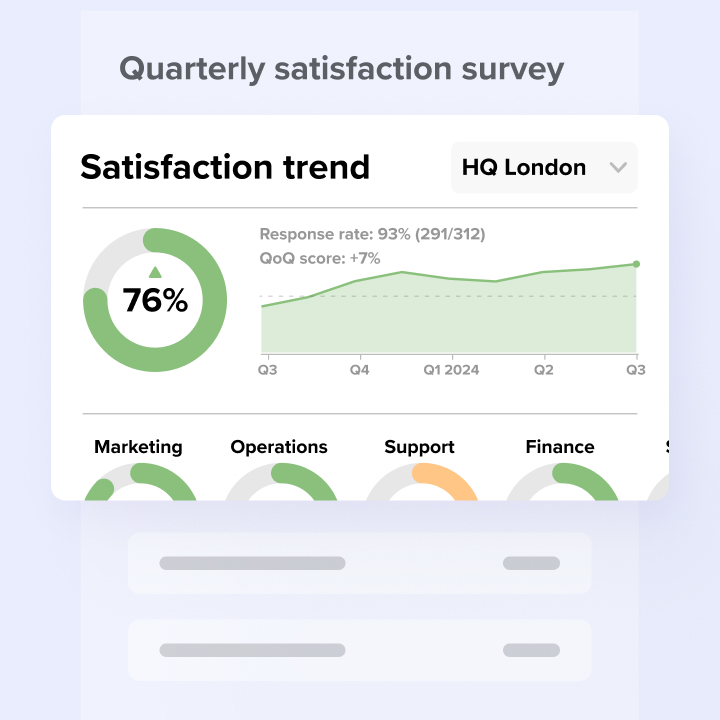
How satisfied are your team members right now? If you can't answer this question, finding out is your first step to meeting their expectations. Learn what makes them stay and what could convince them to leave.
Send an online survey to your workforce and ask them to share honest feedback about their expectations from the company. Analyze the data you get and start from there.
Key metrics to track include:
- Employee Net Promoter Score (eNPS)
- Overall satisfaction scores
- Retention and turnover rates
- Engagement scores by department or team
Use an employee satisfaction questionnaires to gather structured feedback.
Have regular one-on-one conversations
In-person communication is essential to better understand your employees' expectations. Conversations can surface topics that written surveys miss.
Direct discussion helps you fully understand their expectations and why specific things matter to them. This will help you create the right strategy and take the necessary actions to meet their needs best.
Aim for monthly one-on-ones at minimum. Weekly check-ins work even better for building trust and catching issues early.
Send pulse surveys consistently
Meeting employee expectations is an ongoing process. As your business evolves, so do your workforce and their needs. What people expected 2 years ago might not be what they want today.
Regular feedback from your workers is essential to keep meeting their needs. Send quarterly surveys focused on this topic. This helps you gauge whether you're meeting your team members' expectations and where you can improve.
How deskbird helps you meet employee expectations
Flexibility and workplace technology require the right tools. deskbird helps organizations meet these expectations without adding complexity.
Here's how deskbird connects to the expectations covered in this article:
- Flexibility: Desk booking and hybrid scheduling let employees choose when and where they work
- Technology that works: Integrations with MS Teams and a mobile app make booking simple, with 90%+ adoption rates among deskbird customers
- Transparency: Workplace analytics show who's in the office and how space is being used
- Autonomy: Self-service booking puts employees in control of their work week
TwentyCi faced challenges managing office space and accommodating diverse employee preferences for in-office days after transitioning to Microsoft Teams. By implementing deskbird with its seamless MS Teams integration and self-service booking, the company achieved 80-85% adoption without chasing people, and employees now benefit from knowing who is in the office on any given day, preventing commute regret and boosting productivity.
Embrace flexibility and treat employees like grown-ups, and most of them will repay your trust in productivity
Rob Taylor, Head of People at TwentyCi

Frequently Asked Questions
What are the 4 pillars of employee expectations?
The 4 pillars of employee expectations are connection, meaning, impact, and appreciation. Employees want to feel connected to colleagues and managers, find meaning in their work, see their impact on the company, and receive appreciation for their contributions. These pillars form the foundation of a positive employee experience.
How do you balance flexibility expectations with business needs?
Balance flexibility by establishing clear hybrid policies that define in-office requirements. Give employees autonomy over their schedules within those boundaries. Be specific about which days or how many days require office presence. Then let people choose how to meet that requirement. Workplace management tools help teams coordinate office days and see who's coming in. Collaboration happens when people are actually together.
What's the difference between employee expectations and performance expectations?
Employee expectations are what staff want from their employer: flexibility, recognition, growth opportunities, fair pay. Performance expectations are what employers require from staff: meeting deadlines, quality standards, collaboration norms. Both require clear communication to avoid accountability gaps and ensure mutual understanding. The best workplaces align these two sets of expectations. Employees know what they'll receive and what they need to deliver.
How often should you check in on employee expectations?
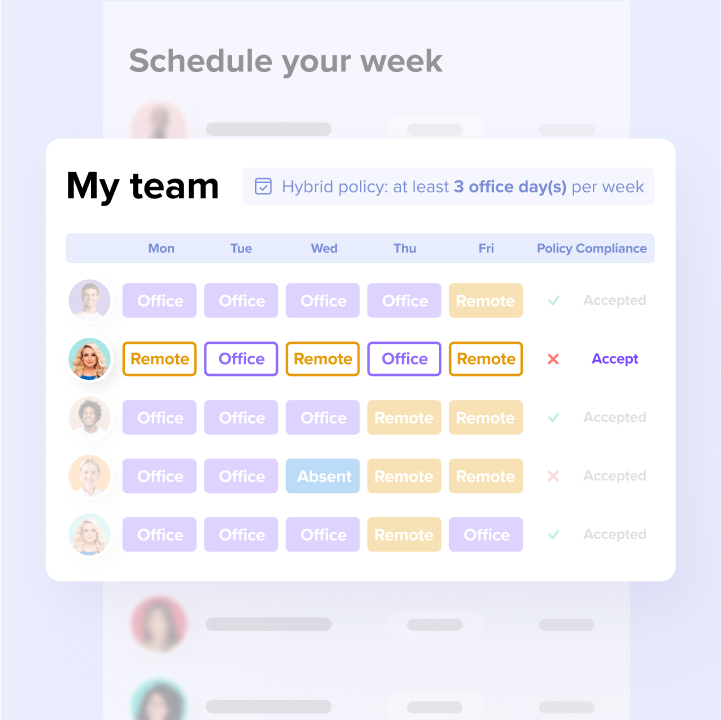
See how deskbird makes hybrid work easier to manage
- Desk booking, hybrid scheduling, and analytics in one simple app
- Customers reach 80-85% adoption without chasing people to use it