

9 ways how to make your office more welcoming
Hybrid work has reshaped how we think about welcoming office spaces. With on-site attendances registering a 30% drop compared to pre-pandemic norms, the challenge isn't just getting employees back, it's making them want to come back.
A welcoming workplace boosts productivity and morale, making the office a better choice than home. To make your office more welcoming and counter low on-site hybrid attendance, focus on diverse workspaces, ergonomic furniture, biophilic designs, social zones, pet policies, events, high cleanliness standards, and tech like deskbird for easy booking to cut frustrations.
This guide shares nine effective strategies to transform your office into an inviting space your team loves, plus six reasons why this shift is essential for modern businesses.
9 recommendations on how to make your office more welcoming
1. Create an office space with various types of workspaces
An office space that fulfills your employees' needs is key to boosting their productivity. Make it more appealing by incorporating a variety of workspaces for different tasks and preferences:
- Hot desks for flexibility
- Assigned desks for those who like permanent spots
- Open spaces that encourage spontaneous collaboration and communication
- Cubicles for focused work
- Meeting rooms equipped for teamwork and client presentations
- Cozy office lounges for informal gatherings or relaxed solo work
Design each area with its specific use in mind, ensuring that your employees have the right environment for whatever their workday holds. This diversity enhances functionality and makes your company a dynamic and appealing workplace.
👉 Cubicles vs. open office, what’s the best option?
2. Design an office environment fostering social interactions and collaboration
Designing an office that promotes social interactions and collaboration significantly enhances creativity and team cohesion. To achieve this, consider creating open spaces that are easily accessible, inclusive, and inviting for everyone. Equip these areas with flexible seating arrangements and movable furniture to accommodate different group sizes and types of meetings.
You can also include relaxed spaces like lounge areas and large shared lunch tables where employees may gather casually. These spots encourage informal chats and brainstorming sessions, often leading to innovation and a higher sense of community at work. By integrating these elements into your setup design, you create an environment supporting collaborative work and strengthening team members' relationships.
3. Invest in ergonomic furniture
Investing in ergonomic furniture is essential for creating a healthy and productive workspace. Ergonomic chairs, desks, and accessories support the natural posture of the body, reducing strain on the back, neck, and wrists. This leads to less fatigue and fewer work-related injuries.
By providing adjustable chairs and tables, you allow your employees to customize their workstations to fit their individual needs, enhancing comfort and efficiency throughout the day. This kind of attention to employee well-being boosts morale and increases productivity by keeping everyone comfortable and focused. By prioritizing ergonomic furniture, you're investing in your team's health, showing a commitment to their overall job satisfaction, and making WFO (working from the office) more enjoyable than WFH (working from home).
4. Play with colors and biophilic office design

Incorporating biophilic design, which involves adding natural components like plants, exposure to natural light, and using materials such as wood or stone, not only leverages your office but also improves air quality and mental health. Integrating colors and natural elements significantly impacts your staff’s well-being and productivity.
Integrating colors and natural elements significantly impacts your staff's well-being and productivity. Implementing colors strategically enhances your team members' mood and energy:
- Blue hues foster calm and focus
- Greens create a restful area that reduces eye strain
This approach lowers stress levels and higher employee satisfaction, making your workspace a healthier and more inviting workplace.
5. Consider implementing a workplace pet policy
Considering a workplace pet policy could be an innovative and effective way to enhance your office atmosphere, especially in a hybrid work environment. Allowing pets on-site reduces stress, increases job satisfaction, and fosters interactions among employees who might not usually connect.
This policy benefits your flexible workforce by making work days more appealing and enjoyable as they can bring their four-legged friends. This undeniably encourages in-person attendance and collaboration. The presence of pets can make the workplace feel more homely and welcoming. This is especially helpful when trying to balance the ease of home with the professional setting of the workplace.
Before implementing such a policy, ensure you establish clear guidelines to address any concerns around allergies or phobias to maintain comfort for all employees.
6. Organize office events and team-bonding activities
Organizing office events and team-bonding activities is a fantastic way to build a stronger community within your workplace. Regular social events and team-building exercises bridge the gap between remote and on-site days, fostering unity and collaboration among all employees. Whether it’s through creative workshops, outdoor activities, or casual get-togethers, these events motivate people to come to the office and enhance relationships that might not develop as naturally when teams are physically apart.
Implementing such activities boosts morale and enhances teamwork, making your workplace more dynamic and appealing. Plus, this approach is crucial for maintaining a cohesive company culture in a hybrid setting, where employees might otherwise feel disconnected.
7. Keep your work environment clean and clutter-free
Maintaining a clean and clutter-free workspace is crucial for fostering an enjoyable office experience. A neat space enhances focus and efficiency and contributes to a healthier atmosphere by reducing dust and allergens. Regular cleaning and tidying help ensure that your employees have a pleasant and functional work area, whether coming in every day or just a few times a week.
This practice is relevant in shared spaces and hot-desking offices common in hybrid models, where cleanliness directly affects multiple employees’ daily experience. Encouraging everyone to keep their areas tidy and providing adequate storage solutions make a significant difference in maintaining an orderly environment.
8. Make the office easily accessible by removing scheduling conflicts
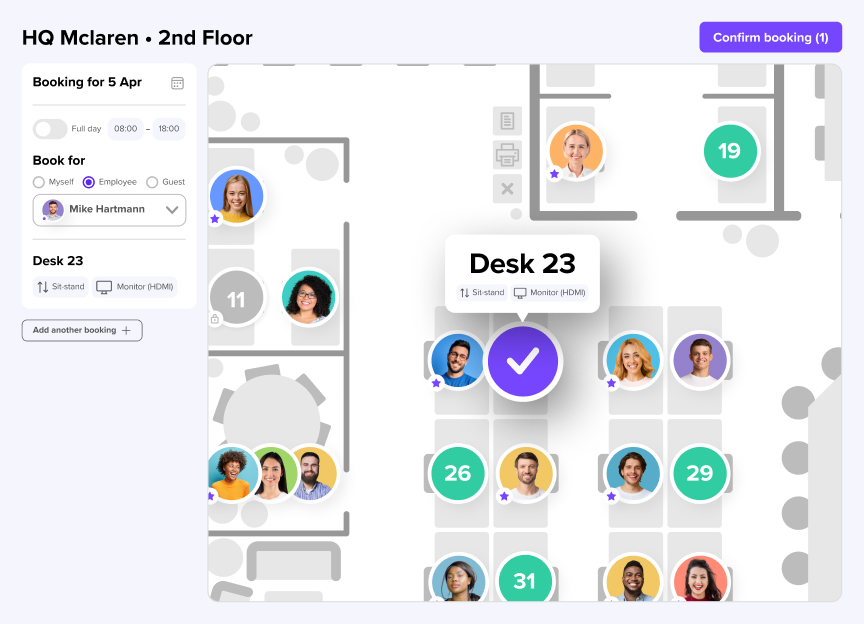
Ensuring your office is easily accessible and free from scheduling conflicts is essential. By implementing a workspace booking system like deskbird, people can book their desks or meeting rooms in advance. This minimizes the frustration of not finding a preferred work spot available upon arrival. Having this kind of convenience encourages employees to come to work more often since it’s easier for them to switch between working from home and on-site.
Such practices improve daily operations and support a flexible work culture by adapting the physical workspace to fit the dynamic needs of your team. This approach is key to maintaining harmony and efficiency in a hybrid setting.
9. Use workplace technology to leverage your physical workplace
Leveraging workplace technology effectively is essential to enhancing your physical workplace. By using tools like deskbird, you ensure your team members can book workspaces and parking spots in advance. This reduces daily hassles and time wasted.
Additionally, you can use advanced technologies like virtual reality (VR) to provide immersive and collaborative experiences that are difficult to duplicate at home, motivating employees to return to work. These kinds of resources streamline operations and improve the overall workplace experience, allowing your staff to focus more on their work and less on logistical frustrations.
Implementing such systems also supports better space utilization and planning, ensuring optimal resource use. By embracing modern workplace technologies, you’re improving functionality and committing to a future-proof working environment.
📆 Start a free trial of the deskbird app to see how you can improve your employee experience with workspace booking and week planning while saving costs!

6 reasons why making your office more attractive and welcoming is a must
1. The amount of unused office space has never been that high
On-site space usage has shifted significantly as hybrid work models are rising. Experts expect that the demand for office space in some major cities will be 20% lower by 2030. This is because hybrid work setups, where employees split their time between home and work, are still popular. COVID-19 has also sped up the trend of people moving out of urban centers, which led to a decrease in population density, which affects workspace demand even more.
There are two dominant strategies to consider:
- Downsizing and redesigning spaces
- Transforming them into more inviting and welcoming places to attract employees back
Due to these dynamics, businesses must rethink how they use and design office spaces. As trends and preferences change, this is to keep up.
2. Employees want in-person interactions but prefer the comfort of home
Many employees like working from home because of the flexibility and comfort, but they still value the in-person interaction they get on-site. Your goal should be to make your workplace as fulfilling and inviting as a home, so office days become their preferred option. By doing this, you create more opportunities for in-person collaboration and communication, which boost productivity and teamwork.
It's possible to shift the trend by creating a homely atmosphere in the office, encouraging employees to work there rather than at home. Start with comfortable furniture, warm lighting, and personal touches like plants or artwork to make your office feel more homey. A well-stocked kitchen, a cozy breakout area, and flexible workspaces can also help foster a sense of familiarity. When the office feels inviting and comfortable, people are more likely to come in instead of working from home.
3. Some workers tend to be more productive at home than on-site
Many of your employees may find they are more productive working from home. Actually, 60.4% of workers report increased productivity because of fewer distractions commonly found in office environments. This significant statistic underscores the necessity for your workplace design to evolve. It is essential to create a workspace that mirrors home tranquility and functionality. Enhancing your office to facilitate focused work and minimize interruptions turns your office into a more appealing place to work.
With this change, you’re not only catering to your employees’ productivity needs, but you’re also enhancing their overall job satisfaction. For this reason, it’s important to reassess and optimize your workspace layout.
💥 Discover how deskbird helps you boost hybrid work productivity and maximize efficiency!

4. Many office buildings no longer match the new ways of working
Modern hybrid work models require versatile and adaptable office spaces. As a CRE or facility manager, you should transform your spaces to answer your team’s new needs. People like remote work mostly because there are fewer distractions, and they love on-site work because it’s collaborative and they get to interact with their peers. Try creating quiet zones and team meeting areas to switch between them.
Flexible furniture and movable partitions make it easy to reconfigure workspaces to accommodate different tasks and work styles. With this level of adaptability, modern workers may collaborate during meetings and focus in quiet zones, which enhances productivity and satisfaction. This benefits both your companies and employees.
5. The office’s role and use has changed
Offices are less used for solitary tasks than before. They have become places where teams come to collaborate and where social interactions happen. Due to this shift, workplaces must be redesigned to better support these functions. The best layouts today integrate flexible workspaces that allow both planned meetings and spontaneous interactions, creating a vibrant, community-based work environment.
Work offices encouraging creativity and teamwork have many benefits, including a stronger social fabric. This makes the process more enjoyable and productive for everyone involved.
6. The physical workplace is essential to maintaining workplace connection
Keeping connections between colleagues and reinforcing a sense of identity and belonging in the workplace is crucial. Even though remote work has become common, the office still provides a space for direct, meaningful interactions and strengthens professional relationships. Not just social, these connections foster a collaborative culture, boost employee engagement, and encourage a collective commitment to the business.
With a physical office, you facilitate social and professional interactions that keep your team productive and engaged. A welcoming environment with flexible workspaces, collaborative spaces, and versatile layouts makes connecting easier for people. Employees communicate more effectively and share ideas freely without rigid barriers, fostering a team-oriented culture.
Making workplaces appealing is essential for hybrid success
Transforming your business to be more welcoming directly supports the needs of modern teams. This means offering a variety of workspaces, incorporating natural and ergonomic elements, investing in technology that simplifies daily operations, and adopting policies that further make the office attractive, such as allowing pets. These changes make your workplace more appealing while showing commitment to your workers' satisfaction and comfort.
By learning how to make an office more welcoming, you transform your business dynamics and boost overall productivity. Start rethinking your setup space today and request a free demo of the deskbird app to discover how our workplace management software can help you improve your employee experience on-site.

Frequently Asked Questions
How can I make my office feel more welcoming without a full makeover?
Start with the fastest wins: declutter surfaces, wipe down high-touch areas, and add one warm light source like a floor or desk lamp. Then layer in a small rug, a plant (real or high-quality faux), and a piece of art with personality to soften the space. Even one “comfort corner” with a chair and small table can change how inviting the room feels.
How do I make my office comfortable for guests or casual chats?
Add at least one comfortable chair and a small side table so visitors have a clear place to sit and set things down. A rug in the conversation area helps define the space and makes it feel intentional rather than like “extra furniture.” If space is tight, a single lounge chair angled toward your desk can still create a friendly setup.
What are the easiest decor changes that make an office feel cozy but still professional?
A neutral rug, cohesive framed art, and a consistent color palette can add warmth without looking messy. Choose a few larger pieces (like one big print) instead of many small items, and keep cables hidden to maintain a clean look. Soft lighting and one or two well-placed plants usually read as both welcoming and polished.
What are the best practices for managing workspaces in hybrid workplaces?
To manage hybrid workspaces effectively, combine employee feedback with workplace analytics. Use scheduling and desk booking tools to organize and coordinate office days, analyze space usage, and adjust layouts to meet flexibility needs. Keep adapting your approach to new work trends, ensuring your hybrid setup remains efficient and people-focused.
How will offices look like in 2030?
By 2030, offices will be flexible, tech-driven, and employee-focused. Expect hybrid work to dominate, with digital tools like VR, AR, and AI making collaboration seamless. Workplaces will also prioritize well-being, sustainability, and culture, transforming offices into destinations for connection, not just for generating output.
Make the commute worth it with deskbird
Let your employees plan their in-office days and stay updated on office events, creating a collaborative, engaging workplace.