

Employee data management in hybrid work for better productivity & compliance
Employee data management is essential for hybrid work success. By securely collecting, centralizing, and analyzing employee information, organizations can improve coordination, productivity, and compliance. When managed effectively, data becomes a strategic asset that drives smarter decisions, strengthens security, and enhances the employee experience across remote and on-site teams.
Key takeaways:
- Centralize and automate data: Consolidate employee data into unified, cloud-based systems and automate routine reporting to reduce errors, save time, and maintain real-time accuracy.
- Prioritize security and compliance: Protect sensitive data with encryption, access controls, and adherence to privacy laws like GDPR or CCPA to build trust and reduce risk.
- Turn insights into action: Use analytics from HRIS and workplace tools to identify patterns, improve hybrid office policies, and boost productivity.
What is employee data management and why is it important in hybrid work?
Employee data management refers to the process of securely collecting, storing, and analyzing employee information to improve workplace operations and employee experience. In hybrid work environments, effective data management is essential because it:
- Optimizes workspace use: Helps you understand attendance patterns and plan office capacity efficiently.
- Enhances employee experience: Enables personalized flexibility by aligning workspace availability with employee preferences.
- Improves communication and coordination: Ensures teams stay connected through accurate scheduling and resource visibility.
- Supports data-driven decisions: Provides actionable insights to refine hybrid work policies, space design, and cost efficiency.
- Ensures security and compliance: Protects sensitive employee data while meeting legal and privacy standards across regions.
What are the main challenges of employee data management in hybrid work?
Managing employee data in hybrid work environments is more complex than in a traditional work setup. With teams spread across multiple locations and devices, organizations face increased risks related to data fragmentation, security, compliance, and access control.
Data fragmentation
When combining remote and in-office teams, there can be concerns about data being stored in multiple locations, such as cloud locations and on-premises. They each have their own security issues. There may also be issues with data syncing between remote and in-office platforms or inconsistent data entry or updates across the two systems. Ultimately, there’s a greater risk of data redundancy and the potential loss of critical information.
Security risks and compliance concerns
Hybrid setups increase exposure to cybersecurity threats like phishing, unauthorized access, and malware. At the same time, companies must comply with regional data protection regulations such as GDPR in the EU and CCPA in California. Protecting employee data requires strong encryption, strict access controls, secure VPNs, and regular audits to maintain compliance and prevent breaches.
💡 Check out these 19 valuable cybersecurity awareness tips for employees in hybrid setups.
Lack of visibility and accountability
When data is spread across different departments and tools, tracking who has access and how it is used becomes challenging. Without proper visibility, you risk unauthorized access or human error leading to data leaks. Implement role-based permissions, establish clear ownership of data, and use monitoring tools to maintain full transparency and accountability.
Integration and scalability issues
As hybrid teams adopt more digital tools, integrating new platforms with existing systems can pose difficulty. Data silos slow down workflows and reduce insight accuracy. To overcome this, choose scalable software that integrates seamlessly with your HR, IT, and workplace management tools to keep data consistent and accessible across the organization.
What are the best strategies for effective employee data management in hybrid work?
To manage employee information effectively, you need robust data governance, secure technology, and consistent practices that keep information accurate and protected across all platforms.
1. Centralize your data systems
When data is consolidated into a single platform, all team members, whether remote or in the office, can access information. Centralizing all information in one location helps reduce data fragmentation and minimize inconsistencies.
With cloud-based software, data can be accessed from any location. It is also updated automatically and synchronized in real-time, reducing the impact of duplicated or outdated information.
2. Automate data collection and reporting
Routine tasks like data entry, tracking, and reporting can be automated. This frees up administrative resources and HR. Automation also improves accuracy by reducing human error.
Some examples of useful tools for remote HR teams include performance management software, time-tracking apps, and payroll platforms. Whichever tools are used, the most important thing is to create efficient data pipelines that streamline the flow of information from various sources.
3. Strengthen data security and privacy management
Hybrid work increases exposure to potential data breaches, so your organization must adopt strict security protocols. Restrict access based on employee roles, encrypt sensitive data both in transit and at rest, and implement multi-factor authentication. Regular security audits and employee training further reduce risks and strengthen compliance.

4. Adhere to relevant data protection regulations
Depending on location and reach, businesses need to review their data policies regularly to ensure they meet any applicable data protection regulations like GDPR, CCPA, and HIPAA. This includes ensuring people know their different roles and office functions in line with company policy. Compliance means protecting data and privacy and avoiding legal and financial penalties.
5. Define a clear hybrid work policy
Hybrid working is a relatively new concept. This means policies in some areas may be lacking. A clear hybrid work policy can help set guidelines for what is expected in terms of data security and access protocols. This will ensure compliance across both remote and in-office settings.
6. Standardize data entry and quality control
Ensure standardized formats for data entry across different teams. Consistency across departments and platforms makes data easier to manage. To ensure procedures are followed, it’s important to conduct regular audits. This allows for any data discrepancies to be identified and corrected.
7. Empower employees with self-service data access
Give your employees ownership of their personal data through self-service portals. Allowing them to update personal details, review HR documents, or correct errors builds trust and engagement. This approach improves data accuracy while promoting transparency and shared responsibility across the organization.

How to boost productivity through efficient employee data management
Efficient data management helps you improve office productivity by cutting down on administrative work, eliminating duplication, and making faster, more informed decisions. When data is centralized, automated, and actively used, teams collaborate better, leaders gain real-time visibility, and organizations turn information into a strategic productivity driver.
1. Streamline access and reduce administrative work
Streamlined and clear access to information reduces unnecessary administrative work. When your data is well organized and accessible, employees spend less time searching for information and more time on meaningful tasks. Automated data entry, validation, and syncing minimize human error and duplication. This efficiency frees HR and management teams to focus on high-value activities like performance development, engagement, and strategic planning.
2. Enable real-time insights and smarter decisions
Centralized, real-time data allows leaders to make quick, evidence-based decisions. With up-to-date visibility into performance metrics, attendance, or workflow trends, you can detect issues early, adjust strategies, and track progress toward goals. This agility ensures your teams stay productive and aligned with business priorities.
3. Improve collaboration with centralized data systems
Having all information in one place, from HR metrics to scheduling data, creates a single source of truth. This reduces miscommunication between remote and in-office teams and ensures everyone works with the same information. Fewer misunderstandings and faster access to shared data mean smoother collaboration and stronger team cohesion.
4. Activate your data for continuous improvement
Data activation techniques can transform raw employee data into actionable insights. This means companies can be proactive and make decisions that boost productivity. Data activation means employers can identify patterns, spot areas for growth, and take steps to address any issues before performance falters. Instead of simply being stored, employee data can be used as an asset to drive productivity.
What technology tools to use for optimizing employee data management?
Using the most appropriate technology for your business is crucial for optimizing employee data management. Human Resource Data Management Systems (HRMS) and other specialized software solutions help businesses streamline data management processes, improve efficiency, and ensure compliance. Business transformation from Ardoq is an example of how organizations can holistically use specialized software to approach employee data.
What key features to look for in employee data management tools?
When choosing the right tools to improve your employee data management, look for the following key features:
- Automation: Automation tools handle repetitive tasks like employee data entry, benefits enrollment, and payroll processing to reduce administrative overhead and minimize human errors.
- Reporting: With detailed reports on performance, engagement, attendance, and more, it’s easy for the organization to make decisions.
- Security: This is crucial. Any tools used should have role-based access control, data encryption, and regular security updates.
- Integrations: Integrating your HRMS with other systems is vital. Look for software that integrates with existing payroll tools, your Customer Relationship Management (CRM) system, and any systems used for project management.

Best practices for implementing employee data management in hybrid work
Successful employee data management in a hybrid work environment requires more than just the right technology. There needs to be a solid framework of best practices to support data accuracy, security, and accessibility.
Training
Both HR teams and employees need adequate training on data management protocols. This should cover topics like data privacy, security practices, and how to use data management tools. When employees are equipped with the right knowledge about data protection, they help mitigate risks and become more engaged with data management systems.
Reviews and updates
Data and management policies should be reviewed and updated regularly. How regularly depends on the organization, but there should be clear timelines in place so that it doesn’t get put to the bottom of a to-do list when more pressing jobs land.
Audits should be scheduled regularly.
Company-wide data governance policies
A clear policy will outline the rules, responsibilities, and procedures for managing employee data across the organization. It should outline who can access, modify, share, and delete data. When everyone follows the same guidelines, it means a safer, more secure data environment regardless of the employee's location. Enterprise process transformation is essential for organizations aiming to standardize and optimize their data management practices across remote and in-office teams.
Transparency and clear communication
Transparency around data management practices promotes trust among employees. Being open about what data is collected, how it is used, and who has access to it can help employees understand what is expected.
Why effective employee data management is key to hybrid workplace success
In a hybrid work environment, efficient employee data management is crucial for seamless collaboration, security, and performance. Centralizing information, automating workflows, and using the right tools help you turn scattered data into actionable insights that support smarter decisions and stronger connections across teams and departments.
Beyond efficiency, effective data management empowers employees and builds a more resilient organization. With accurate, accessible, and secure information, you can optimize your hybrid workforce, boost productivity, and create a future-ready workplace that thrives on flexibility and trust.

Frequently Asked Questions
Why is employee data management critical for hybrid work success?
Hybrid work relies on accurate, secure, and accessible data to function smoothly. Effective employee data management supports transparency, real-time collaboration, and strategic decision-making. It transforms information into a real growth asset, thereby helping your teams stay connected and productive no matter where they work.
How can companies ensure compliance and data security when managing employee data?
To stay compliant, companies must align their data management practices with regional data protection frameworks like GDPR, CCPA, or HIPAA. Use role-based access controls, data encryption, and multi-factor authentication to protect sensitive information. Conduct regular security audits, train staff on data privacy, and maintain clear data governance policies.
How can deskbird help organizations manage employee data more effectively?
deskbird helps organizations manage employee data more effectively by centralizing information on office attendance and workspace utilization, integrating with existing tools like HRIS as well as Google and Microsoft calendars, and providing workplace analytics to optimize office space. It also offers options for custom data privacy setup for managing access to user and activity data within the platform.
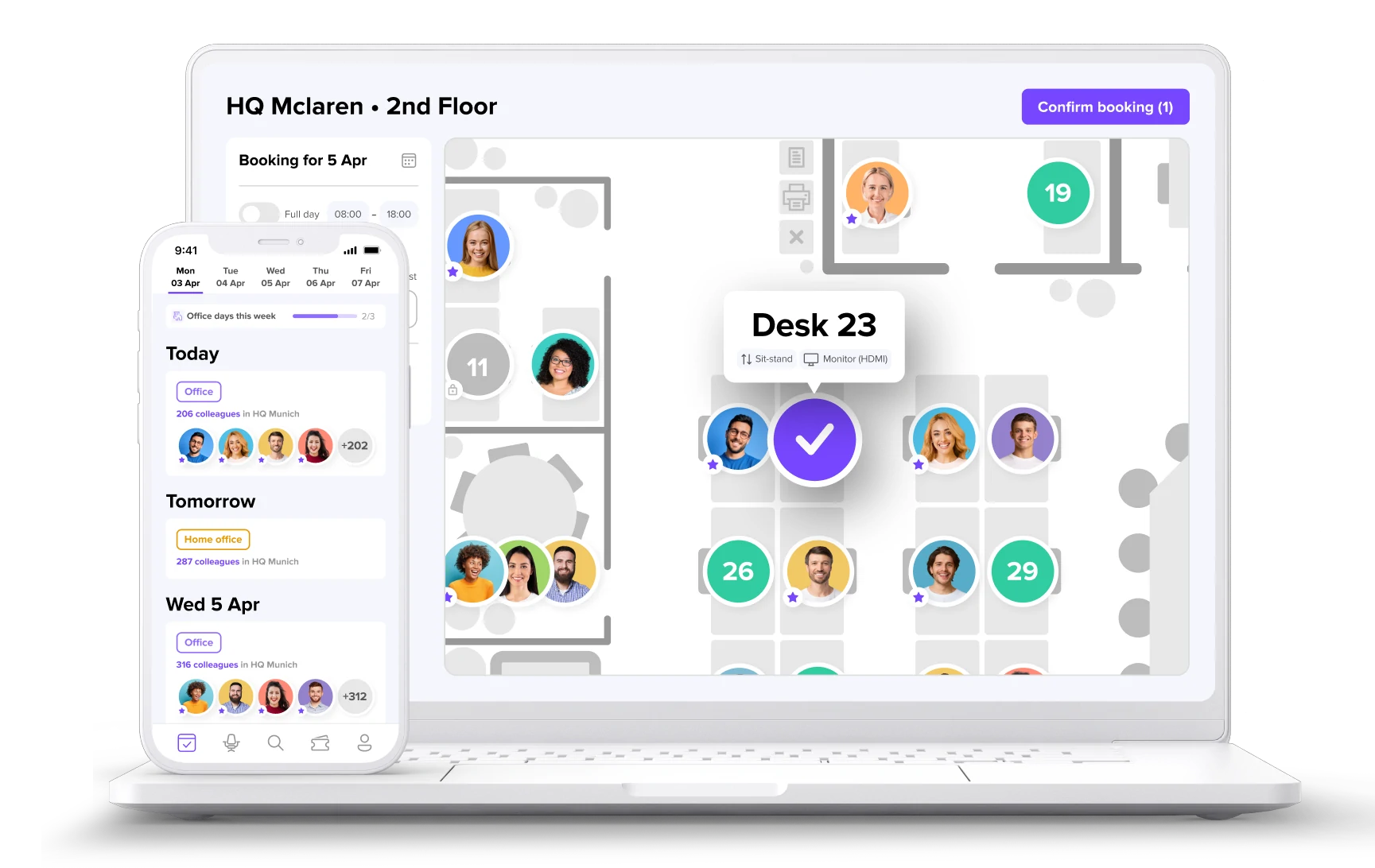
Manage hybrid teams with clarity, compliance, and confidence
- Centralize data across locations and roles
- Ensure privacy while improving workplace personalization
- Align space planning with real employee behavior