
.webp)
Workplace compliance: A practical guide for 2026
In hybrid work settings, employees now work across multiple locations, devices, and schedules, creating gaps in visibility, data security, and safety accountability. This makes workplace compliance in hybrid offices more complex, requiring enforcing hybrid policies, assigning safety roles like first aiders and fire wardens, and managing visitor access to meet health, safety, and data protection regulations such as GDPR.
This guide explains what workplace compliance means for hybrid offices, which regulations matter most, and how to maintain audit-ready records and safety standards without resorting to invasive surveillance or manual processes that do not scale.
What is workplace compliance?
Workplace compliance is following the laws, regulations, and internal policies that govern how your business operates. This means meeting your legal obligations to employees, customers, and government agencies while maintaining ethical standards across your organization.
Think of compliance as your company's rulebook. It covers everything from how you pay staff to how you protect customer data. When you stay compliant, you operate within legal boundaries and avoid penalties. When you fall short, you risk fines, lawsuits, and damage to your reputation.
Compliance splits into 2 main categories:
- External compliance: Following government laws and regulations that apply to your business. These rules are mandatory and enforced by outside authorities.
- Internal compliance: Adhering to policies your company creates for itself. While not legally required, these rules ensure fair treatment and smooth operations.
Both types matter equally. External compliance keeps you out of legal trouble, while internal compliance keeps your workplace running fairly and consistently.
What are the main types of workplace compliance?
Most organizations juggle several compliance areas at once. The specific rules vary by location and industry, but the core categories stay consistent. Understanding these areas helps you organize your efforts and avoid missing critical obligations.
Employment and labor laws
Employment and labor law forms the foundation. This covers your relationship with employees from hire to termination. You must follow anti-discrimination rules, provide proper contracts and fair wages, and handle layoffs legally.
Wage and hour
Wage and hour compliance area sits within employment law but deserves special attention. You need to pay minimum wage, track hours accurately, and classify workers correctly. Misclassifying an employee as a contractor is one of the most common violations. Up to 30% of US employers have misclassified at least one worker.
Health and safety
Health and safety rules require you to maintain a safe physical environment. This includes proper lighting, emergency exits, fire extinguishers, and protocols for workplace injuries. In many European countries, you must also ensure adequate first aiders, fire wardens, and evacuation helpers are present. For example, Germany typically requires at least one first aider per 20 employees, while requirements vary by risk level in countries like Italy and the UK.
Data protection
Data protection has become a critical compliance area in the digital age. You must secure employee and customer information, limit who can access it, and report breaches promptly. GDPR sets strict standards for European companies, but similar laws exist worldwide.
Apart from these, industry-specific regulations add another layer. Healthcare organizations follow patient privacy laws, financial firms face strict reporting requirements and manufacturing plants deal with environmental regulations.
Why is workplace compliance important?
Many leaders see compliance as paperwork and bureaucracy. In reality, strong compliance practices protect your business and create a better workplace for your people.
Here is what you gain:
- Legal protection: Violations lead to fines, lawsuits, and government audits. Compliance acts as insurance against these costly disruptions.
- Employee trust: Clear policies on pay, safety, and harassment create fairness. When people know their rights are respected, they engage more deeply with their work.
- Data security: Breaches destroy reputations and customer relationships. Proper controls keep sensitive information private and secure.
- Operational stability: Audit-ready records and clear processes mean business continues smoothly, even during investigations or regulatory reviews.
The cost of non-compliance extends beyond fines. You lose talented employees who do not want to work for a company that cuts corners. You lose customers who do not trust you with their data. You lose time dealing with legal battles instead of growing your business.
What makes workplace compliance harder in hybrid offices?
Hybrid work has created new compliance challenges. In a traditional office, you knew exactly where everyone worked, which devices they used, and who entered the building. Hybrid models split employees between home and office, creating gaps in visibility and control.
Data security across tools, devices, and locations
Your office is now wherever an employee opens their laptop. This expands your security perimeter significantly. People access company systems from home Wi-Fi, coffee shops, and personal devices.
Traditional security measures like office firewalls no longer protect you. You need to secure access regardless of location. This requires stronger identity management, multi-factor authentication, and tools built with privacy-by-design principles.
The challenge grows when employees use multiple apps and platforms. Each tool represents a potential vulnerability if not properly configured—unapproved AI tools alone add $670,000 to average breach costs. You need centralized control over who can access what, from where.
Reliable on-site visibility without surveillance-style tracking
Many compliance requirements need you to know who is in the building. Fire safety regulations require accurate headcounts. Insurance policies depend on knowing your office capacity. Tax laws care about where work happens.
But tracking attendance in hybrid work is delicate. You need visibility without spying on your people. Badge swipes provide data but do not help employees coordinate with each other or plan their days.
Modern workplace platforms solve this by letting employees book resources voluntarily. This gives you the data you need for compliance while respecting employee autonomy. People choose when to come in, and you get accurate records without invasive monitoring.
Visitors, safety roles, and real-time on-site accountability
In a fully in-person office, you always knew if your fire warden was at their desk. In hybrid work, your designated first aider might be home on Tuesday. This creates safety gaps.
You need systems that ensure safety roles are covered every day. If your fire warden works remotely, someone else must fill that role for the day.
Visitor management becomes more complex too. Paper logbooks at reception do not work when contractors, clients, and partners arrive at different times. You need digital logs that track exactly who is on-site in real-time. This satisfies safety audits and insurance requirements while keeping your workplace secure.
How to ensure workplace compliance step by step
Building a compliant hybrid workplace requires deliberate planning. Follow these steps to reduce risk and make compliance part of your daily operations.
Step 1: Write clear policies and keep one source of truth
Start with documentation. Employees cannot follow rules they cannot find or understand. You need written policies for every aspect of hybrid work, from data handling to attendance requirements.
These policies must live in one accessible location. Avoid scattering rules across emails, PDFs, and different systems. Create a central hub that serves as your single source of truth.
Update this hub immediately when laws change or policies shift. Link to it during onboarding and send regular reminders so everyone stays aligned.
Step 2: Assign owners and define approval workflows
Compliance fails when everyone is responsible, because then no one is responsible. Assign specific owners for different areas. HR owns employment law. IT owns data security. Facilities owns health and safety.
Define clear approval workflows for decisions that affect compliance. If a team wants new software, who approves it for security? If a manager changes remote work rules, does HR sign off? Clear workflows prevent rogue decisions that create liability.
This approach is how enterprises ensure compliance across multiple departments and locations. Each area has an owner, and cross-functional decisions follow documented approval paths.
Step 3: Train people in short, role-based modules
Training is often the weakest link in compliance programs. Long seminars rarely work. Break training into short modules specific to each person's role.
Managers need deep training on wage and hour rules to avoid asking teams to work off the clock. General employees need training on data privacy and attendance policies. Track all training completion, as these records are the first thing auditors request.
Required compliance training for employees should be documented and refreshed regularly. Laws change, and your team needs to stay current.
Step 4: Run internal audits and keep audit-ready records
Do not wait for regulators to find your mistakes. Schedule regular internal audits to check your compliance health. This lets you identify gaps like missing visitor logs or outdated safety certifications before they become problems.
Focus on keeping audit-ready records. Digital systems beat paper here. You should be able to pull reports on office attendance, visitor history, or training completion in minutes, not days.
Many workplace compliance services offer audit support, but you can handle much of this internally with the right tools and processes.
Step 5: Use workplace technology with privacy-by-design
Managing hybrid compliance manually is nearly impossible. Spreadsheets cannot track daily changes in attendance and desk usage. The right workplace management platform automates the heavy lifting.
Look for tools that prioritize privacy from the ground up. deskbird is built and hosted in Europe with strict GDPR compliance and ISO 27001 certification. This ensures you collect necessary data on space usage within a secure, privacy-respecting framework.
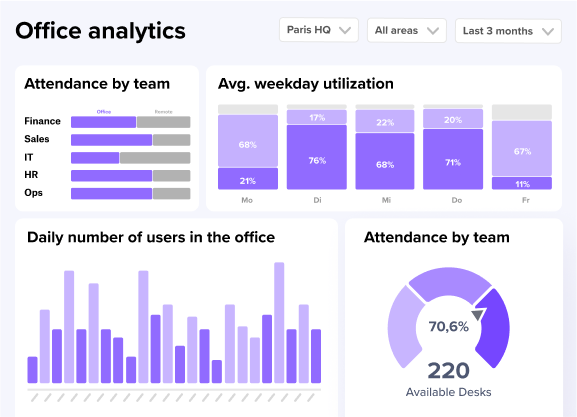
Workplace analytics provides the data you need for capacity planning and safety audits without compromising individual privacy. Visitor Management ensures you maintain accurate, compliant logs of external guests. Desk Booking gives you real-time visibility into who is on-site and where they are sitting.
These tools integrate with your existing systems like MS Teams, Slack, Outlook, and Google Calendar. This makes compliance easier for employees because they work within familiar tools rather than learning new platforms.
How do you monitor and enforce workplace compliance without breaking trust?
Enforcement is the most sensitive part of compliance. Too heavy-handed and you damage culture. Too lax and rules become meaningless. The goal is monitoring that feels fair and transparent.
Follow these principles:
- Be transparent: Tell employees exactly what data you collect and why. If you track office attendance, explain it is for safety and space planning, not micromanagement.
- Focus on patterns, not individuals: Use aggregate data to spot trends. If one department consistently ignores booking rules, address the team leader rather than singling out individuals.
- Make compliance easy: Most violations happen because rules are hard to follow. If booking a desk is difficult, people will just show up and sit anywhere. User-friendly tools make compliance the path of least resistance.
- Handle violations fairly: When rules are broken, apply consequences consistently. If you let some people ignore security protocols while punishing others, you create resentment and distrust.
The key is balancing oversight with autonomy. You need enough visibility to meet legal requirements and keep people safe. But you do not need to track every minute of every employee's day.
Modern workplace platforms strike this balance by focusing on space and resource management rather than individual surveillance. You see that 60 desks are booked on Tuesday, not that Sarah spent 47 minutes in the break room.
How deskbird supports workplace compliance in hybrid offices
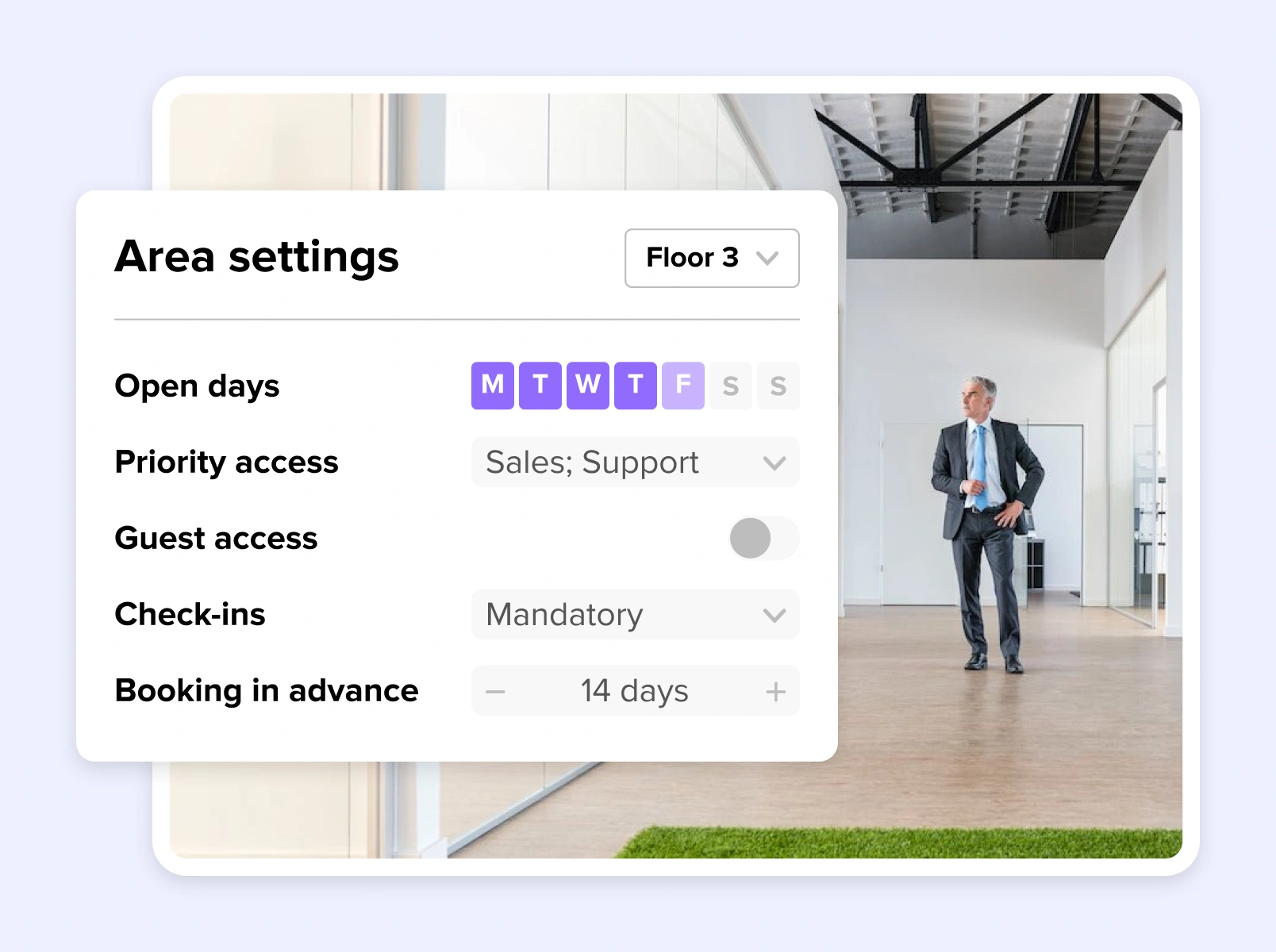
deskbird helps organizations manage hybrid work complexity while meeting strict compliance standards. By centralizing workplace management into one platform, it reduces data fragmentation and ensures you have the oversight needed for audits and safety.
Here is how deskbird specifically supports compliance:
- European-grade data privacy: Fully GDPR-compliant and ISO 27001 certified with all data hosted in the EU. This makes it safe for organizations with strict data protection requirements.
- Accurate safety logs: Desk booking shows exactly who is in the office and where they are sitting. In emergencies, you can instantly access a list of on-site employees.
- Visitor compliance: Visitor management replaces paper logbooks with a secure digital system. All guests are registered with precise check-in and check-out times.
- Space utilization audits: Detailed analytics on how space is used. This data proves your office capacity aligns with safety regulations and supports real estate decisions.
- Role management: Assign attributes like "Fire Warden" or "First Aider" to users. When employees book desks, you can see if you have enough safety personnel on-site.
The platform integrates with MS Teams, Slack, Outlook, Google Calendar, and HRIS systems like Personio and SAP. This means employees work within tools they already use, making compliance frictionless rather than burdensome. See how it works in your setup and book a demo.

Frequently Asked Questions
What does workplace compliance mean for hybrid teams?
What are the most common workplace compliance violations in hybrid offices?
Why is data protection harder to maintain in hybrid work environments?
How can workplace management software help maintain compliance records?
Get audit-ready hybrid compliance with deskbird
- Keep accurate on-site headcounts and visitor logs, without surveillance
- Prove capacity, safety coverage, and space use with privacy-first analytics
- Stay GDPR-compliant with EU hosting and ISO 27001 security built in
