Hybrid work implementation: A step-by-step rollout plan
Learn how to implement hybrid work step by step: from pilot design and feedback loops to company-wide rollout and hybrid onboarding.

Hybrid work implementation works best as a phased rollout: start with a pilot (4-6 weeks), gather data and feedback, refine your model, then scale company-wide. Key success factors are clear metrics upfront, consistent communication, manager training, and structured onboarding for new hires joining a hybrid environment.
Key takeaways:
- Run a pilot with clear metrics to test your hybrid work model in practice before scaling across your organization.
- Communicate relentlessly with clear messaging, constant updates, and Q&A sessions.
- Hybrid work is not a one-time launch. It requires continuous refinement, support, and regular feedback loops during implementation (and thereafter).
Implementing hybrid work at your organization
Hybrid work implementation follows 6 phases: define pilot parameters, establish a timeline and feedback loops, design a communication plan, execute the pilot, review and refine, then roll out company-wide. A typical full rollout takes 9-11 weeks.
When implementing hybrid work at your organization, you need a solid rollout plan. With a clearly mapped out pilot project, structured feedback, and strong communication, you can move from having a hybrid work concept on paper to company-wide adoption in less than three months. According to McKinsey, organizations that involve employees in the design of their hybrid model are significantly more likely to see strong adoption and sustained engagement.
How do you implement hybrid work step by step?
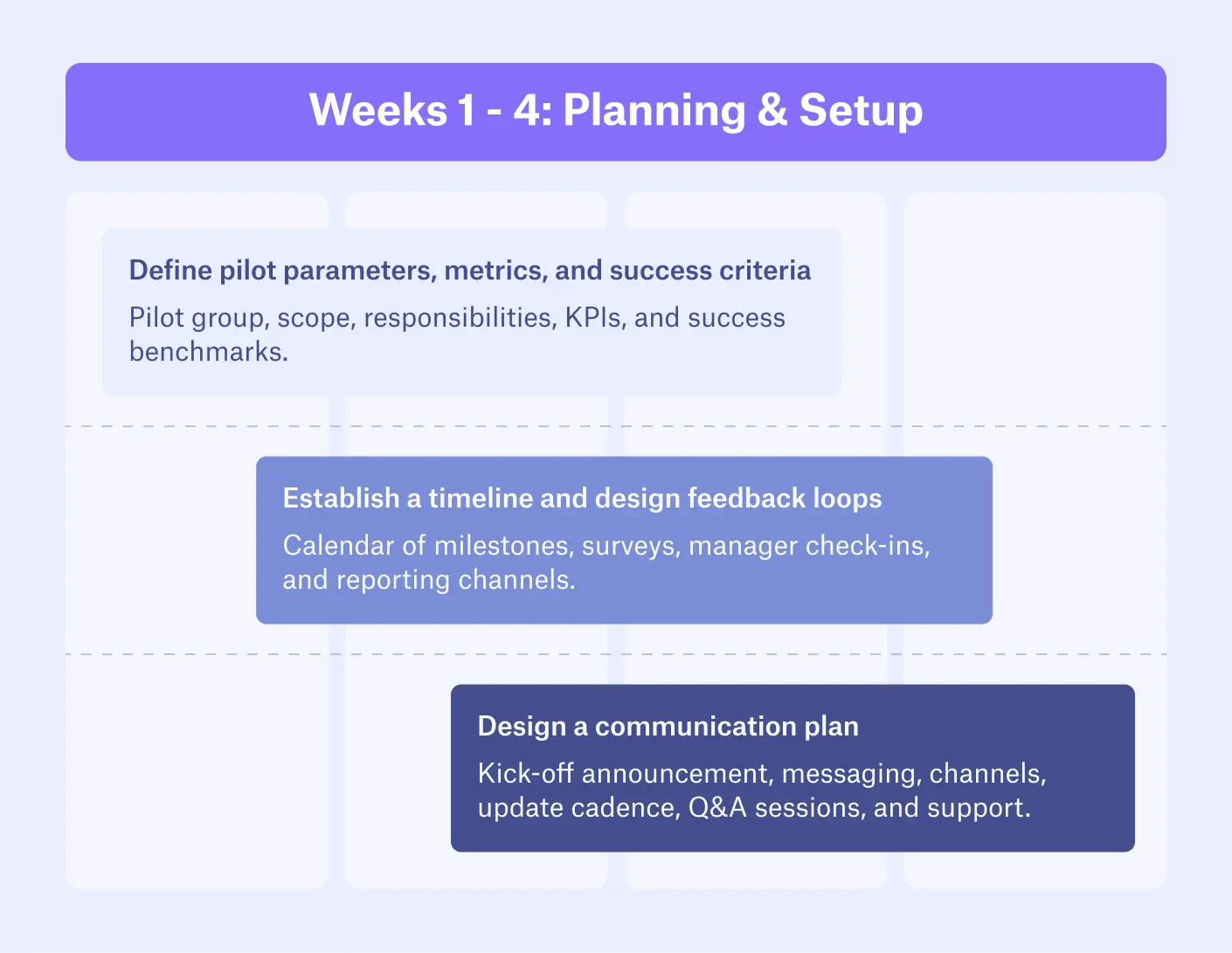
1. Define pilot parameters, metrics, and success criteria (weeks 1–2)
Set the framework for testing your hybrid model. This includes selecting a pilot group and defining scope, metrics, and criteria for evaluating the success of your hybrid test run.
- Pilot group: Choose teams, departments, and roles that are suitable for early adoption.
- Pilot scope: Define how long you want to run the pilot project (e.g., 4–6 weeks) and which locations and working patterns you want to test.
- Responsibilities: Assign clear roles and responsibilities for the pilot program, including an executive sponsor, admins, pilot leads, and members from the HR and IT team to support the project.
- Success metrics: Define the key performance indicators you’ll track during the pilot, such as productivity, engagement, collaboration, tool adoption, or employee satisfaction.
- Success criteria: Establish the benchmarks that determine whether the pilot is successful or not. Possible benchmarks could be over 80% employee satisfaction, stable or improved productivity, fewer than 10% unresolved IT issues, or positive qualitative feedback.
2. Establish a timeline and design feedback loops (weeks 2–3)
Work out a timeline for rolling out your hybrid work model and determine at which points and milestones you want to integrate feedback loops.
- Detailed timeline: Prepare a calendar with key milestones, such as pre-pilot training and orientation, pilot start and completion dates, deadlines for collecting feedback, and decision points for scaling, adjusting, or stopping the pilot.
- Feedback loops: Plan for weekly micro-surveys or pulse polls to gather feedback from employees in the pilot groups, schedule manager check-ins (e.g., every two weeks), and set up immediate reporting channels for IT or HR issues along with real-time suggestion boxes or chats for continuous input.
3. Design a communication plan (weeks 3–4)
Develop a detailed communication plan that covers anything from an official kick-off announcement to regular updates to Q&A sessions.
- Kickoff announcement: Communicate the pilot’s purpose, scope, participants, and timeline in a company-wide announcement.
- Communication channels: Determine which channels you want to use for communication during the pilot (e.g., email, Slack, or intranet).
- Clear messaging: Focus on the purpose, benefits, pilot details, and practical information like how to give feedback.
- Ongoing updates: Regular pilot status updates via newsletter, intranet, or all-hands meetings keep everyone in the loop. Set an update cadence (e.g., weekly updates during launch, then bi-weekly) to make sure no updates are missed.
- Q&A sessions: Host scheduled forums or even dedicated town halls for questions to create transparency and prevent open questions that might cause uncertainty.
- Support channels: Make sure to set up different communication channels for IT or HR issues and share the different points of contact so employees can provide continuous feedback
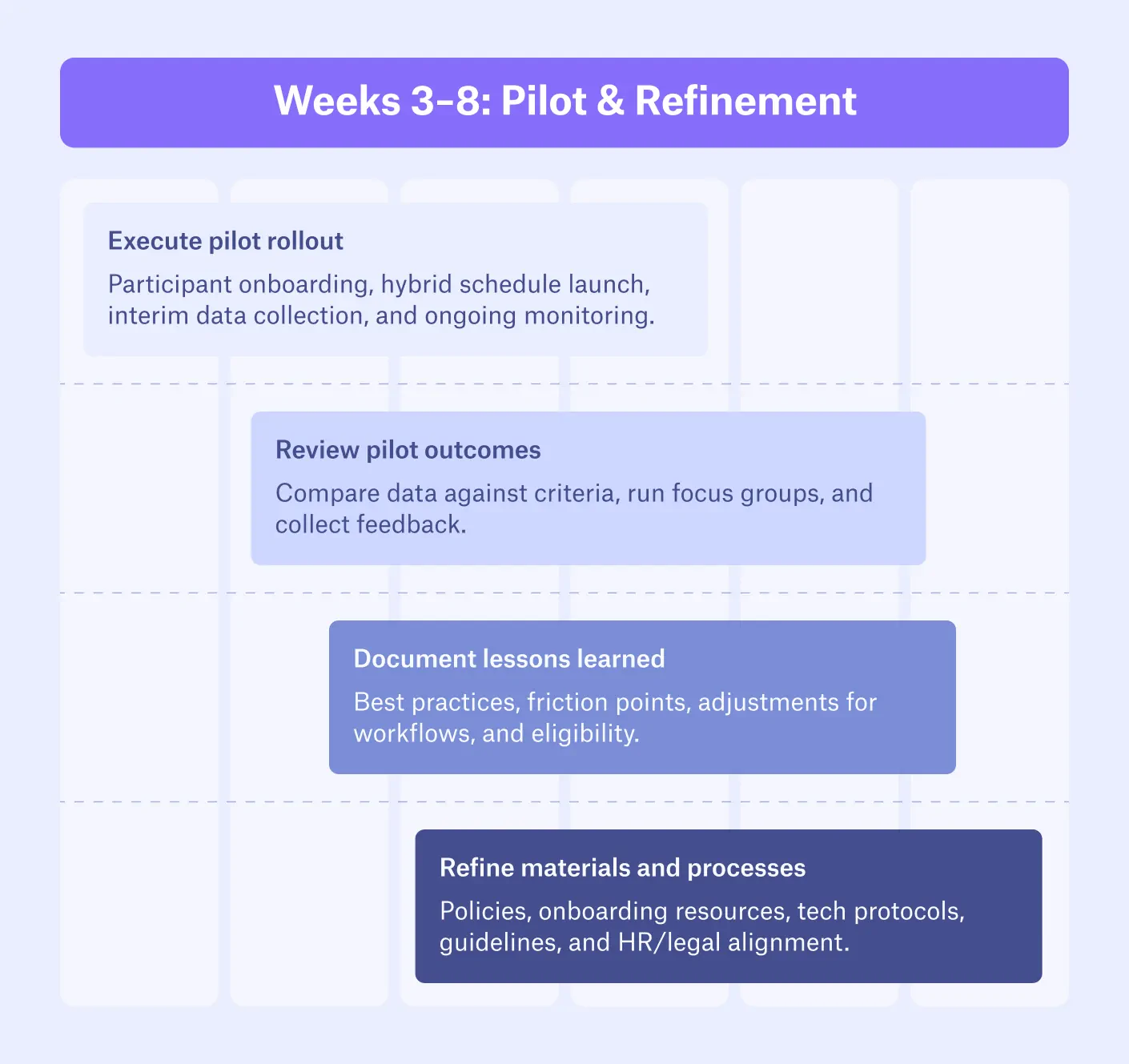
4. Execute your pilot rollout (weeks 3–8)
Launch the pilot with your selected teams and start testing your hybrid model in practice. This phase is about putting plans into action, supporting pilot participants, and collecting data and feedback throughout the ranks.
- Participant onboarding: Provide participants with training on new tools, policies, and best practices to ensure they’re ready to adopt the model.
- Hybrid schedule launch: Start testing hybrid work schedules as defined in the pilot scope, with clear expectations for attendance and flexibility.
- Interim data collection: Capture pilot data at the previously defined checkpoints (e.g., week 2 and week 4) using surveys and manager check-ins.
- Ongoing monitoring: Track your success metrics (productivity, engagement, collaboration, etc.) to identify trends and make timely adjustments.
5. Review, refine, and prepare for full rollout (week 8–9)
Evaluate how the pilot project went and analyze what worked well, where things fell short, and what needs tweaking before you scale. Looking at both the data you collected and the qualitative feedback of participants will help you shape a hybrid model that truly works for your organization.
- Analyze pilot data: Compare pilot results against established KPIs and success criteria to see where goals were met and where not.
- Collect qualitative feedback: Run focus groups, interviews, and open feedback sessions with participants and managers to capture their experiences. Document which challenges persist and note down ideas for improvement.
- Document lessons learned: Identify best practices, recurring friction points, and any other challenges that need to be addressed. Use these learnings to adjust schedules, eligibility criteria, workflows, and support setup.
- Refine materials and processes: Update policy documents, onboarding resources, tech protocols, and guidelines. Finalize your hybrid work policy, prepare training materials, and align HR and legal documentation for full rollout.
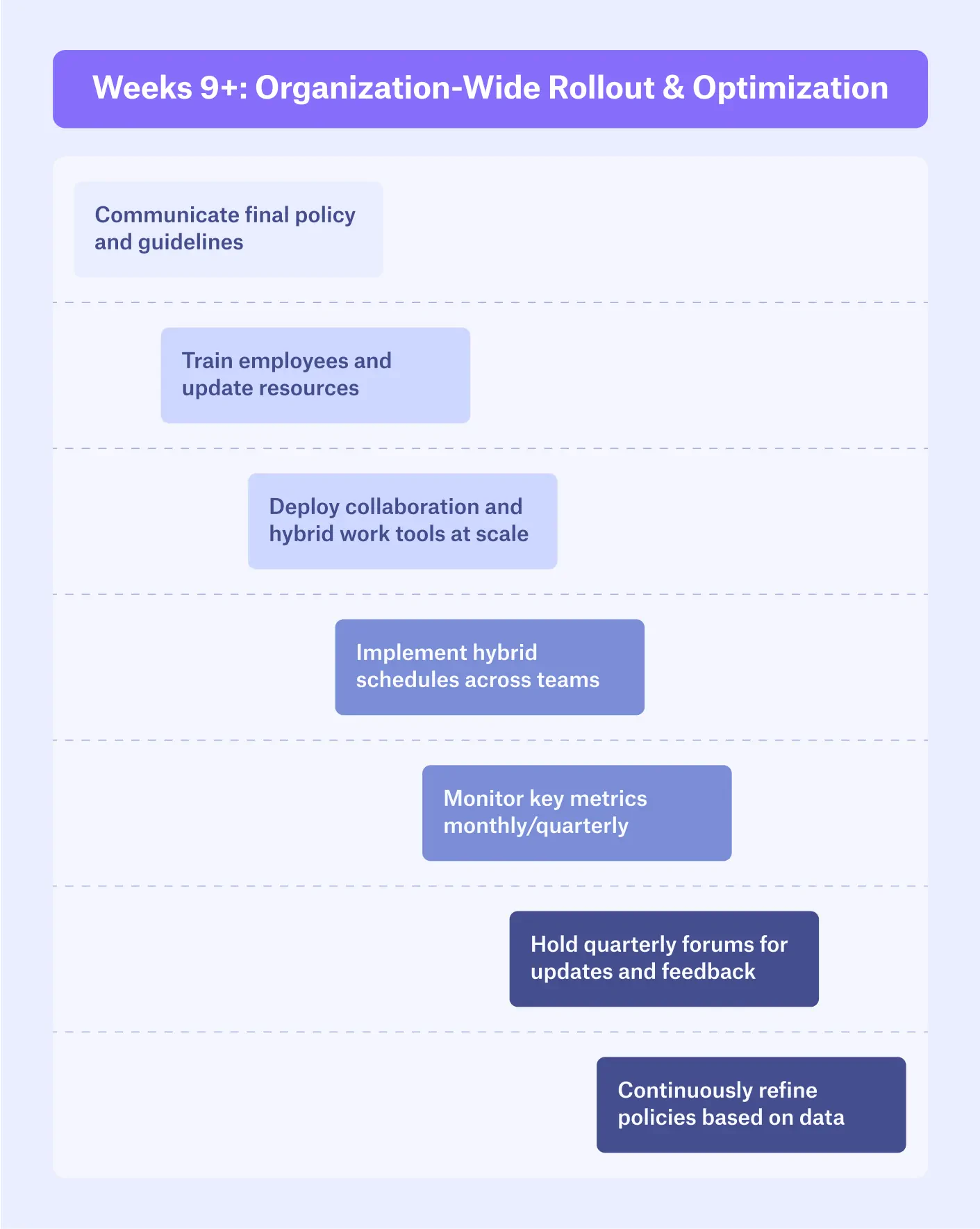
6. Roll out company-wide and drive ongoing improvement (weeks 9+)
Scale your refined hybrid model across your organization, while creating mechanisms to keep improving over time—including continuous monitoring, transparent communication, and regular adjustments.
- Communicate the rollout: Share the finalized hybrid work policy, guidelines, and support resources across your organization.
- Train and onboard at scale: Schedule organization-wide training sessions and update employee handbooks.
- Deploy technology at scale: Roll out collaboration and hybrid work tools to all employees and make sure IT support is ready and available.
- Implement new schedules: Introduce hybrid schedules across teams and locations, with clear guidelines to balance flexibility and business needs.
- Monitor metrics regularly: Track key indicators (e.g., productivity, engagement, collaboration, well-being) on a monthly and quarterly basis to identify trends.
- Hold quarterly forums: Use town halls or Q&A sessions to share outcomes, address challenges, and create transparency on what’s next.
- Continuously refine your policies: Review data and feedback regularly to adjust schedules, workflows, and policies as your hybrid model evolves.
How do you onboard employees in a hybrid work environment?
Onboarding in a hybrid environment is about creating an inclusive experience that works equally well for employees joining remotely, in the office, or a mix of both. A thoughtfully structured hybrid onboarding process helps new hires feel connected, supported, and productive from day one. An onboarding plan for hybrid work could include the following steps.
1. Preboarding logistics
- Align schedules and coordinate in-office and remote onboarding sessions.
- Ensure new hires receive equipment, accounts, and access to tools before their first day at work.
- Provide managers with communication templates and checklists to welcome new employees.
2. Structured orientation
- Run group onboarding sessions in inclusive settings (e.g., hybrid-friendly video calls with equal participation for in-office and remote attendees).
- Pair new hires with buddies or mentors to support integration across locations.
- Introduce company culture, values, and hybrid work policies early to set and manage expectations.
3. Collaboration setup
- Walk through core collaboration tools (messenger, project management, shared docs, etc.).
- Define team norms for synchronous and asynchronous collaboration and communication.
4. Inclusion and connection
- Facilitate introductions with peers and across teams, both online and in-person.
- Schedule 1:1 calls and regular check-ins with managers to build trust and support integration.
- Encourage participation in social events or team-building activities and make sure these events are accessible to remote and on-site staff alike.

How to implement hybrid work with deskbird
At deskbird, we've supported hundreds of businesses during their transition to hybrid work. During the onboarding process, we guide organizations through several key steps to get their hybrid work journey off to a good start. This includes:
- Clarifying priorities for hybrid work, whether it’s streamlining workspace booking and office operations, optimizing office attendance and employee engagement, or maximizing office ROI and sustainability.
- Defining roles and responsibilities—from IT, HR, and workplace champions to contract owners.
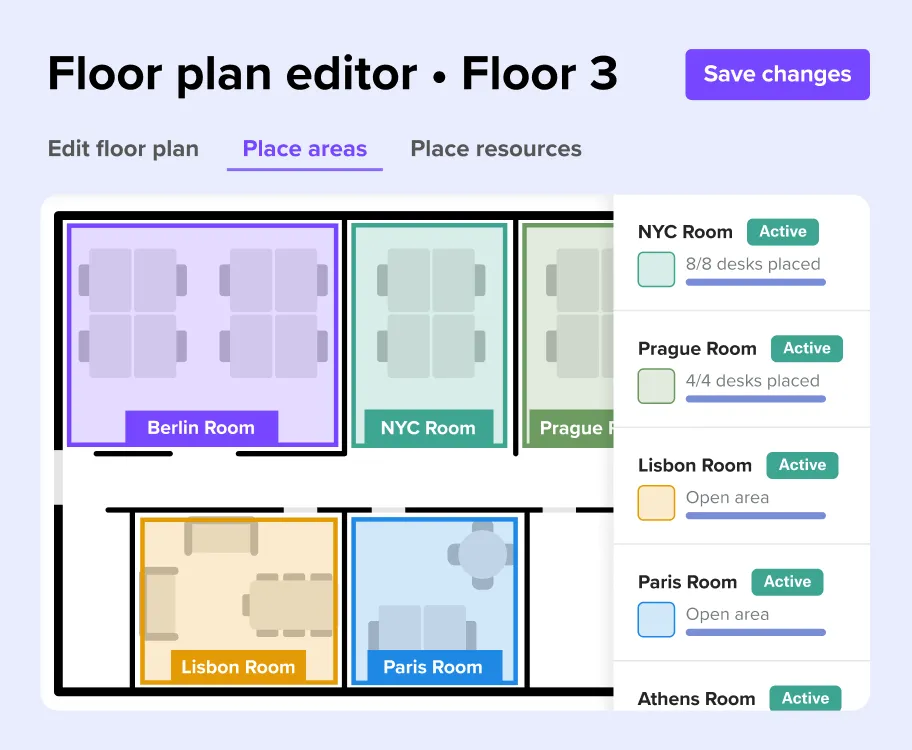
- Sharing best practices and tips for adoption, such as using our native Slack integration, interactive floor plans, or easy one-click booking function.
How IU went hybrid with deskbird
With this support, the IU International University of Applied Sciences successfully introduced deskbird for their 800 employees across 30 locations in Germany—and in record time. After the project kickoff and some fine-tuning of the product to meet IU’s needs, they announced the launch of deskbird as their new desk booking solution just a week before the start. IU employees can now choose a date, quickly check where their colleagues are seated, and book a desk in their preferred area.
We were looking for an easy, intuitive tool that could still cater for all our needs. Especially as the project involved a restructuring of our office layout, it was amazing how flexible deskbird was with our changing needs. With deskbird, we have found a software that offers great user experience along with all the features we wished for, especially SSO and access restrictions which were very relevant for us!
—Jacqueline Schuster, Senior Project Lead HR at IU
How Testbirds went hybrid with deskbird
Testbirds experienced an equally swift and smooth hybrid work implementation with deskbird. After an initial demo call, it quickly became evident what was needed, and within just a few weeks the team was already sharing positive feedback. Because deskbird works seamlessly within MS Teams, there was no need for lengthy training sessions, and everything was explained and set up in a quick meeting.
Hybrid work implementation checklist
Successful hybrid work implementation comes down to hitting the right milestones in the right order. Use this checklist to keep priorities visible during rollout and avoid the most common pitfalls.
- Define clear success criteria early so you know when the pilot is ready to scale.
- Ensure leadership alignment and sponsorship throughout the rollout.
- Provide managers with training on inclusive leadership and hybrid team best practices.
- Prepare IT, HR, and facilities teams to respond swiftly to hybrid-related challenges.
- Communicate consistently, use multiple channels and repeat key messages.
- Build feedback loops into every stage (e.g., surveys, check-ins, open channels).
- Make sure all employees have equal access to tools, resources, and opportunities.
- Celebrate milestones and share success stories early to build trust and promote adoption.
Implementing hybrid work: Planning is everything
A successful hybrid work rollout comes down to structured planning—from defining success metrics in the pilot to establishing feedback loops, communicating transparently, and refining your hybrid setup based on employee and manager feedback. However, hybrid work implementation doesn’t end with launch. It’s a continuous process of feedback, iteration, and communication.
A key part of refining your hybrid model is tracking the right metrics. In the next chapter, we’ll explore key hybrid work success metrics and how to measure engagement and productivity with outcome-based KPIs so you can prove the value of hybrid work for your organization and keep improving over time.
Hybrid Work Implementation FAQs
What is the biggest reason hybrid work implementations fail?
The most common cause is poor planning before launch: skipping a pilot, setting no clear success metrics, and failing to align leadership before announcing the model to employees. From there, the problems compound. Managers who are not trained to lead hybrid teams apply inconsistent standards, employees receive conflicting messages, and the rollout stalls. Structured planning, dedicated IT and HR support, and continuous feedback loops from day one are the most reliable ways to avoid this.
How long should a hybrid work rollout take?
A typical rollout spans 9–11 weeks. This includes a 4–6 week pilot phase, 2 weeks for evaluation and refinements, and a staggered organization-wide launch. Larger companies may need longer, but starting lean and refining along the way helps maintain momentum and ensure stakeholder buy-in.
What tools are needed to support hybrid work?
Key tools include collaboration platforms (e.g., MS Teams or Slack), hybrid scheduling tools, desk and room booking solutions, and secure remote access technology. The right mix of tools reduces friction, supports flexibility, and ensures everyone has equal access to information and opportunities.
How do you measure the success of hybrid work implementation?
Track outcome-based KPIs such as productivity, employee satisfaction, tool adoption, collaboration quality, and attendance patterns. Combine quantitative data with qualitative feedback from surveys and focus groups to get a complete picture of engagement and effectiveness.
What are the biggest risks when executing a hybrid work rollout?
The top risks are poor communication, lack of leadership buy-in, insufficient IT/HR support, and mismatched employee experiences. Mitigating these risks requires proactive planning, dedicated support channels, and frequent check-ins to detect issues before they turn into real problems.
Effortlessly implement hybrid work with deskbird
- Implement within days, thanks to quick and straightforward set-up and onboarding
- Set clear guidelines for your teams and customize your hybrid office policies in minutes
- Effortlessly set up your office as an interactive floor plan and start booking
Trusted by 100,000+ employees worldwide