Hot desking 101: what it is and why companies use it
Learn what hot desking is, how it differs from hoteling, its key benefits and challenges, and how to decide if it's right for your office.
Hot desking is a flexible office setup where employees choose any available desk each day instead of having an assigned seat. It reduces real estate costs, supports hybrid work, and encourages cross-team collaboration. Success depends on thoughtful office design, a clear policy, and the right booking technology.
What is hot desking?
Hot desking is a workspace arrangement where employees do not have assigned desks. Instead, they choose any available desk when they arrive at the office, typically on a first-come, first-served basis or by booking in advance through a desk reservation system.
Having gained prominence with the rise of remote and hybrid work models, it's a great way to use office space more efficiently, adapt to changing team needs, break down silos, and spark collaboration. As employees split their time between working from home and the office, hot desking allows them to choose their workspace based on daily tasks and needs, thereby making the work environment more adaptable and dynamic.
Hot desking vs. hoteling
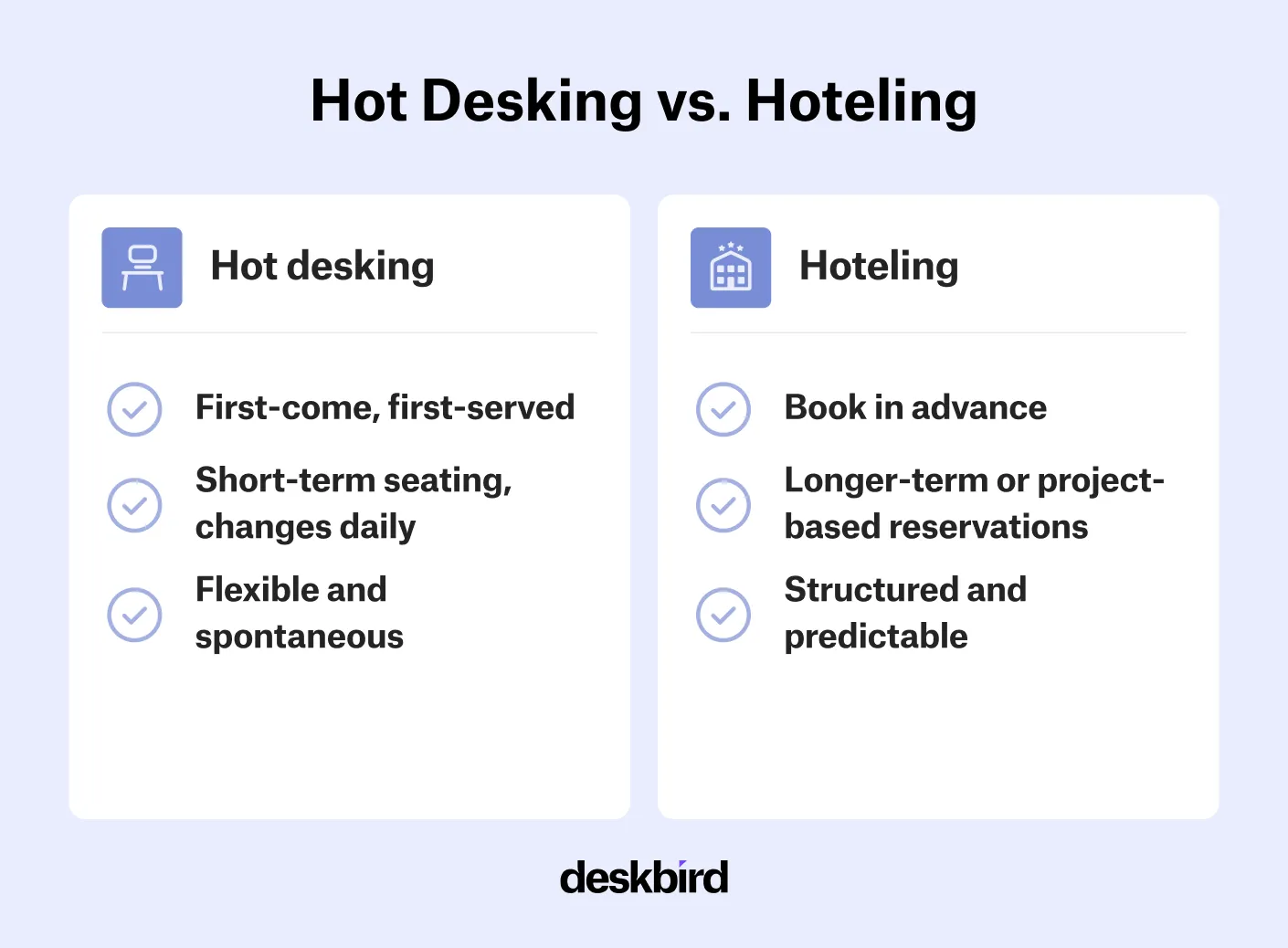
Hot desking and hoteling both eliminate assigned seating, but differ in how access is managed. Hot desking is unstructured: employees take any available desk on arrival. Hoteling uses advance reservations, typically for longer or project-based stays.
The term 'hot desking' is often used interchangeably with office hoteling. However, there are slight differences between the two concepts when it comes to how access to available desks is managed.
In a nutshell:
- Hot desking: Workstations are taken on a first-come, first-served or time-slot basis.
- Hoteling: Desks are reserved in advance through a booking system and are kept for a longer, often project-based period.
How common is hot desking today?
According to a 2024 CBRE report, only 40% of organizations in the United States still operate with a 1:1 desk-employee ratio, meaning each employee has their own desk in the office. In 2023, the percentage of businesses without hot desking was still 56%. The same report shows that 92% of organizations surveyed have implemented a hybrid work model which makes a traditional 1:1 desk-to-employee ratio obsolete.
For the DACH region, the numbers are similar. As shown by the 2025 Office Report by teamgnesda, 61% of companies in German-speaking countries have a desk-sharing ratio between 0.5 and 0.8. This goes to show that hot desking is not only still a thing, but it’s even gaining in popularity. As hybrid work matures, more organizations are adopting desk-sharing models to match attendance patterns, reduce unused space, and create more dynamic workplaces.
What are the main benefits of hot desking?
Initially seen as a means to save on real estate costs, hot desking delivers clear, data-backed benefits for both employees and employers in hybrid and flexible office environments. It supports employee choice, strengthens collaboration, lowers costs, and helps maintain a clean, modern work environment. The concept also aligns well with sustainability efforts, since it reduces the number of desks and workstations needed and thereby helps cut back on wasted space.
Hot desking benefits for employees
- Task-based workspace choice: Employees select the environment that best fits their current task (e.g., focus work, collaboration, brainstorming), which boosts performance and satisfaction.
- Improved flexibility & hybrid support: With hot desking, employees who come into the office only on certain days can avoid being tied to a fixed desk.
- Increased productivity: When implemented properly, hot desking can help increase productivity, since it allows employees to choose the workspace that best suits their tasks and needs. Surveys show that 46% of workers feel more productive in a hot-desking environment—in a well-designed hot-desking setup that offers a mix of different workspaces, this number even increases to 85%.
- Enhanced collaboration and networking: Without fixed seating, employees interact more often with colleagues from different teams which, in turn, fuels communication and collaboration across different departments and supports informal learning.
- Better employee wellbeing: Dynamic movement and switching between different spaces and work environments reduces monotony, sparks creativity, and exposes employees to new perspectives, which fosters the exchange of new ideas.

Hot desking benefits for employers
- Optimized utilization of office space: Studies show that more than one-third of available desks remain unused in organizations across the globe. Hot desking solves this issue by allowing for better space and resource planning. It helps you use every square foot of your office effectively, reducing dead zones and bringing more life to your workplace.
- Clean and clutter-free workplace: Not having permanent desks encourages employees to adopt tidier work habits, which contributes to a more professional work environment—especially when supported by a clean desk policy.
- Improved talent attraction and retention: Flexibility appeals to modern workers and supports competitive recruitment, ultimately helping businesses attract and retain talent.
- Lower real-estate and equipment costs: With a smaller office footprint per employee, you can either downsize your office space or use your existing space more efficiently. Because of this flexibility, rent, energy, and maintenance costs drop. In fact, tools like deskbird can help you cut costs by up to 32%.
What are common hot desking challenges and concerns?
Despite its benefits, hot desking has some potential drawbacks, such as:
- Lack of personalization: Employees might miss personalizing their workspace, which could affect their sense of ownership and engagement.
- Potential for conflict and miscommunication: The lack of fixed workstations can lead to conflicts over desk choices and challenges in maintaining effective communication.
- Health and hygiene concerns: Sharing desks raises concerns about cleanliness and the spread of germs, which is especially important in the context of heightened awareness due to the pandemic.
- Collaboration challenges: Hot desking can make it harder for employees to find each other, which can slow down communication and weaken team cohesion. This can lead to feelings of isolation and create obstacles for effective teamwork—unless you use a solution like deskbird that lets employees find their teammates with interactive floor plans.
Does hot desking affect productivity?
Hot desking can increase productivity when implemented well. 46% of workers report feeling more productive in a hot desking environment, rising to 85% in well-designed setups that offer a variety of workspace types. Flexible seating gives employees more control over where and how they work, which can have a positive impact on focus and output. The key variable is fit: the right office design and tech infrastructure determine whether the model helps or hinders.
However, hot desking is not a universally effective means to increase productivity. Its impact on productivity depends on workplace fit, employee preferences, and thoughtful implementation. A robust technology infrastructure (including reliable Wi-Fi and access to work files from any device) is crucial. Without proper tech setup, productivity can suffer.
How to know if hot desking is right for your office?
Hot desking works best for organizations that already show signs of underused space, cross-team collaboration, and employee demand for flexibility. The questions below help you evaluate readiness across the areas that matter most: culture, technology, space design, and employee sentiment.
- Do leaders support flexible work arrangements?
- Do employees already switch workspaces occasionally?
- Is your office frequently underutilized?
- Do teams collaborate across departments?
- Is your workforce comfortable with digital tools?
- Do employees trust that resources will be available when needed?
- Does your culture value autonomy and responsibility?
- Do work tasks benefit from different space types?
- Is your organization open to change?
- Do employees want more flexibility in how and where they work?
- Is your technology infrastructure reliable enough to support booking systems and hybrid work tools?
- Does your office layout offer a mix of quiet areas, collaborative zones, and accessible spaces?
Get ready to make hot desking work for you and your team
Hot desking offers a modern, adaptable approach to workplace design that supports hybrid work, cuts unnecessary costs, and helps employees work in the environments where they feel most productive and engaged. But its success depends on thoughtful planning, the right office setup, and tools that make the hot desking experience straightforward.
In the next chapters of this guide, we’ll walk you through the different steps that are needed to make hot desking work for your organization, including hot desking implementation, setting up your office for hot desking, choosing the right hot desking software to support booking, teamwork, and analytics, and managing hot desking in day-to-day operations.
Frequently Asked Questions
We can help!
What is hot desking?
Hot desking is a workspace arrangement within an organization where various individuals utilize desks on a flexible, as-needed basis at different times. This system is designed to optimize space utilization and minimize real estate exposure by eliminating excess office space.
What is the difference between hot desking and hoteling?
Hot desking and hotelling are both designed to maximize office space efficiency, but they cater to different needs. Hot desks promote spontaneity and choice every day because there’s no need for reservations. Similarly to hot desking, hoteling refers to booking a desk for a longer period of time, such as a week or more. You need to understand these differences to decide which model works best for your organization.
What are the advantages of hot desking?
One major advantage is greater flexibility for your employees and their work arrangements, which creates more freedom and makes your employees happier. Also, hot desking allows the company's space and resources to be used more efficiently. It's not just desk space that can be saved, but space in total—meaning lower rent, heating costs and less office equipment. Hot desking can therefore lead to cost savings and increased efficiency.
What are the disadvantages of hot desking?
Hot desking can come with a few downsides. Employees may miss having a personalized workspace, which can reduce their sense of ownership and engagement. The lack of assigned seating may also create conflicts over desk selection and make day-to-day communication slightly more challenging. In addition, shared desks can raise health and hygiene concerns.
How to know if hot desking is right for my company?
While hot desking can be an excellent solution for some companies, it may not be suitable for everyone, and it's essential to assess whether it's the right fit for your workplace. To do so, consider whether your organization is culturally ready, digitally equipped, supportive of flexible work, and already showing signs of underused office space, cross-team collaboration, and a desire among employees for more autonomy and flexibility.
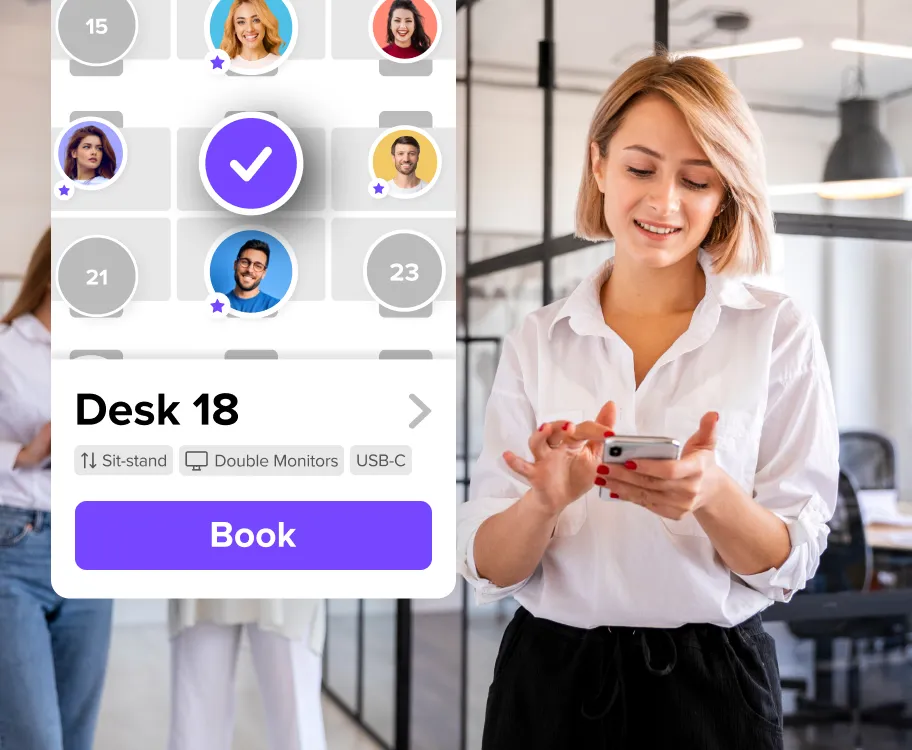
Easily introduce hot desking with deskbird
- Let employees book desks on the go with an easy mobile app
- Use assigned spaces to restrict access for resources if needed
- Gain real-time visibility into who’s in and where they sit
Trusted by 100,000+ employees worldwide