5 best Robin alternatives & competitors
We compare the top Robin competitors in detail and highlight what each management platform offers to help you choose the best fit for your workplace.
.webp)
Quick verdict
For mid-market and enterprise teams running hybrid offices, deskbird is the strongest Robin alternative. It covers desk booking, room booking, visitor management, hybrid attendance management, and workplace analytics in one platform, with transparent per-user pricing starting at €2.75/user/month, no annual lock-in required, and EU-hosted infrastructure that meets GDPR requirements out of the box.
If your priority is enterprise-grade occupancy analytics at very large scale, Robin remains a credible choice, and its own pricing page confirms it's built for organizations with 500 or more employees. If you need a complete hybrid workplace platform that's faster to roll out, easier for employees to adopt, and built for the European compliance environment, deskbird is the better fit.
Robin alternatives: table overview

Skedda
Eptura Engage
Kadence
Joan
Why look for an Robin alternative?
Robin is built around desk and room booking, visitor management, and workplace analytics, with strong features for occupancy tracking, digital signage, and AI-assisted scheduling. It targets organizations with 500+ employees and positions itself firmly at the enterprise end of the market.
Some teams find it limiting when it comes to hybrid attendance management. Others run into gaps with HRIS integrations, or find that pricing is hard to forecast without a formal quote process. Robin's annual contracts and 500+ employee baseline can make it a poor fit for teams below that threshold, or for organizations that require EU data residency.
If your workplace needs deeper hybrid coordination and people management, you might need an alternative to Robin that:
- Provides structured attendance management and approval workflows, not just space booking and occupancy data
- Integrates directly with HRIS systems like SAP, ADP, and Personio for employee-level visibility
- Offers transparent, per-user pricing with no annual lock-in required
- Delivers strong EU data residency on top of SOC 2 Type II and ISO 27001 certification for compliance-heavy environments
Best Robin alternatives and competitors
1. deskbird
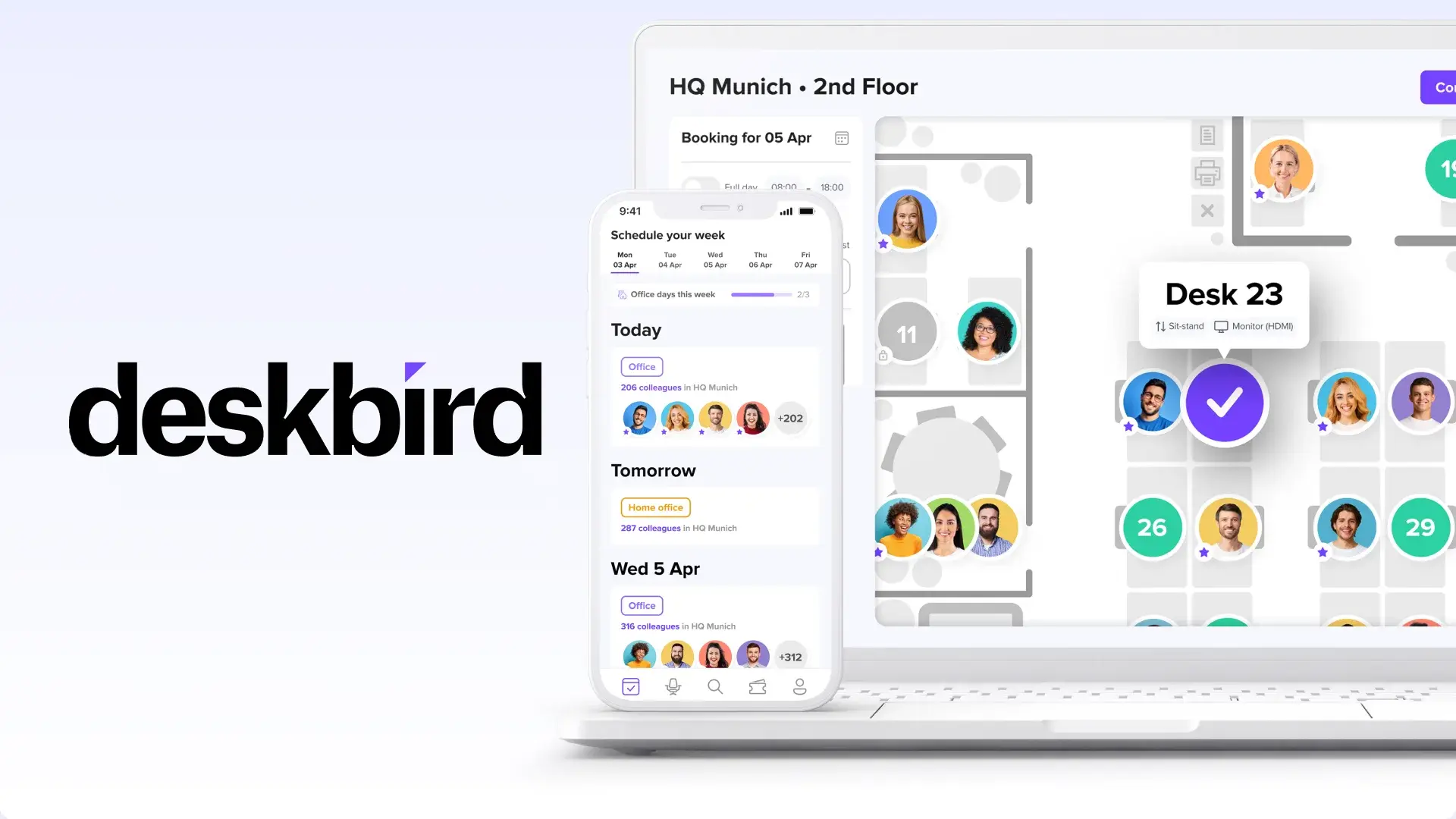
deskbird is a leading workplace management platform built for companies navigating the realities of hybrid work.
deskbird helps organizations manage their entire in-office experience: hybrid attendance management, space planning, real-time presence tracking, and built-in visitor management. It's built to support employees, operations teams, and IT with the structure, visibility, and compliance a modern workplace requires.
Why do hybrid teams choose deskbird over Robin?
Many organizations need more than space intelligence. deskbird manages the entire office in a secure, scalable platform: desks, rooms, parking spots, visitors, and analytics. It requires less IT overhead than Robin, with transparent pricing and EU-level secure infrastructure.
deskbird is a standout Robin alternative for workplace management in mid-market and enterprise companies. Connecting with the platforms you already use, deskbird sees a 90%+ adoption rate. That matters beyond rollout: when employees actually use the platform, booking data gets accurate. Accurate data is what tells you whether your office is sized right, when to open more desks, and where you're wasting space.

Built for more than the front desk
More than space analytics, deskbird is a complete solution for hybrid workplace management. It connects people, schedules, and presence in one place.

Real-time presence
With geofenced, QR-based, and automatic sensor-free check-ins via deskbird Dock, deskbird gives accurate occupancy data and attendance insights without additional sensor hardware.

Fast to roll out
Teams get up and running without training sessions, complex configuration, or technical overhead, backed by a 90%+ adoption rate.

Secure and scalable by design
Both platforms are SOC 2 Type II audited and ISO 27001 certified. deskbird adds GDPR compliance and EU data hosting. All data is stored in Germany and never leaves Europe.
Integrations
deskbird connects with SSO, SCIM, Google Workspace, Outlook, Teams, Slack, and popular HR tools including Personio and SAP. Setup is straightforward and ongoing support needs stay low, which reduces admin workload while keeping everything in sync.
deskbird pricing
deskbird offers transparent pricing starting at €2.75/user/month (annual) or €3.50/month (monthly), so teams only pay for the features needed at their stage of growth. For companies moving from tools like Robin, deskbird delivers stronger long-term ROI by improving in-office presence and reducing operational complexity.
deskbird is incredibly easy to use and quick to implement. The user interface is clean and intuitive, so our team had no trouble adapting to it. Booking desks, checking who’s in the office, and managing our hybrid schedules has become much more organized. The setup process was smooth, and the customer support team was responsive and helpful throughout.
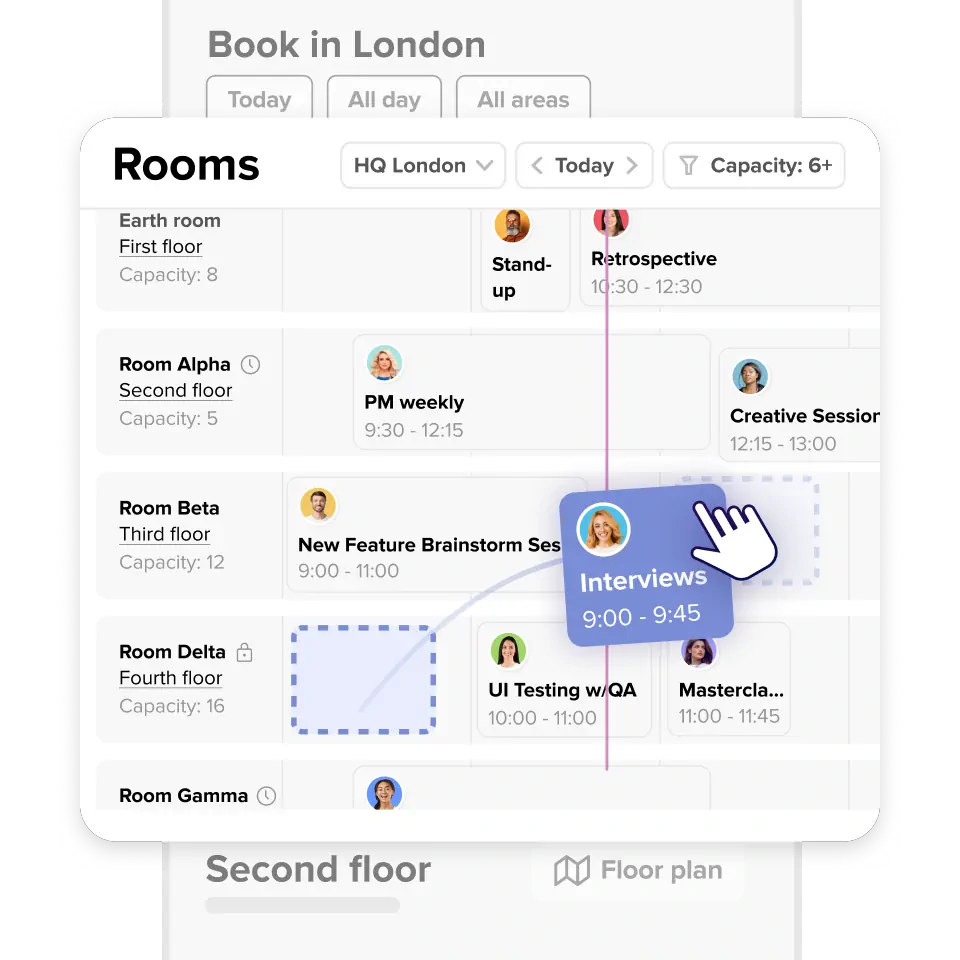
Easy to use, quick to implement
- Bring together people and spaces in a single, user-friendly platform
- Fuel workplace decisions with accurate utilization data insights and analytics
2. Skedda
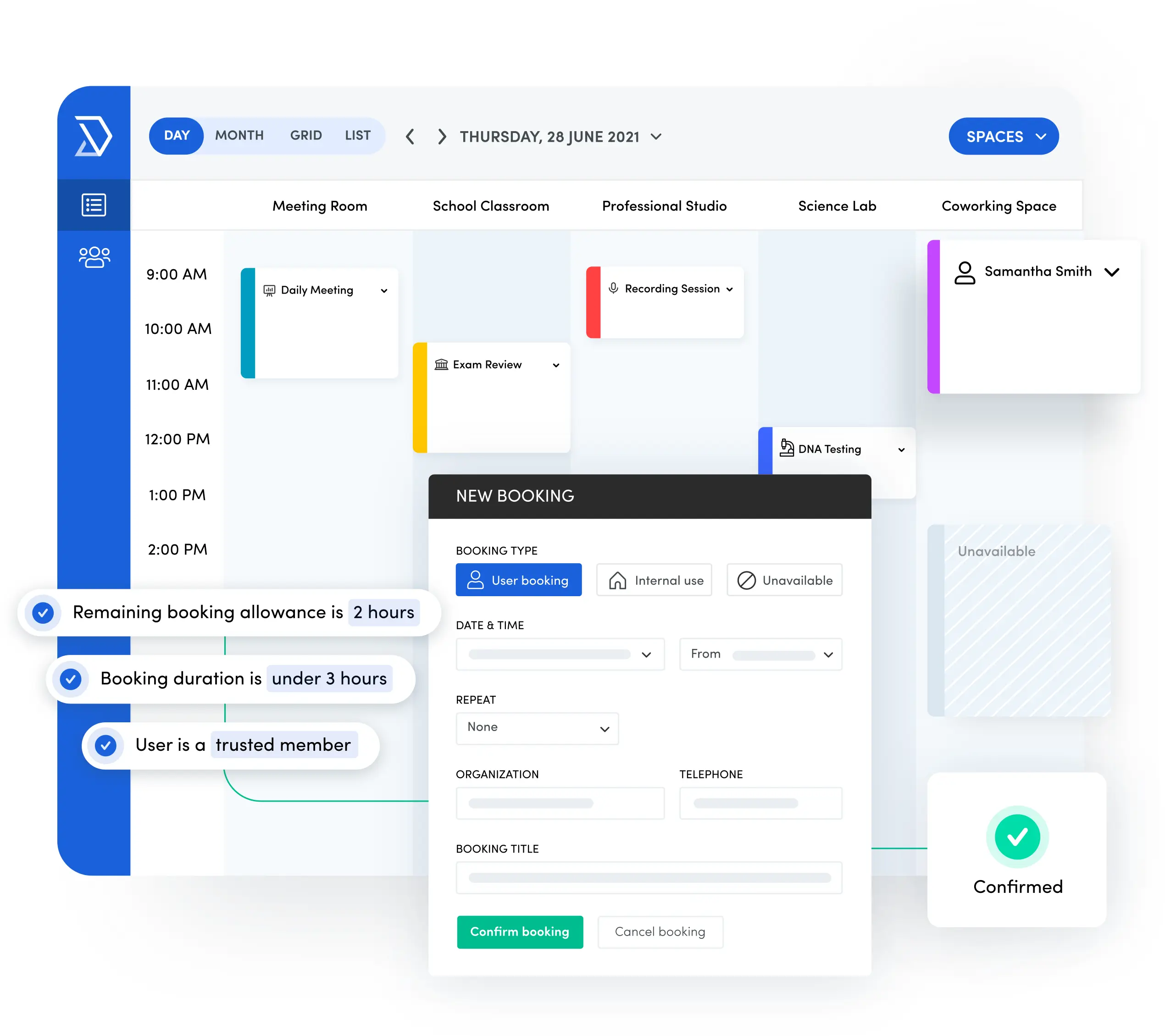
Skedda is a scheduling platform designed primarily for venue-style bookings: coworking spaces, studios, and sports facilities. Its strengths lie in self-service room and desk booking, embeddable calendars, and public-facing scheduling workflows. For organizations managing external access or simple space reservations, it offers a lightweight experience.
For hybrid office environments, Skedda may feel limited. It does not currently support structured attendance workflows, presence tracking, or team coordination features. Compared to tools like Robin or deskbird, it also lacks native event management and HRIS integrations, making it less suited for companies focused on employee engagement and the in-office experience.
Skedda pricing
Plans start at $99/month for 15 spaces (Starter), rising to $149/month for 20 spaces (Plus) and $199/month for 25 spaces (Premier), billed annually. Advanced features are only available on higher tiers.
Skedda potential drawbacks
- Lacks event management or native HRIS connectors (Personio, SAP, etc.)
- Fixed annual pricing model with limited modularity
- No hybrid policy support, check-ins, or team coordination tools
Skedda pros
- Embeddable calendar and public scheduling options
- Easy-to-use interface for self-service room and desk booking
- Well-suited to coworking spaces and shared venue management
3. Eptura Engage
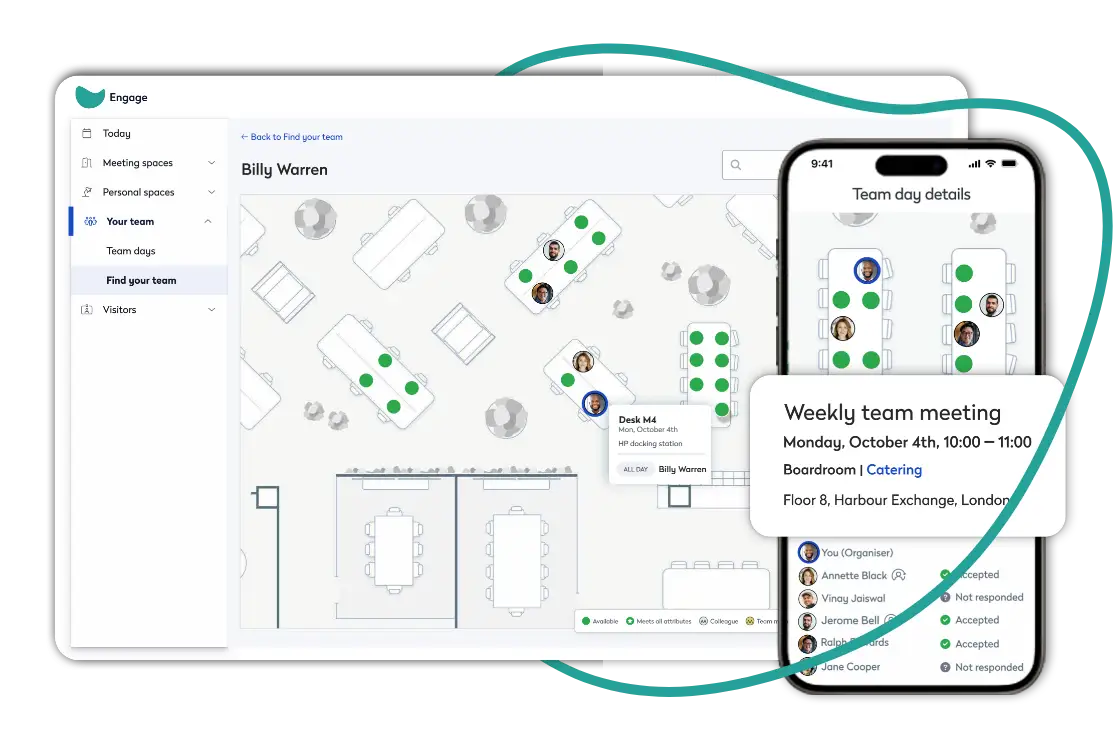
Eptura Engage (formerly known as Condeco) is an enterprise-focused room booking and visitor management tool. Their range of products now includes badge-based visitor check-ins (Eptura Visitor, formerly proxyclick), real estate navigation (Serraview) or workplace operations (Archibus).
Its tools are often geared toward very large, complex organizations with centralized IT and longer onboarding cycles. The range of products can feel fragmented and require more configuration to solve issues and fit evolving hybrid needs. For companies seeking fast setup, modern UX, and modular flexibility, other platforms may offer a smoother path.
Eptura Engage pricing
No public prices exist across any Eptura product. Every quote requires a sales demo and a minimum one-year contract, which makes costs harder to forecast, especially for growing teams.
Eptura Engage potential drawbacks
- Pricing not publicly displayed nor the free trial is readily available on website
- Wide range of tools can feel fragmented and complex to set up and onboard
- Reviewers mention complex configurations and non-intuitive UI
Eptura Engage pros
- Strong visitor compliance workflows (badges, legal docs, front-desk check-in)
- Integration with Microsoft ecosystem
- Hardware support

4. Kadence

Kadence is a Robin alternative platform built around automation and coordination. It supports check-ins, floor plans, attendance tracking, and booking, powered by Kadence AI, a conversational assistant embedded in Microsoft Teams and Slack that books desks and rooms, invites visitors, and surfaces teammate presence on request. Teams can create office "neighborhoods" to align presence, and SpaceOps is a space scenario planning tool for portfolio and floor decisions built on occupancy data.
Kadence rebuilt its visitor management system, adding kiosks, badge printing, AI-assisted invites, and audit-ready records. However, kiosk support still runs on Kadence's own hardware, some key integrations like Microsoft and SAP are reported as clunky by some users, and Kadence's US-based infrastructure still lacks a confirmed EU data residency commitment.
Kadence pricing
Pricing is not publicly displayed. Annual billing is required with a 1-year minimum, and floor plan setup is charged separately at $250 per floor, which makes budgeting harder and contrasts with platforms like deskbird that publish their pricing clearly.
Kadence potential drawbacks
- Pricing not published, annual contract required, plus a separate per-floor setup fee
- Conversational AI covers booking and coordination, not the admin-side work that scales with a growing footprint
- Lacks EU-hosting transparency and advanced privacy controls
Kadence pros
- Kadence AI for conversational booking and team coordination
- Interactive floor plans and “office neighborhoods” for team coordination
- SpaceOps for space scenario planning and portfolio decisions
5. Joan
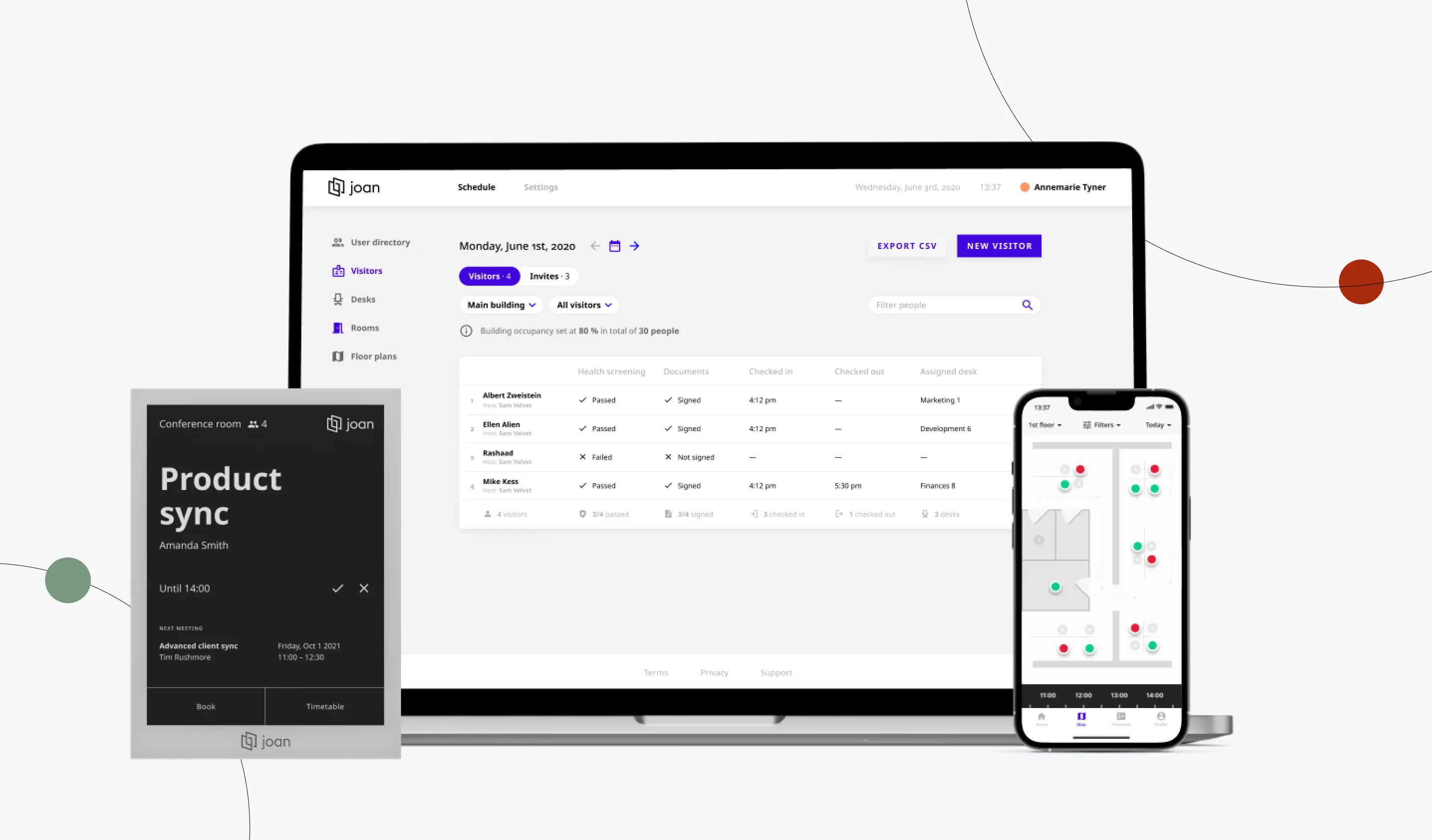
Joan is a meeting room and desk booking platform built around e-ink display hardware, known for its clean interfaces and minimal onboarding friction. It integrates well with Google Workspace, Microsoft 365, and calendar systems, giving real-time visibility into room availability.
Because Joan's priorities lie in room signage and booking rather than attendance logic or access flows, it may feel limited for organizations that need visitor management, hybrid attendance coordination, or full workplace orchestration. Some reviewers note the UX could be made easier, and touch screens can be slow and lagging.
Joan pricing
Pricing for Joan includes a subscription model plus hardware. Plans start at €49/month for the base subscription, with additional users billed at €0.99/user/month on top.
Joan potential drawbacks
- Visitor workflows are not part of core functionality
- Device dependence and hardware cost make scaling cumbersome
- No policy enforcement or hybrid workforce rule support
Joan pros
- Minimalist booking UX with ultra-low-power e-ink tablets
- Reliable calendar integrations
- Visually clean signage helps reduce no-shows and confusion
Which is the best Robin alternative for your team?
The right workplace management platform depends on your strategy. The key question is whether you need enterprise-grade occupancy analytics and AI-assisted scheduling, or a platform that goes beyond space intelligence to manage the full hybrid work picture.
For most mid-market and enterprise teams, deskbird is the most complete Robin alternative available. It brings together check-ins, scheduling, approvals, and analytics in one platform, with transparent pricing and no annual lock-in. And because employees actually use it, the data it generates is accurate enough to act on: space decisions, schedule adjustments, real estate planning.
Disclaimer
Software listed in this article, and corresponding pricing and functionalities, are based on publicly available information as of July 2026 and are subject to change. Information provided without guarantee. If something is mapped out incorrectly, please contact us.
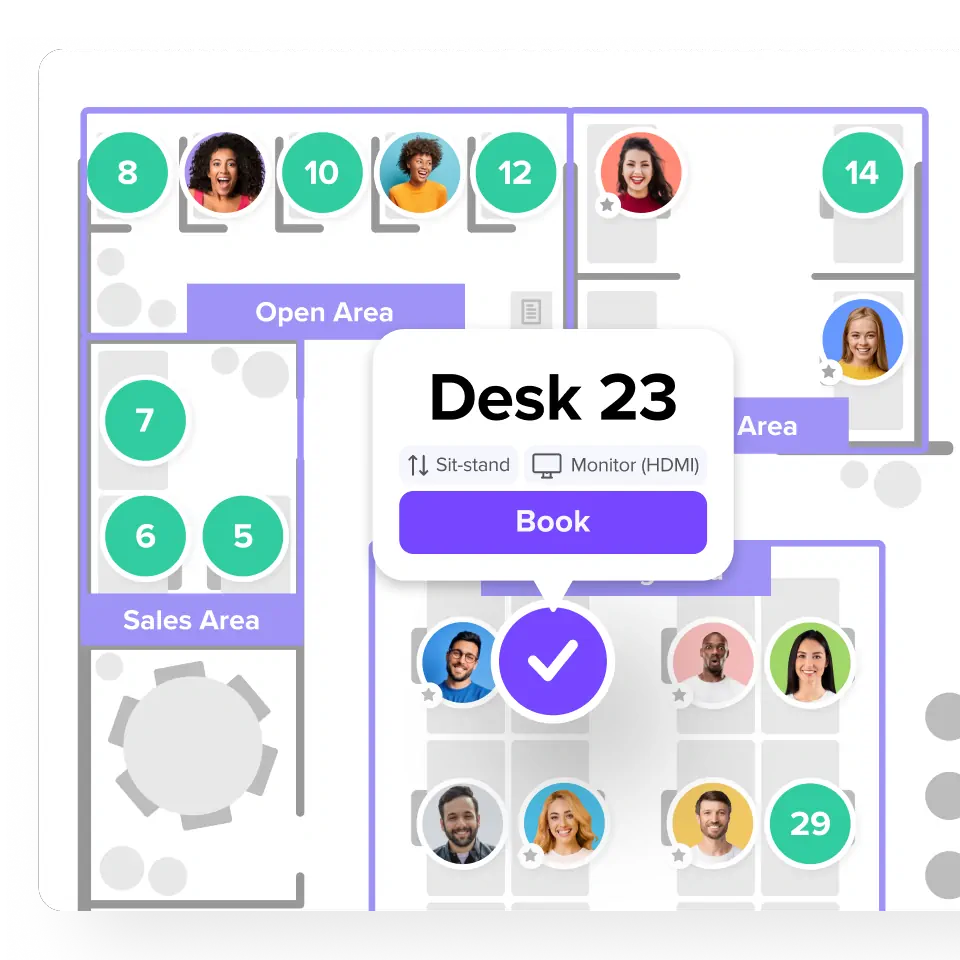
Choose the employee-first platform
- Coordinate hybrid policies, in-office days and team presence
- Improve employee experience when booking office resources
Frequently Asked Questions
More about Robin and alternative platforms.
Why look for an alternative to Robin?
Robin is a workplace management platform built around desk and room booking, visitor management, and occupancy analytics, with a strong focus on AI-assisted scheduling and space intelligence for large enterprise teams. While it covers those areas well, companies managing hybrid work in the 250 to 1,500 employee range may find gaps in structured attendance management, HRIS integrations, and pricing transparency. Robin doesn't publish rates publicly and requires annual contracts, which makes it harder to evaluate total cost upfront.
What is the best alternative to Robin for managing hybrid work?
deskbird is one of the most complete alternatives to Robin for hybrid workforce management. It's designed for internal teams that need to manage in-office attendance, apply hybrid schedules, and see who's working where. With real-time check-ins, who's-in views, calendar sync, and HRIS integrations, deskbird supports smooth coordination while maintaining enterprise-level security and compliance.
What is the best alternative to Robin for workplace analytics?
For teams focused purely on occupancy data and space intelligence, Robin's analytics are strong but come with enterprise pricing and complexity to match. If you need actionable utilization insights alongside hybrid scheduling, in-office coordination, and real-time presence data, deskbird offers a more complete solution, combining space analytics with workforce planning and compliance in a single platform.
What’s important to look for in an Robin alternative today?
The best Robin alternatives go beyond occupancy analytics to support the full hybrid work picture: attendance management, resource bookings, HRIS integrations, and flexible check-in methods (QR, Wi-Fi, geofencing). Look for transparent pricing without annual lock-in, deep integrations with your HR and calendar systems, and strong privacy compliance including GDPR support. As workplace needs evolve, flexibility, data accuracy, and people-first workflows matter more than space intelligence alone.
Is deskbird SOC2 Type II compliant?
Yes. deskbird is SOC 2 Type II audited, ISO 27001 certified, and fully GDPR-compliant. All data is hosted in Germany and never leaves Europe. This makes deskbird one of the few hybrid workplace platforms that meets both US security audit standards and EU data residency requirements, a meaningful advantage for multinational companies or any organization operating under strict data protection mandates.
