
Desk sharing software: what to look for and how to choose the right system
Most companies pay for office space based on total headcount, but workplace leaders who invest in a desk sharing system make real estate decisions based on who actually shows up. This article explains the employee experience improvements, cost reductions, and operational advantages that justify the investment, along with what to look for when evaluating platforms and how organizations measure success after implementation.
TL;DR
A desk sharing system helps hybrid teams book desks, see who is in the office, and use space based on actual attendance rather than guesswork.
- Companies can grow their workforce without expanding office space
- Employees book desks in seconds and know who will be onsite before commuting
- Workplace leaders get utilization data to make informed real estate decisions
What is desk sharing and how does a desk sharing system work?
Desk sharing is a flexible seating arrangement where employees do not have permanently assigned desks. You reserve a workspace only on the days you visit the office. A desk sharing system is the software that makes this process simple, providing interactive floor plans and reservation tools.
This model replaces the traditional setup where empty desks sit unused when people work from home. Companies can support more employees with fewer physical desks. The software acts as a digital map and booking tool for your entire workplace.
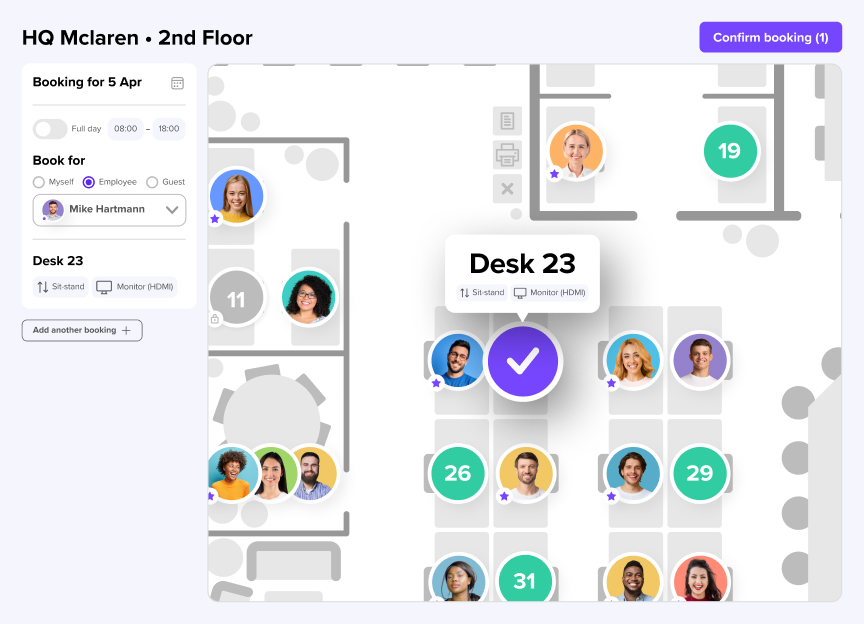
When you open a desk sharing app, you see a floor plan with available desks highlighted. Tap on a desk, choose your date, and confirm. The reservation syncs to your calendar so you remember where to go. Your colleagues can see you will be in the office that day, which helps them plan their own schedules.
ILF Consulting Engineers Austria, an engineering company with over 800 employees across 6 locations, struggled to allocate desks fairly as their workforce expanded under a hybrid model. Each department had been assigned a fixed number of workstations, but some departments occupied too much space while others had too little. Management constantly mediated disputes between department heads.
After implementing a desk sharing system, they now manage around 800 workstations transparently. Over 80% of employees actively use the platform to book desks based on actual need rather than departmental politics.
There are no more discussions and through all the analyses, we've also realized that we actually have enough space. In fact, we could continue to grow, and desks would probably still not become scarce.
Josef P. Mayr, Managing Director at ILF Consulting Engineers Austria
Employee benefits of a desk sharing system
Hybrid work only succeeds when it works well for the people using the office. A desk sharing system gives you the flexibility to book a desk exactly when you need it, reserving a spot from anywhere before you even start your commute.
You gain the autonomy to choose a quiet zone for deep focus or sit near your team for group projects. The software also provides complete visibility into who is in the office on any given day. You know exactly which colleagues will be onsite before you arrive.
Everyone has equal access to desks without dealing with claimed spots or office politics. When the tool is intuitive, employees actually use it to plan their workweek.
MR Datentechnik, an IT services company with 500 employees, experienced chaos when employees returned to the office post-pandemic. Favorite desks were claimed. Morning searches for available spots grew longer. Project teams struggled to coordinate. After implementing a desk sharing system, employees can now plan their entire week in just a few clicks.
deskbird provides an improved overview for employees and managers alike, which in turn increases employee satisfaction. Everyone knows which desks are free and can secure their preferred workspace days or even weeks in advance.
Collaboration and cross-team visibility
Desk sharing systems help you find and sit near your colleagues easily. Features like following coworkers or making team bookings turn the office into a place where collaboration happens intentionally. When you know your manager or project partner is onsite, you can book a desk right next to them.
Desk sharing makes office days more valuable for everyone involved. No more endless messaging back and forth to coordinate schedules.
Vrije Universiteit Amsterdam's Athena Institute faced concerns that team cohesion would suffer when 120 employees had to share just 65 flex desks after relocating. The desk sharing system strengthened team bonds instead, allowing employees to see who is in the office and coordinate their in-person days intentionally. They achieved over 90% user adoption.
We were worried that our team cohesion might suffer due to the change, resulting in increased remote work, but thankfully, these concerns proved unfounded. In fact, deskbird has strengthened our team bonds more than anticipated.
Lotte Snellenburg, Management Assistant at the VU Athena Institute of the Vrije Universiteit Amsterdam
Employer benefits of a desk sharing system
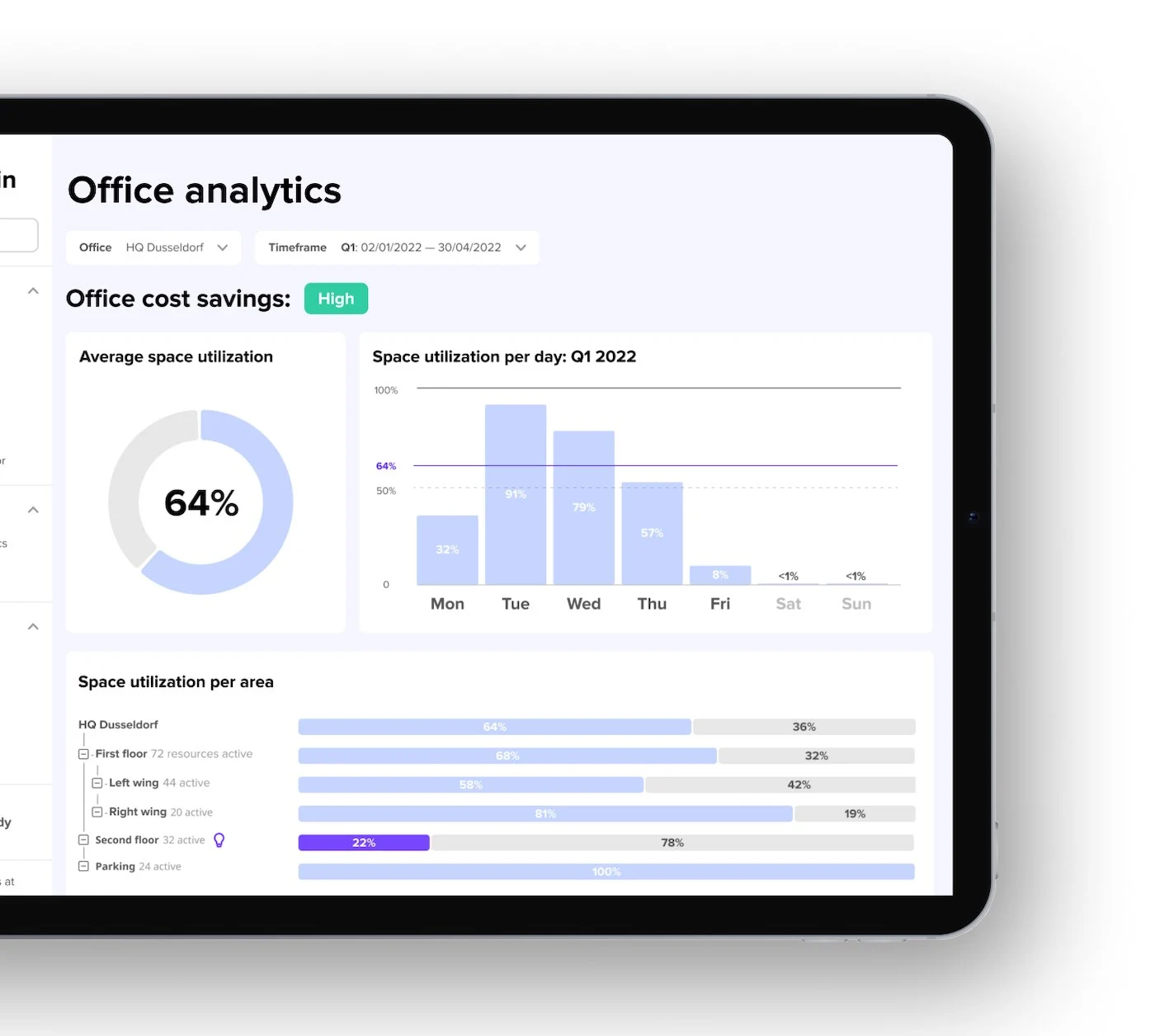
Companies invest in desk sharing systems to reduce real estate costs and understand actual desk usage. Leaders use utilization data to see which desks and floors are popular and which sit empty. This information helps you right-size the office based on actual attendance rather than total headcount.
The software provides the exact numbers needed to justify real estate decisions to senior management. You stop paying to heat, cool, and maintain empty desks, saving 10% to 50% in space costs.
[Table1]
Cost savings and office space utilization
Most offices are underutilized on certain days, with attendance concentrated on Tuesdays at 58.6 percent occupancy globally. A desk sharing system surfaces this data so workplace leaders can take action: consolidate floors, sublease unused space, or delay expensive office expansions.
ILF Consulting Engineers Austria discovered through detailed usage analytics that they actually had enough space to continue growing. They could only reach this conclusion after closely reviewing desk occupancy data. Management no longer acts as referee between departments arguing over space allocation. The system manages it transparently based on actual usage patterns.
LOOPING GROUP, a marketing agency with 250-300 employees across 5 locations, uses monthly utilization analysis to identify peak days. Their data revealed Tuesday and Wednesday as the busiest days. This enabled them to make informed decisions about encouraging attendance on quieter days rather than expanding office space.
Operational advantages of desk booking software
Desk booking software eliminates the daily chaos of managing a hybrid office. It prevents double bookings and stops conflicts over who took a specific desk. Facility managers save hours each week because they no longer track attendance manually.
Clear policies built directly into the system help enforce desk etiquette automatically. Automatic check-ins release desks if employees do not show up. Booking rules set limits on how far in advance desks can be reserved. Hygiene tracking shows when a desk was last used or cleaned.
A good desk sharing system requires minimal training. It removes the friction from office days so employees can focus on their actual work.
MR Datentechnik prioritized efficient desk booking and fast check-ins via QR codes when selecting their system. The implementation went quickly and smoothly. Employees were excited to use the tool because it eliminated the frustration of searching for available desks each morning and replaced cumbersome manual tracking sheets.
Technology benefits and integrations of desk sharing software
Modern desk sharing software connects with the tools your team already uses. You see open desks instantly through real-time availability updates; no need to learn a complicated new system to reserve a spot.
The best desk sharing apps integrate directly with your existing communication platforms and HR systems. IT teams appreciate these tools because they do not require expensive hardware installations.
[Table2]
Real-time availability and mobile booking
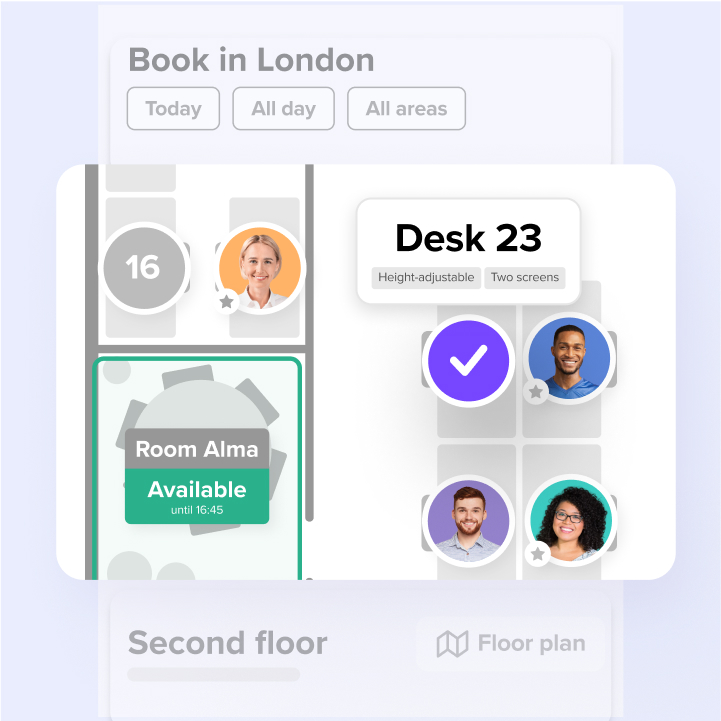
Book a desk in seconds from your phone using a mobile app. Interactive floor plans show exactly where a desk is located in the building. You can filter available spots by equipment, such as dual monitors or standing desks.
This reduces friction and increases adoption across the company. You feel confident knowing you have a guaranteed spot before you commute. No more wandering around looking for an open seat.
Calendar and collaboration tool integrations
Desk bookings sync automatically with Outlook, Google Calendar, and Microsoft Teams. You see your desk reservation right alongside your daily meetings, keeping all schedule information in one familiar place.
TwentyCi, an advertising services company, needed a tool that could integrate with their Microsoft-based ecosystem while making booking effortless. Their Head of People now books his schedule a month ahead with just a few clicks. The company achieved 80-85% adoption without having to chase employees to use the system.
I set myself a reminder and sometimes book my schedule a month ahead. It's so straightforward: you click-click, and you're done! I have set up everybody, allocated people to desks, and don't have to think about it anymore.
Rob Taylor, Head of People, TwentyCi
How deskbird supports desk sharing
deskbird is an all-in-one workplace management platform that helps companies run hybrid offices with ease. The platform lets employees book desks, meeting rooms, and parking spots in just a few clicks. You can manage office attendance directly from tools like MS Teams, Slack, Outlook, and Google Calendar.
Detailed analytics on attendance and space utilization give leaders the data they need to make informed decisions about office size, layout, and hybrid work policies. deskbird features a social office feed that helps employees find colleagues and plan collaborative days.
Security and privacy remain top priorities for enterprise organizations. deskbird offers GDPR-compliant, SOC2 and ISO 27001-certified EU hosting to protect your company data. The platform integrates with over 100 tools, including HRIS systems like Personio and SAP.
Is a desk sharing system worth the investment?
A desk sharing system pays off by delivering cost savings, employee flexibility, and operational clarity. It provides data-driven insights that help companies make smarter real estate decisions. The investment succeeds when adoption is high, which relies entirely on the software being easy to use.
Hybrid work is a permanent shift, with 62% of global organizations now using shared seating models. A dedicated system makes managing this new reality simple and transparent. Employees get the visibility and autonomy they need to do their best work. Employers get the utilization data required to reduce wasted space.
ILF Consulting Engineers Austria discovered they could continue growing without running into space issues after analyzing their actual desk occupancy. TwentyCi achieved 80-85% adoption without chasing employees. Vrije Universiteit Amsterdam successfully accommodated 120 employees with just 65 flex desks and over 90% user adoption.
If you want to see what desk sharing looks like with deskbird's real utilization data, book a demo.

Frequently Asked Questions
What is the difference between desk sharing and hot desking?
How does a desk sharing system help companies reduce real estate costs?
What features should you look for in a desk sharing app?
How do employees find colleagues when desks are not assigned?
Does desk sharing work for companies with hybrid schedules?
See how desk sharing with deskbird pays off in practice
- Companies like ILF Austria found room to grow without adding a single desk
- TwentyCi hit 80-85% adoption without pushing employees to use it.
- Real utilization data helps you cut space costs and make smarter office decisions.